 ENEnglish
 LTLietuviškai
 DEDeutsch
 FRFrançais
 RUРусский
 ESEspañol
 PLPolski
 ITItaliano
 UKУкраїнська
 CSČeština
 PTPortuguês
 JA日本語
 LVLatviešu valoda
 ETEesti
 HUMagyar
 IDBahasa Indonesia
 TRTürkçe
 HIहिन्दी
 ELΕλληνικά
 ARالعربية
 THไทย
 VITiếng Việt
 RORomână
 MSBahasa Melayu
 BNবাংলা
#Web vulnerabilities
Web vulnerabilities are weaknesses in websites and web applications that attackers can use to read data, change content or take control. Well-known examples include SQL injection, cross-site scripting, broken access control and outdated software with published flaws. Most of them come from code that trusts user input too much or from components that are no longer updated. They affect small sites built on popular content management systems as much as large custom applications. Understanding the common types helps owners ask the right questions of developers and hosting providers. The articles under this tag explain how the main vulnerabilities work and which practical measures prevent them.
 19 अक्तू॰ 2026 · 8 मिनट पढ़ें
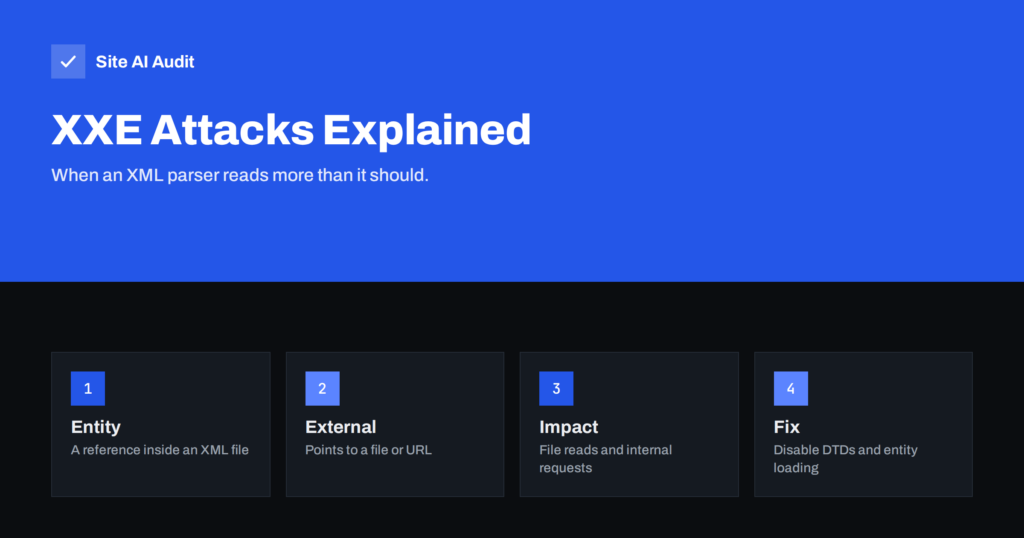
XML External Entity (XXE) Attacks Explained for Site Owners
XXE tricks an XML parser into reading local files or calling internal addresses. Learn where it hides on websites and how developers switch it…
 18 अक्तू॰ 2026 · 7 मिनट पढ़ें
Command Injection Explained: How to Keep Servers Safe
Command injection lets attackers run system commands through your website. See how it works in plain words and how to prevent it in code,…
 17 अक्तू॰ 2026 · 8 मिनट पढ़ें
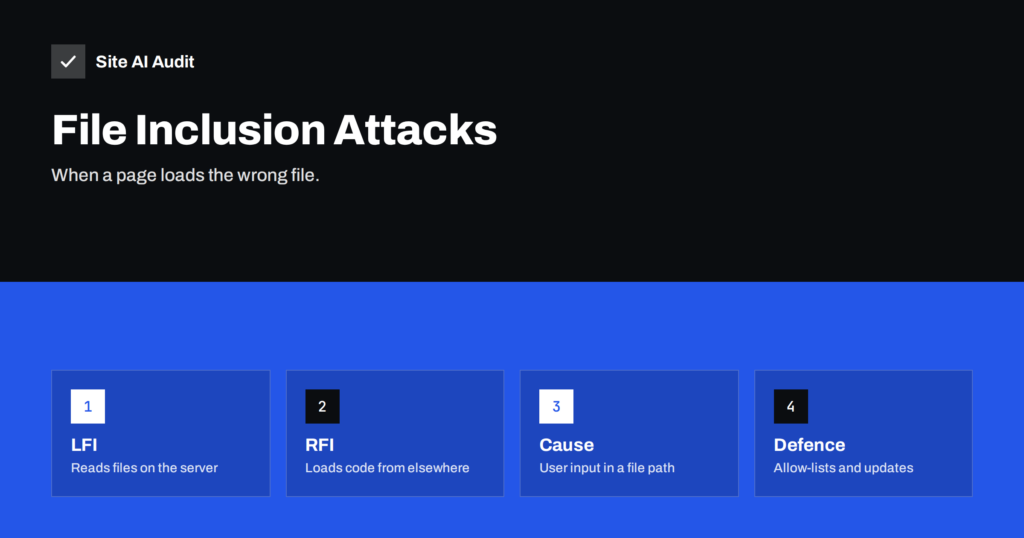
File Inclusion Attacks (LFI and RFI) Explained Simply
Local and remote file inclusion make a website load files it should never touch. Learn how the flaw works, what it can lead to…
 16 अक्तू॰ 2026 · 8 मिनट पढ़ें
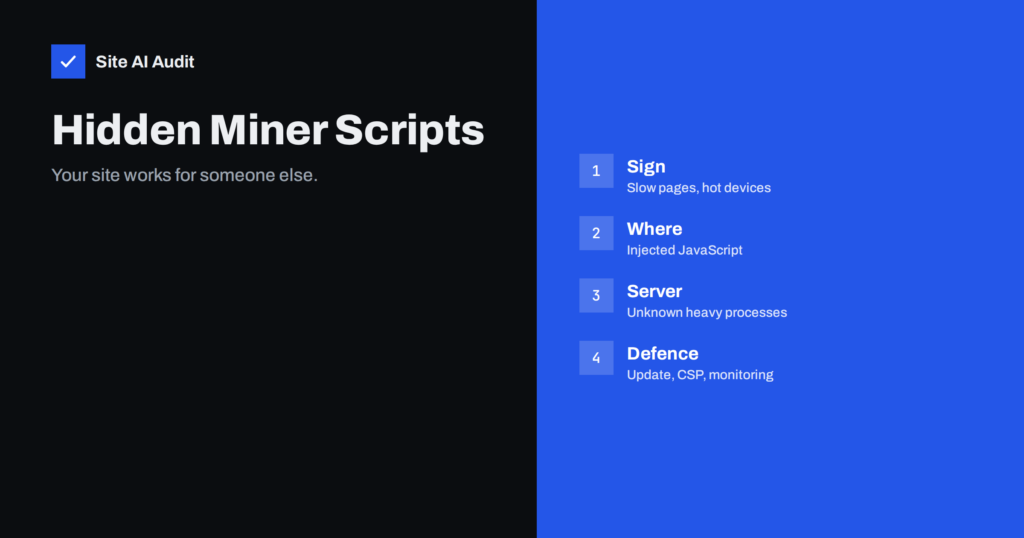
Cryptojacking: Hidden Miner Scripts on Your Website
Hidden scripts can use your visitors' devices or your server to mine cryptocurrency. Learn the warning signs, how to find them and how to…
 16 अक्तू॰ 2026 · 7 मिनट पढ़ें
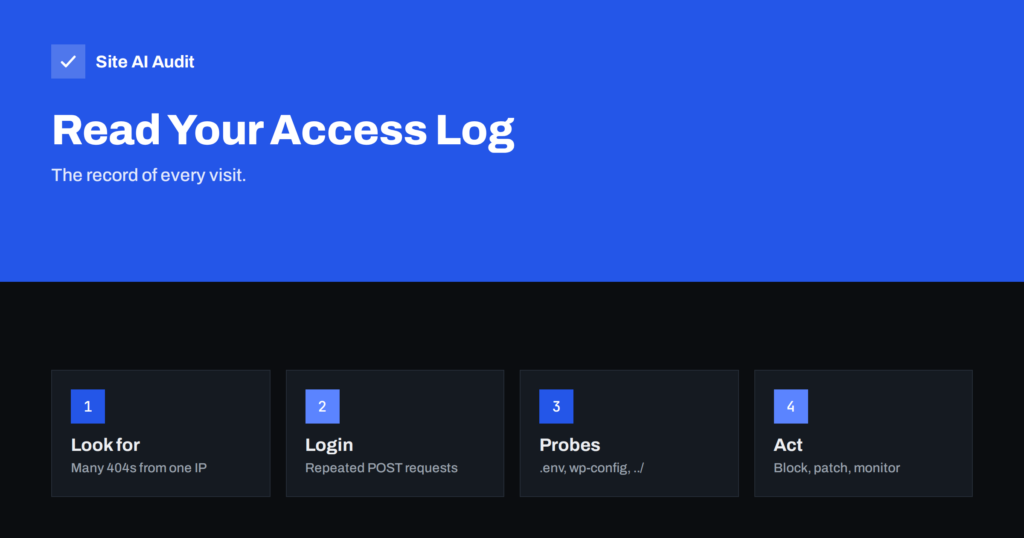
How to Read Web Server Access Logs to Spot Attacks
Your access log records every request to your site. Learn what each line means and which patterns reveal scanners, brute force and injection attempts.
 15 अक्तू॰ 2026 · 8 मिनट पढ़ें
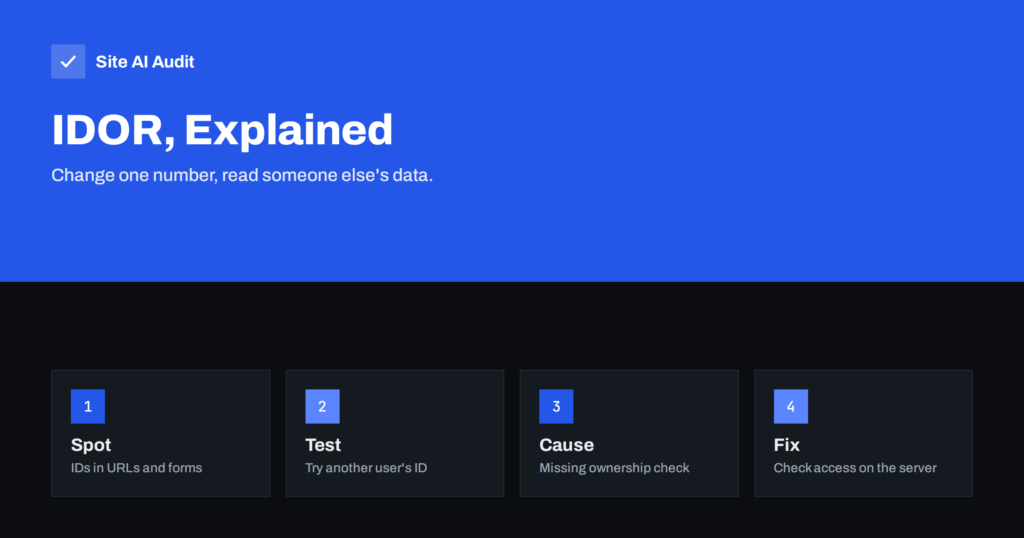
IDOR Vulnerability Explained: Broken Access Control Basics
An IDOR lets a visitor open other people's data by changing an ID in the address. Learn how broken access control works and how…
 14 अक्तू॰ 2026 · 8 मिनट पढ़ें
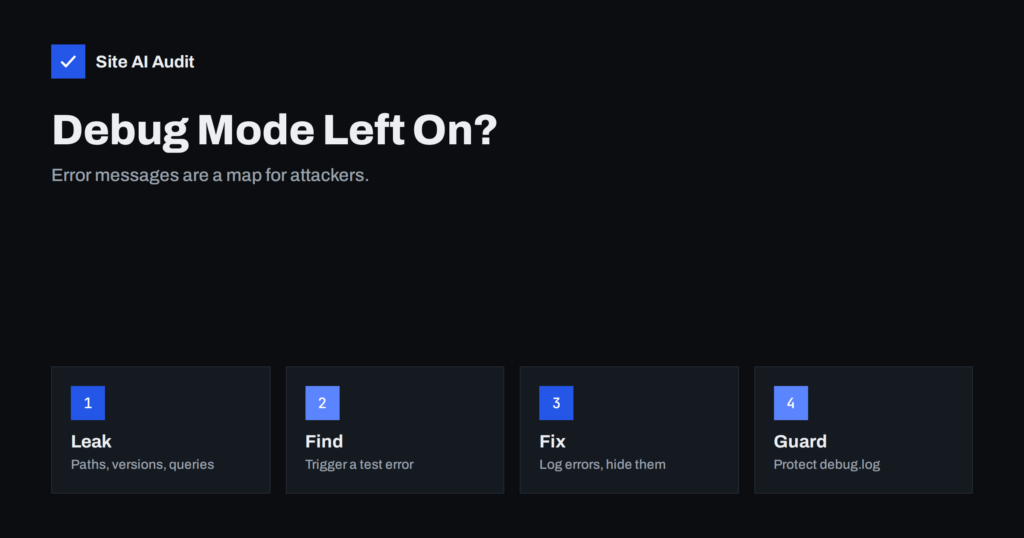
Exposed Error Messages and Debug Mode: Hide Them Now
PHP warnings, stack traces and debug logs give attackers a map of your site. Learn how to find exposed errors and switch debug mode…
 14 अक्तू॰ 2026 · 7 मिनट पढ़ें
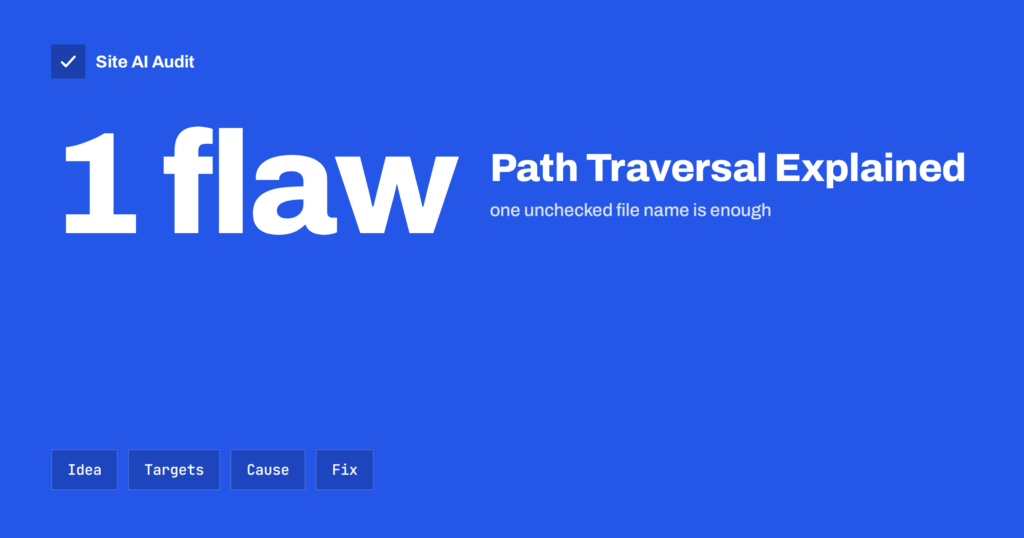
Path Traversal Attacks Explained: How to Stop Them
Path traversal lets attackers read files outside the web folder using ../ tricks. Learn how it works, how to spot it in logs and…
 12 अक्तू॰ 2026 · 7 मिनट पढ़ें
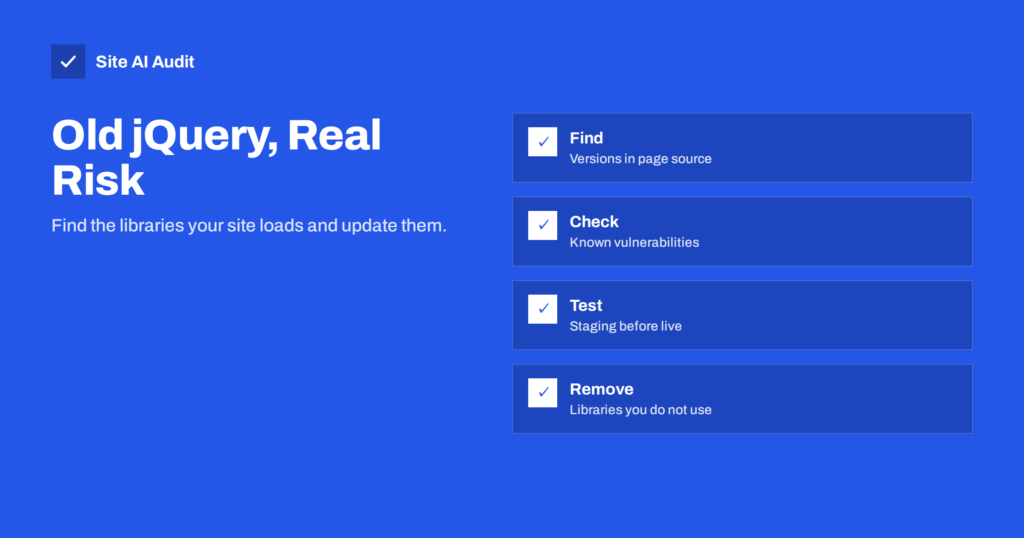
Outdated JavaScript Libraries: Why Old jQuery Is a Risk
Old jQuery, Bootstrap and other front-end libraries carry known security flaws. Learn how to find the versions your site loads and update them safely.
 12 अक्तू॰ 2026 · 8 मिनट पढ़ें
SSRF Explained: How Server-Side Request Forgery Works
SSRF tricks your server into fetching URLs an attacker chooses, including internal systems. Learn how it works, where it hides and how to prevent…
 8 अक्तू॰ 2026 · 8 मिनट पढ़ें
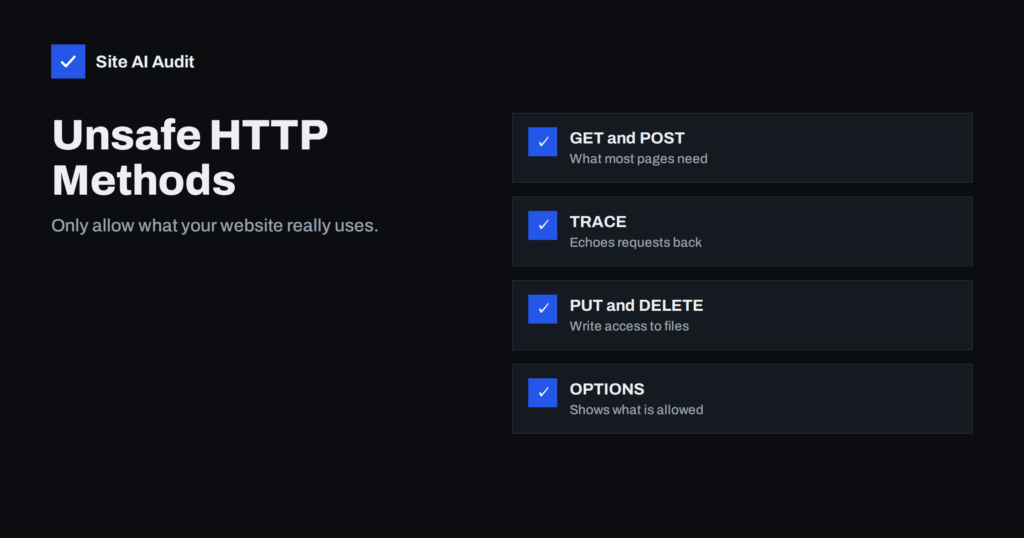
Unsafe HTTP Methods: Why TRACE, PUT and DELETE Should Be Off
TRACE, PUT, DELETE and WebDAV methods left open on a web server can leak data or let attackers upload files. Learn how to test…
 7 अक्तू॰ 2026 · 8 मिनट पढ़ें
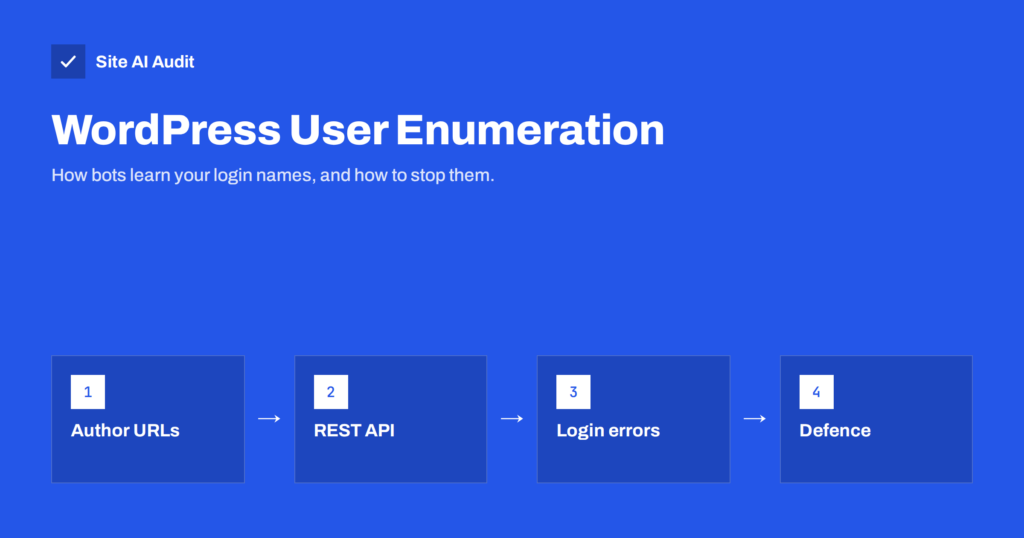
WordPress User Enumeration: What It Reveals and How to Stop It
Attackers can list WordPress usernames through author URLs, the REST API and login errors. See what user enumeration reveals and how to limit it…