ENEnglish
 LTLietuviškai
 DEDeutsch
 FRFrançais
 RUРусский
 ESEspañol
 PLPolski
 ITItaliano
 UKУкраїнська
 CSČeština
 PTPortuguês
 JA日本語
 LVLatviešu valoda
 ETEesti
 HUMagyar
 IDBahasa Indonesia
 TRTürkçe
 HIहिन्दी
 ELΕλληνικά
 ARالعربية
 THไทย
 VITiếng Việt
 RORomână
 MSBahasa Melayu
 BNবাংলা
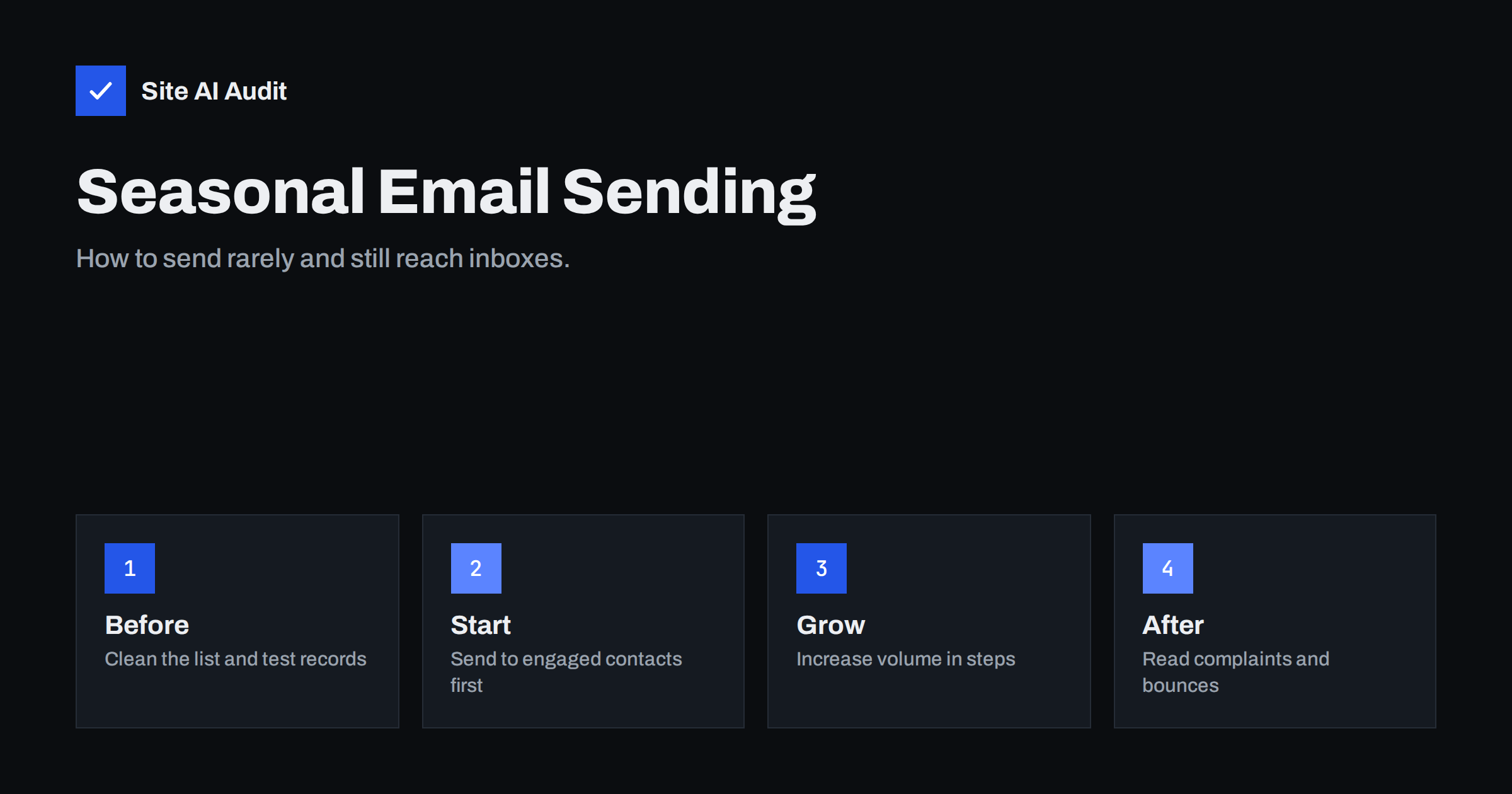
Short answer: Businesses that email only a few times a year, such as garden centres, event organisers and tax advisers, face a real deliverability problem. Mailbox providers see a quiet sender that suddenly sends a large batch to an old list. To stay out of spam, check your authentication first, clean the list, send to your most engaged contacts first, increase volume in steps and watch complaints and bounces closely.
Why rare senders struggle
Mailbox providers judge senders by their history. A company that sends a steady stream of wanted email builds a record that tells filters it is safe. A seasonal sender has almost no recent record. Months of silence, followed by a sudden burst of thousands of messages, looks like the pattern of a compromised account or a bought list, and filters react with caution.
The list itself is part of the problem. People change jobs, abandon addresses and forget they ever subscribed. After a long quiet period, a larger share of your list is out of date or no longer interested. Each wrong address and each annoyed recipient counts against you at exactly the moment you need the strongest reputation.
This is why a business that sends four campaigns a year can have worse delivery than one that sends weekly, even if its content is better. The weekly sender has a track record, and the seasonal sender has to rebuild trust each time. Understanding this changes the plan: the goal is not just to write a good message, but to show mailbox providers that the sender is real, careful and wanted.
Check authentication before the season starts
Do the technical work weeks before the campaign, not on the morning you send. Make sure SPF, DKIM and DMARC are correct for the domain and for every tool that sends on your behalf, including the newsletter platform and your website forms. A record that was valid last year may have broken after a change of provider, a new tool or an expired key.
Our guide to authenticating third-party email senders shows how to include each service correctly. Send test messages to a few addresses at the main providers, read the headers and confirm that authentication passes. Our article on testing email deliverability lists simple ways to do this.
Clean your list before you send
A list that has sat unused for months needs cleaning. Remove addresses that bounced last time, people who unsubscribed, role addresses that nobody reads and obvious typos. If you have a record of when each contact last opened or clicked, separate the contacts who were active within the past year from the rest.
An old list is also the place where spam traps hide. A spam trap is an address that no real person uses, set up to catch senders with poor list habits, and an abandoned address can later become one. Read our explanation of spam traps and our email list hygiene guide for practical steps. Never add purchased or scraped addresses to the list, however close the season is.
Also check how the addresses were collected. A list from a paper sign-up sheet, an old event or a contact form needs more care than one built through a confirmed subscription. If you cannot say where a group of addresses came from, keep them out of the first batch, or leave them out altogether. A smaller list of people who want your email always performs better than a large list of people who do not.
Remind people why they are getting the email
When people receive a message after a year of silence, many do not remember you. Some will mark it as spam, and complaints hurt you more than any other signal. Make the reason for the email clear at the top: where they signed up, what you will send and how often. Use the same name in the From line that they saw when they subscribed, and keep the design recognisable.
Make unsubscribing easy and visible. A clear link, and the one-click option described in our guide to one-click unsubscribe, gives unhappy people a better way out than the spam button. If your list was collected a long time ago, think about a short re-permission message first, asking people to confirm they want to hear from you.
Start small and grow in steps
The safest way to rebuild a sending pattern is to begin with the contacts most likely to welcome your message. Send the first batch to people who opened or clicked recently. Their positive reaction tells mailbox providers that your mail is wanted. Wait a day or two, check the results and send the next group, widening the audience in stages.
This works like the process described in our guide to email domain warm-up, adapted for a sender who already has a domain but has been quiet. Avoid sending everything at once at the start of the season. If a batch shows high bounces or complaints, stop and fix the cause before sending more.
Keep a simple record of each step: date, number of messages, bounce rate, complaint reports and any rejection messages. After a season, this record is a valuable guide. You will see how fast you could grow the volume without trouble, and next year you can plan the schedule with confidence instead of guessing.
Keep a light rhythm all year
You do not have to send full campaigns every month, but a very small, regular message helps. A short useful note every month or two keeps the list alive, keeps your domain in the sending record and lets you spot list problems earlier. It also gives you a chance to remove addresses that bounce, so the big seasonal mailing goes to a cleaner list.
Choose content that people value, such as a reminder, a checklist or a short update, and keep it relevant to the reason they signed up. A seasonal business might send a brief tip before each season, which prepares recipients for the main offer. Do not flood the list just to look active, since volume without interest damages your reputation faster than silence.
Watch the results while you send
During the campaign, pay attention to the signals that matter: bounces, complaints, opens and delivery errors. A rise in rejections from one provider is an early warning that something is wrong, and fixing it quickly may save the rest of the campaign. Use Google Postmaster Tools if you send enough volume to Gmail users, and read DMARC reports to see who else sends in your name, as described in our DMARC monitoring guide.
Know the rules that large mailbox providers set for senders of bulk email. Our overview of the Gmail and Yahoo bulk sender requirements explains what authentication, unsubscribe options and complaint levels they expect.
Look at the content from the recipient’s side as well. Check that the subject line matches the message, that links point to your own site and that images have text alternatives, since heavy images with little text are often treated with suspicion. A message that is clear, honest and well formed gives filters few reasons to doubt it.
Separate seasonal marketing from everyday email
Keep the sending that your business depends on away from the sending that carries risk. Day-to-day messages such as quotes, invoices and replies to customers should not share a reputation with a large annual campaign. A common approach is to send marketing from a subdomain, which keeps its reputation separate. Our article on a subdomain for marketing email explains the setup and the trade-offs.
If a seasonal campaign goes badly, the damage then stays with the marketing subdomain and your ordinary business email continues to arrive.
How Site AI Audit helps
Site AI Audit checks the email records of your domain: SPF and its lookup limit, DKIM signatures, the DMARC policy and MX records. Run it a few weeks before your busy season to catch a broken record while there is still time to fix it. It does not clean your list, send test messages or measure your sending reputation, so use the steps above for those. You can run a free check of your website or see the plans.
Related reading
- Email Engagement and Inbox Placement: How Providers Judge You
- Double Opt-In vs Single Opt-In: Which Is Better for Your List?
- How to Reduce Spam Complaints and Keep Your Spam Rate Low
- Email Deliverability Checklist: 20 Checks for Small Businesses
The bottom line
Rare senders can reach the inbox when they prepare. Fix authentication early, clean and explain the list, start with engaged contacts, grow in steps and watch the results as you send. A small amount of regular contact during the quiet months makes the busy season far easier to manage.
الأسئلة الشائعة
How long can a list sit unused before it becomes risky?
There is no exact limit, but after several months the risk rises, and after a year or more a re-permission message or careful cleaning is wise.
Should I send to everyone at once in my busy season?
It is safer to start with recently engaged contacts and widen in stages. A sudden large batch from a quiet sender looks suspicious to filters.
Is it worth sending small messages in the quiet months?
Yes, if they are useful. Light regular contact keeps the list current and gives you early warning of delivery problems.
Can I use the same domain for marketing and daily email?
You can, but a subdomain for marketing keeps a bad campaign from affecting invoices and customer replies.
What should I check first if my seasonal email goes to spam?
Check the authentication results in the message headers, then bounces and complaints, and finally whether the list contained old or unwanted addresses.