 ENEnglish
 LTLietuviškai
 DEDeutsch
 FRFrançais
 RUРусский
 ESEspañol
 PLPolski
 ITItaliano
 UKУкраїнська
 CSČeština
 PTPortuguês
 JA日本語
 LVLatviešu valoda
 ETEesti
 HUMagyar
 IDBahasa Indonesia
 TRTürkçe
 HIहिन्दी
 ELΕλληνικά
 ARالعربية
 THไทย
 VITiếng Việt
 RORomână
 MSBahasa Melayu
 BNবাংলা
#DKIM
DKIM (DomainKeys Identified Mail) adds a cryptographic signature to every outgoing message. The public key is published in DNS under a selector, and receiving servers use it to confirm that the message was signed by the domain and not altered on the way. Each sending service, such as a mail host or a newsletter platform, usually needs its own DKIM key. DKIM survives most forwarding, which makes it the most reliable basis for DMARC alignment. The articles under this tag explain setup, key length, rotation and signature failures.
 28 Ağu 2026 · 8 dk okuma
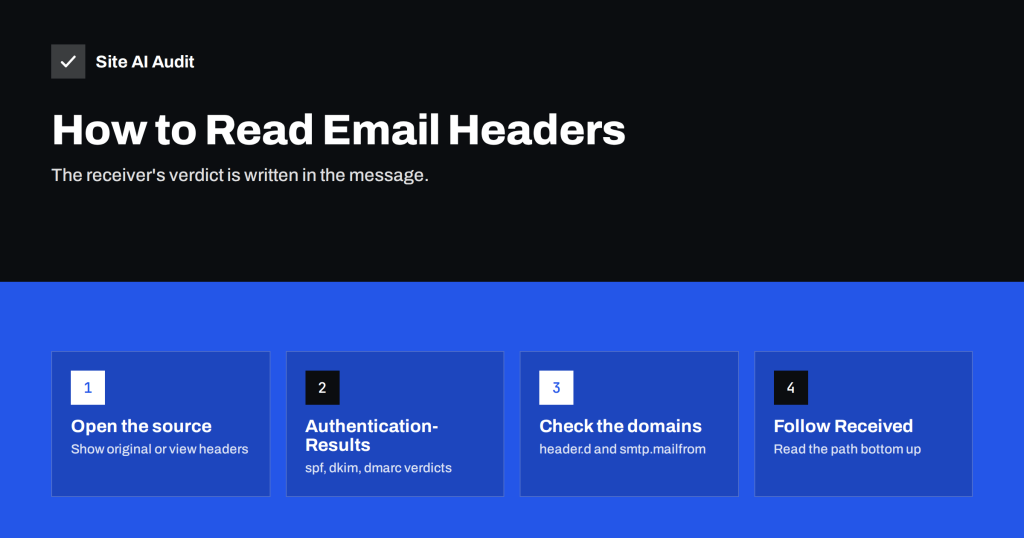
How to Read Email Headers to Check SPF, DKIM and DMARC
E-mail headers show exactly why a message passed or failed authentication. Learn how to open them in Gmail and Outlook and read Authentication-Results.
 15 Ağu 2026 · 8 dk okuma
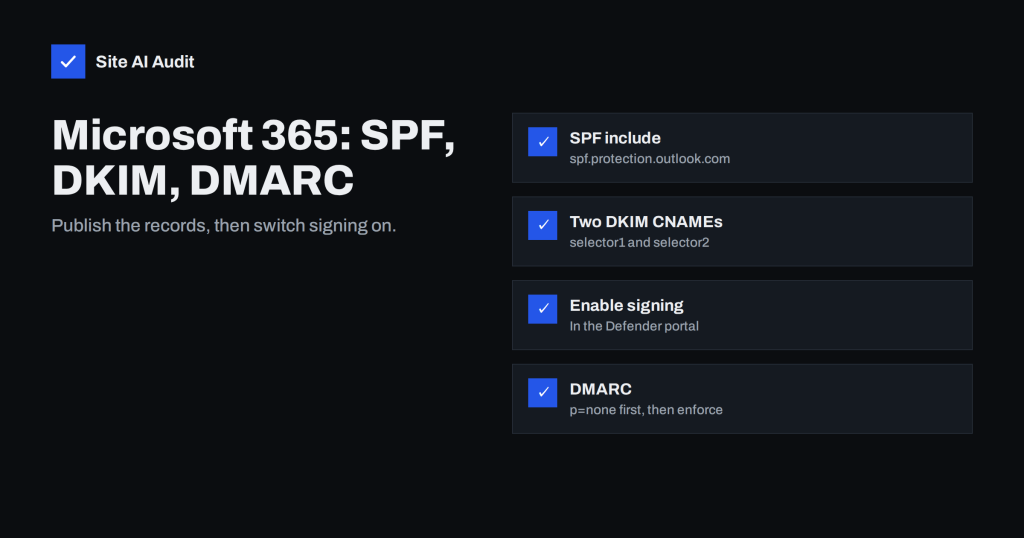
Microsoft 365 Email Authentication: SPF, DKIM and DMARC Setup
A practical guide to SPF, DKIM and DMARC for Microsoft 365: the records to publish, how to enable DKIM in the Defender portal and…
 14 Ağu 2026 · 8 dk okuma
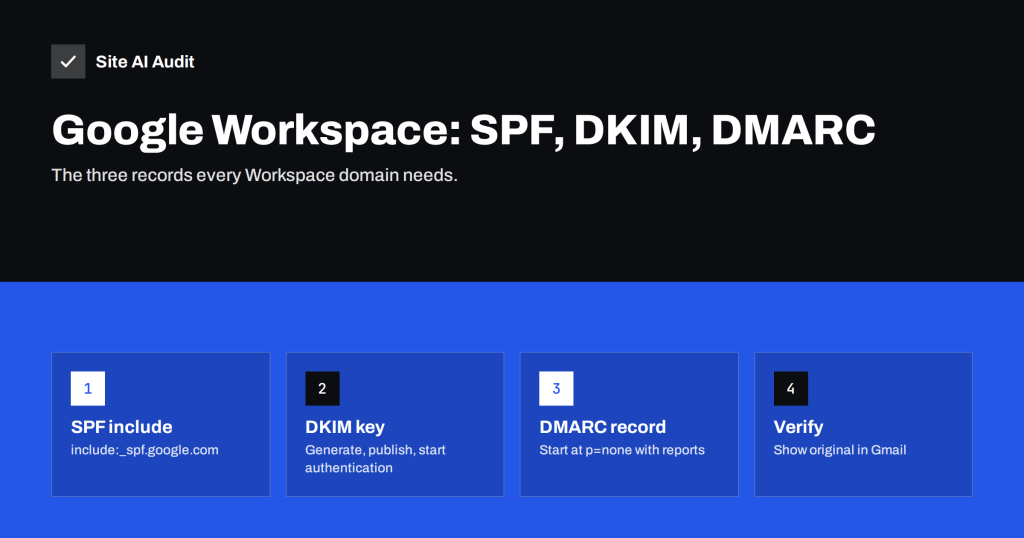
Google Workspace SPF, DKIM and DMARC Setup, Step by Step
Set up SPF, DKIM and DMARC correctly for Google Workspace: the exact records, where to enable DKIM signing, and how to confirm everything passes…
 5 Ağu 2026 · 8 dk okuma
SPF vs DKIM vs DMARC: What Each One Does and Why You Need All
SPF, DKIM and DMARC solve different parts of e-mail trust. See what each checks, how they work together and in which order to set…
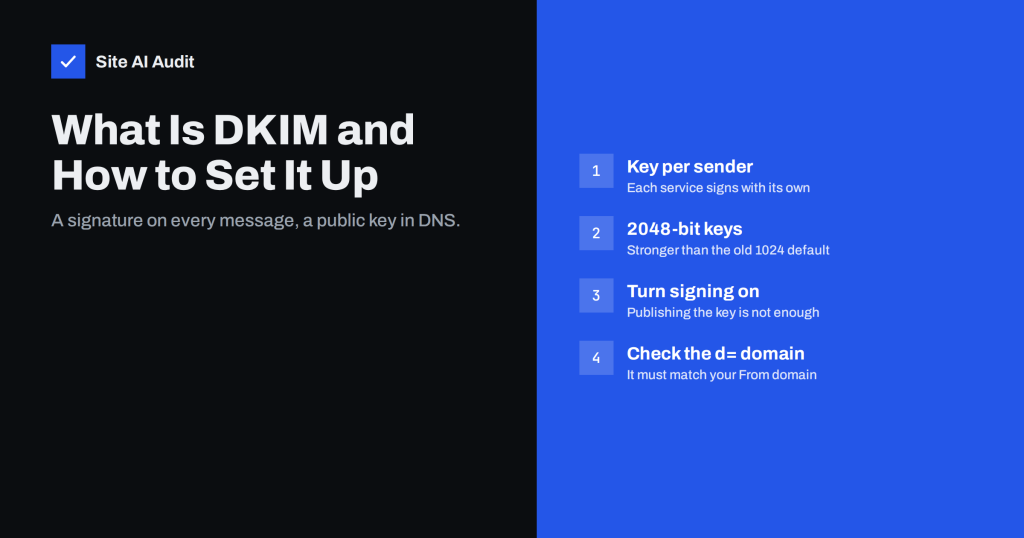 3 Ağu 2026 · 8 dk okuma
What Is DKIM and How to Set It Up for Your Domain
DKIM signs every message so receivers can trust it came from your domain. Learn how it works, how to set it up for each…