 ENEnglish
 LTLietuviškai
 DEDeutsch
 FRFrançais
 RUРусский
 ESEspañol
 PLPolski
 ITItaliano
 UKУкраїнська
 CSČeština
 PTPortuguês
 JA日本語
 LVLatviešu valoda
 ETEesti
 HUMagyar
 IDBahasa Indonesia
 TRTürkçe
 HIहिन्दी
 ELΕλληνικά
 ARالعربية
 THไทย
 VITiếng Việt
 RORomână
 MSBahasa Melayu
 BNবাংলা
#Email Security
Email security protects a domain and its users from spoofing, phishing, interception and account abuse. Domain-level controls such as DMARC stop criminals from sending mail that looks like it comes from you, while standards such as MTA-STS protect mail in transit. Many attacks on small businesses start with a fake invoice or a message that imitates a colleague. Good security settings also improve deliverability, because they make legitimate mail easier to trust. The articles under this tag explain practical protections that any organisation can set up.
 Nov 5, 2026 · 8 min read
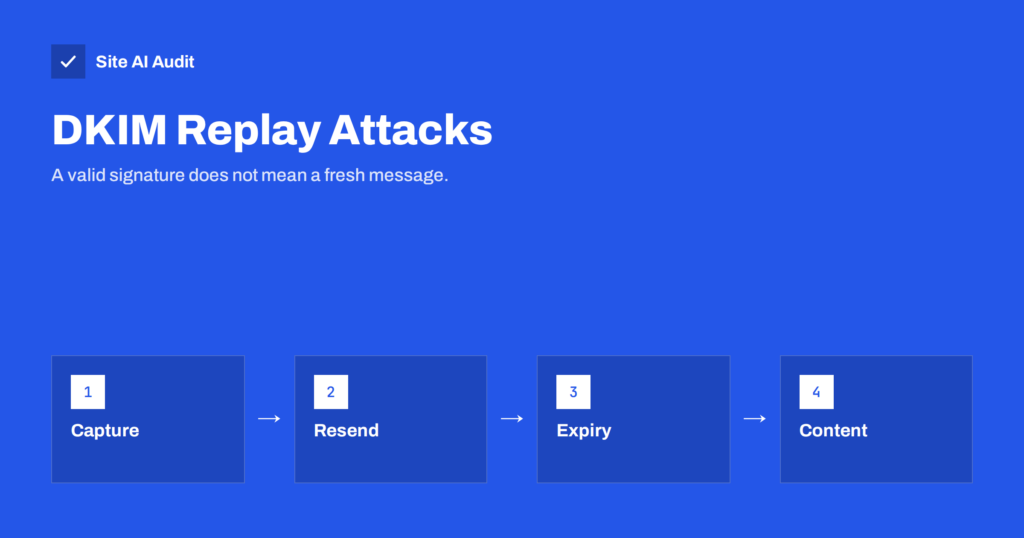
DKIM Replay Attacks: When a Signed Email Is Sent Again
A DKIM replay attack resends a genuine signed email to new victims, so it still passes authentication. Learn how it works and how senders…
 Nov 5, 2026 · 8 min read
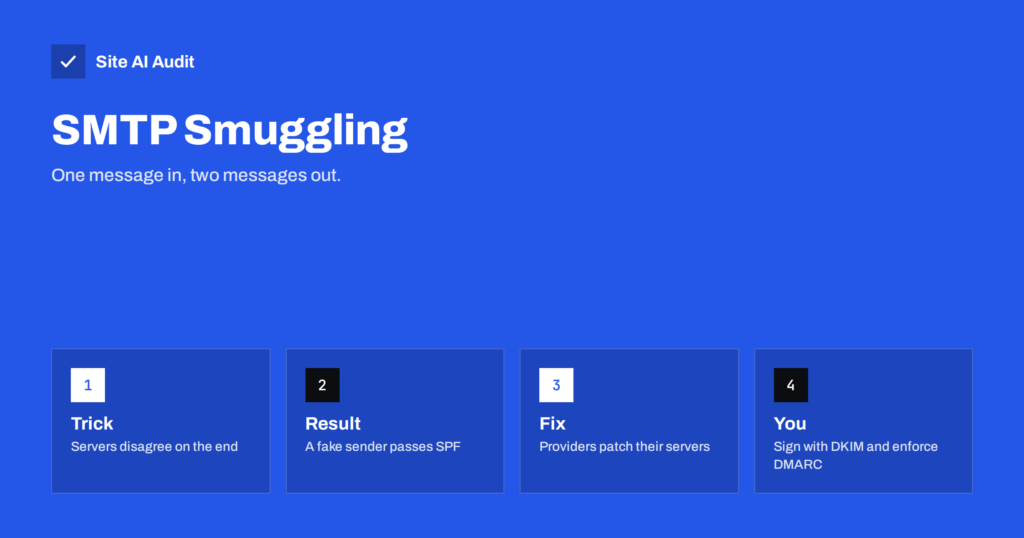
SMTP Smuggling: How Spoofed Email Slips Past SPF and DMARC
SMTP smuggling tricks mail servers into treating one message as two, letting fake senders pass checks. Learn how it works and what domain owners…
 Nov 3, 2026 · 8 min read
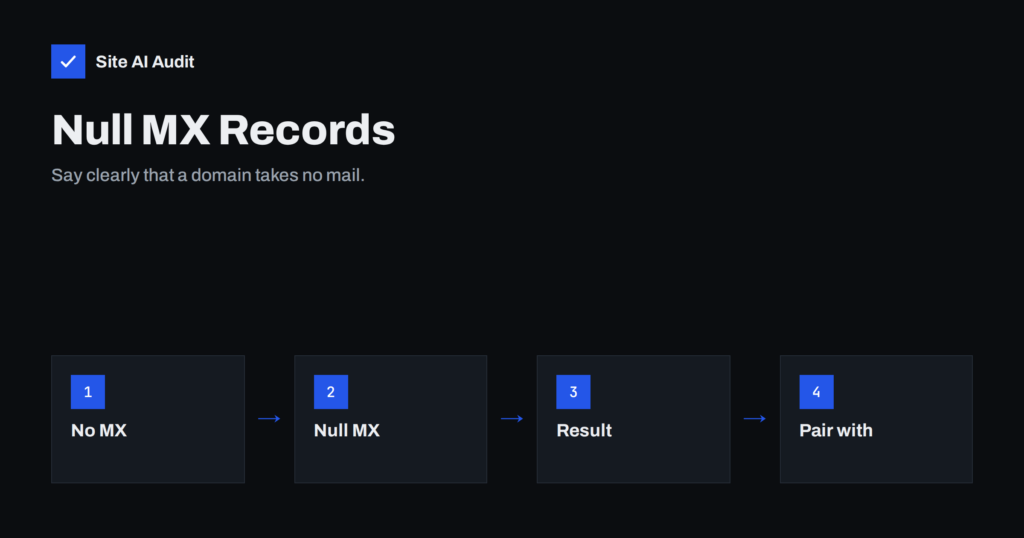
Null MX Records: Declare a Domain That Receives No Email
A null MX record tells other mail servers that your domain does not accept email, so messages fail fast. Learn when to use it,…
 Nov 2, 2026 · 8 min read
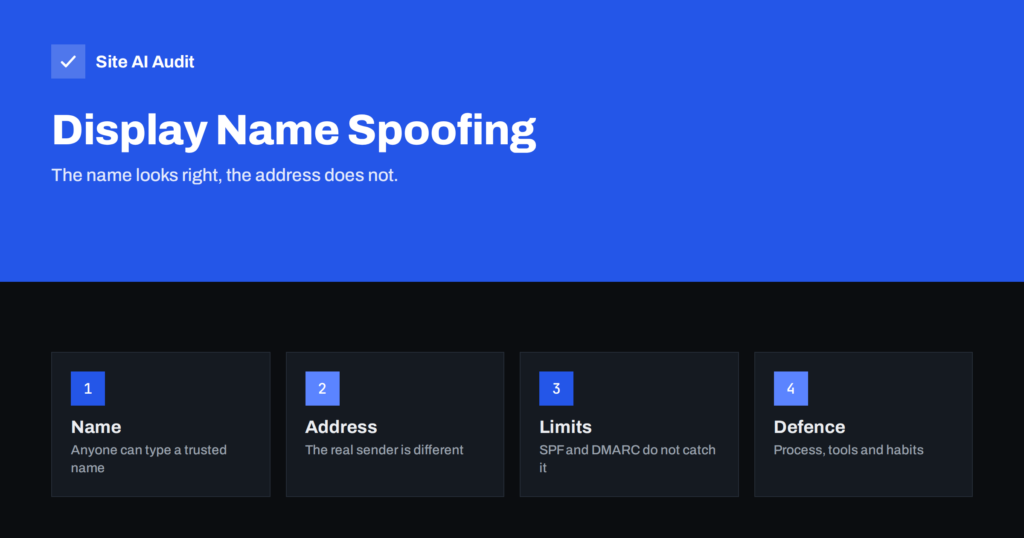
Display Name Spoofing: Fake Senders That Pass Authentication
Display name spoofing shows a trusted name on a message from an unrelated address, so SPF and DMARC cannot stop it. Learn how to…
 Oct 31, 2026 · 8 min read
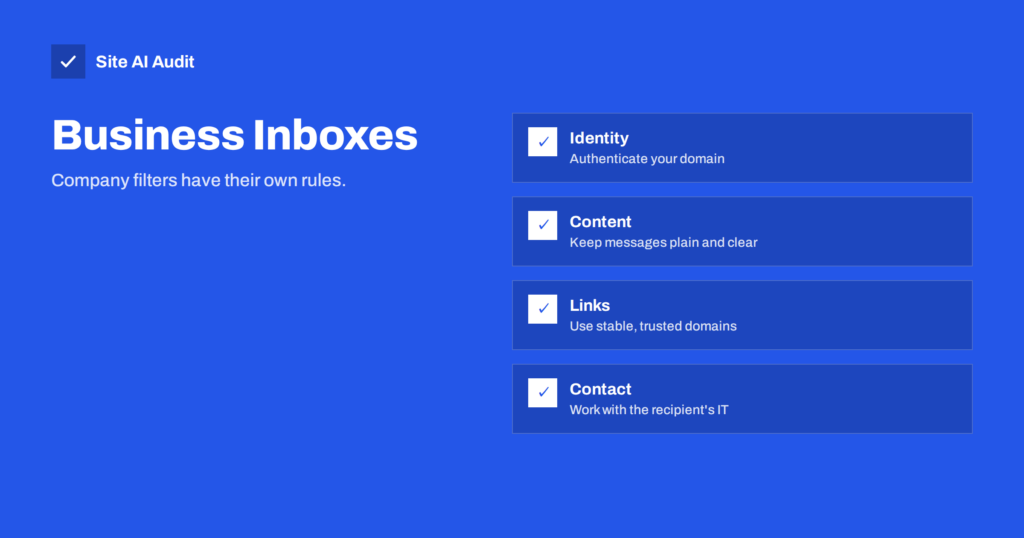
Email Security Gateways: Reaching Business Inboxes
Company mailboxes sit behind security gateways that judge senders more strictly than webmail. Learn how they decide and how to reach business inboxes.
 Oct 31, 2026 · 7 min read
Safe Links and URL Rewriting: Why Email Links Change
Business mail systems rewrite and scan links before readers click. See what that does to campaigns, click reports and confirmation links, and how to…
 Oct 30, 2026 · 8 min read
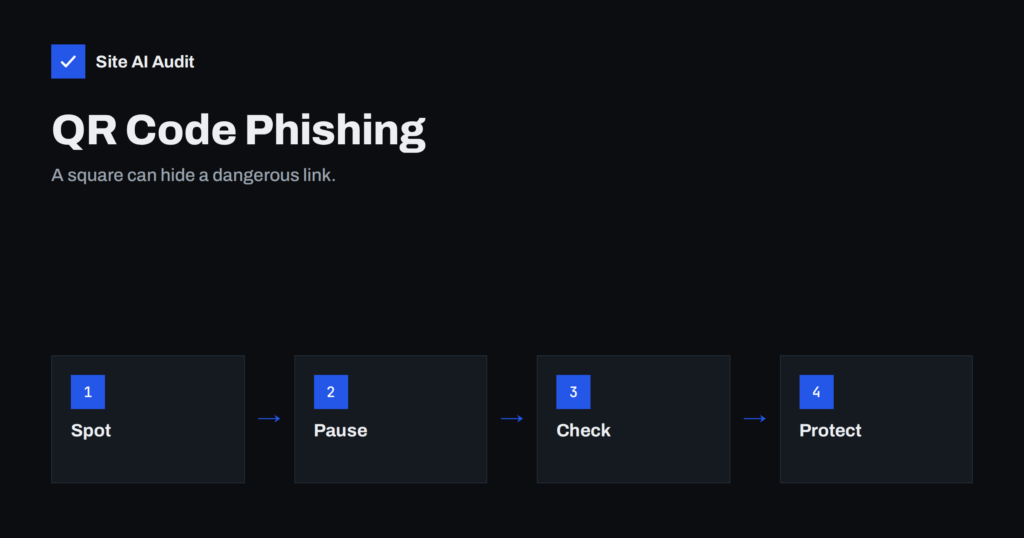
QR Code Phishing in Email: Protect Your Team and Brand
Attackers hide malicious links inside QR codes in emails to slip past filters. Learn how quishing works and how to protect staff, customers and…
 Oct 26, 2026 · 8 min read
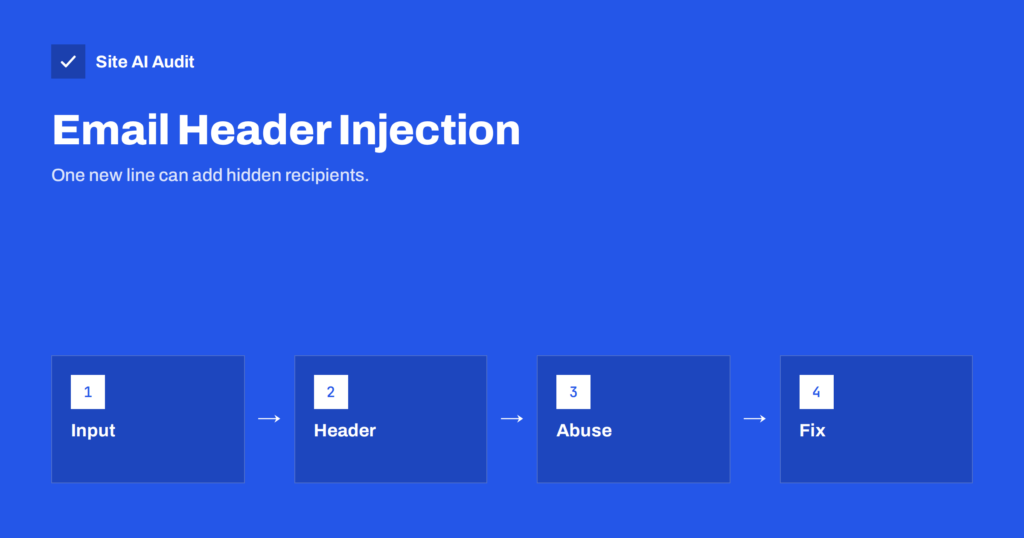
Email Header Injection: How Contact Forms Get Abused for Spam
Attackers can turn a weak contact form into a spam machine by adding hidden e-mail headers. See how it works and how to protect…
 Oct 19, 2026 · 8 min read
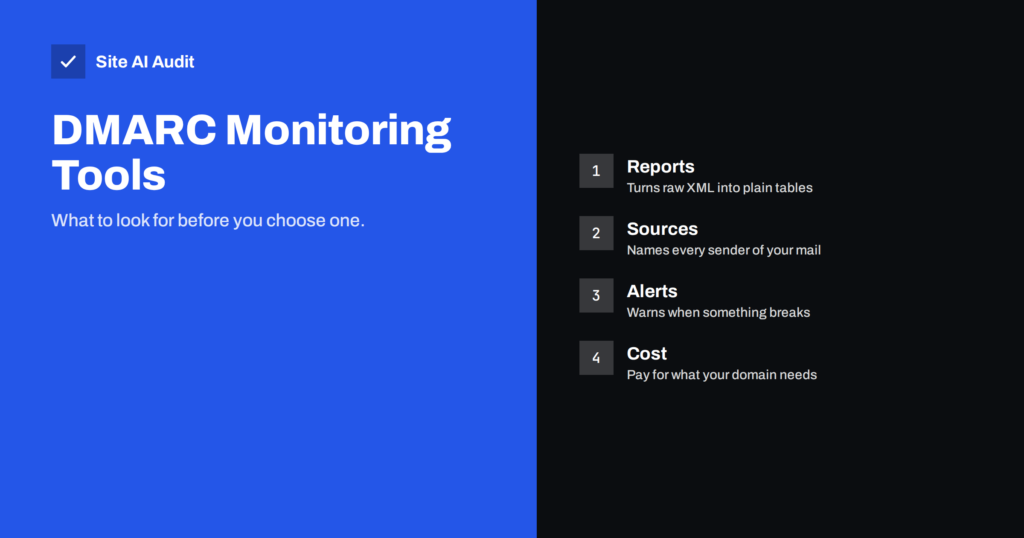
DMARC Monitoring Tools: What to Look For Before You Choose
DMARC reports arrive as unreadable XML. See what a monitoring tool should do, which features matter for a small domain and how to avoid…
 Oct 16, 2026 · 8 min read
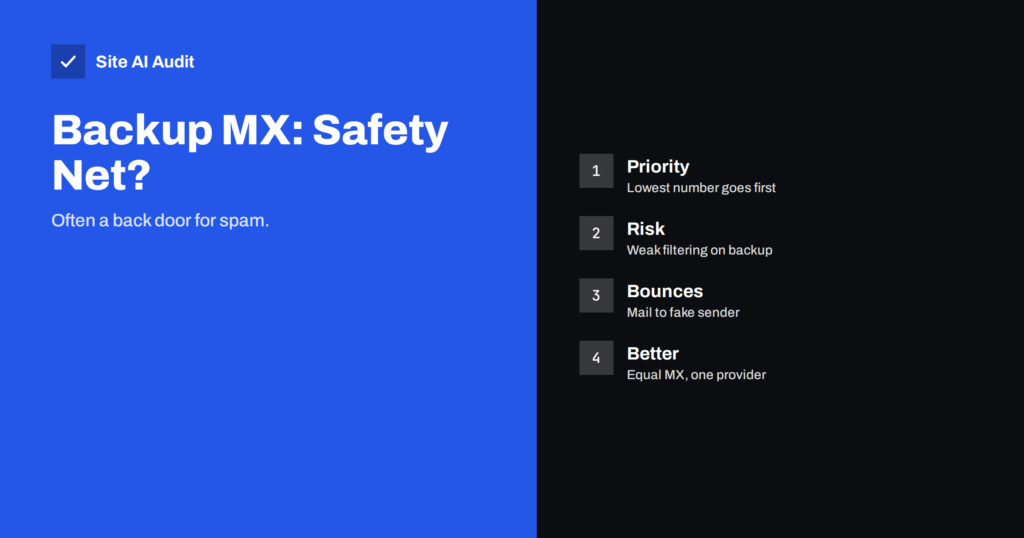
Backup MX Servers: Why a Secondary MX Can Hurt You
A backup MX sounds like insurance for your email, but it often lets spam in and creates bounces. Learn how MX priority works and…
 Oct 14, 2026 · 8 min read
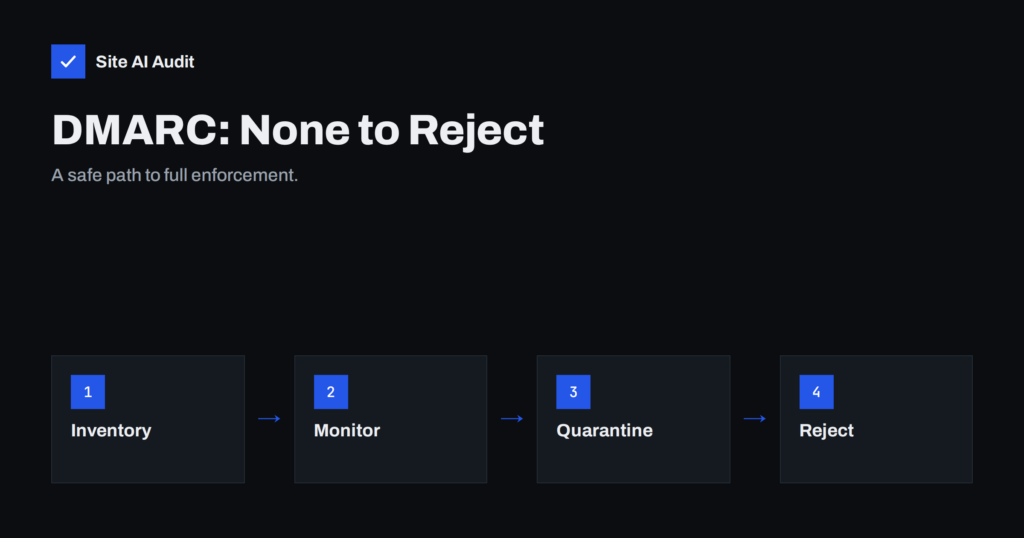
DMARC Policy: How to Move From p=none to Reject Safely
Stuck at p=none? Follow a safe plan to move DMARC to quarantine and reject without blocking real email, and learn what to check before…
 Oct 13, 2026 · 7 min read
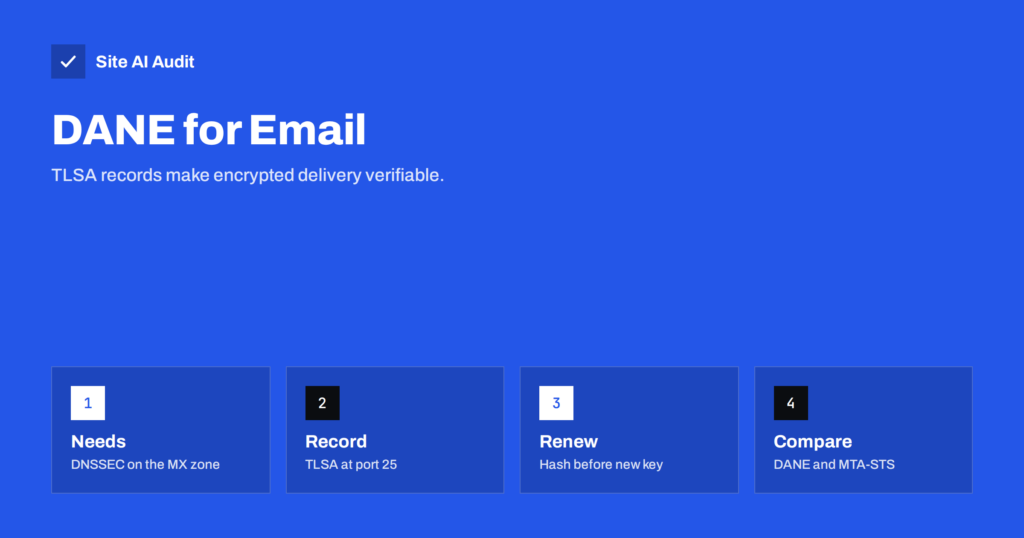
DANE for Email: How TLSA Records Compare to MTA-STS
DANE uses DNSSEC and TLSA records to make mail servers insist on encrypted, verified delivery. Learn how it works, what it needs and how…