 ENEnglish
 LTLietuviškai
 DEDeutsch
 FRFrançais
 RUРусский
 ESEspañol
 PLPolski
 ITItaliano
 UKУкраїнська
 CSČeština
 PTPortuguês
 JA日本語
 LVLatviešu valoda
 ETEesti
 HUMagyar
 IDBahasa Indonesia
 TRTürkçe
 HIहिन्दी
 ELΕλληνικά
 ARالعربية
 THไทย
 VITiếng Việt
 RORomână
 MSBahasa Melayu
 BNবাংলা
#HTTPS
HTTPS is the encrypted version of HTTP that every modern website is expected to use. Articles tagged here explain how HTTPS protects visitors and what browsers do when it is missing or broken. They cover redirects from HTTP, mixed content, HSTS and moving an existing site to HTTPS. You will find step-by-step instructions for common servers, hosting panels and content management systems. Each guide also explains how to verify that the change really works. Use these articles whenever a browser shows a padlock problem or a Not Secure label.
 19 нояб. 2026 г. · Время чтения: 8 мин
“The Website Does Not Work Over HTTPS”: A Critical Audit Finding
A critical Site AI Audit finding says your website does not work over HTTPS. See what triggers it, the usual causes and the steps…
 16 нояб. 2026 г. · Время чтения: 8 мин
Mixed Content and HTTP Redirect Findings: Fix Insecure Pages
Learn what the Site AI Audit warnings about mixed content and a missing HTTP to HTTPS redirect mean, why they matter and how to…
 15 нояб. 2026 г. · Время чтения: 8 мин
Security Header Findings: HSTS, CSP, Frame and Referrer Policy
Five small headers harden every page. See how Site AI Audit reports missing HSTS, CSP, frame, referrer and nosniff headers and how to add…
 14 нояб. 2026 г. · Время чтения: 8 мин
SSL Certificate Findings: Expired, Expiring, Wrong Name
Learn how Site AI Audit reports SSL certificate problems: expired, expiring soon, untrusted or issued for the wrong name, and exactly how to fix…
 10 нояб. 2026 г. · Время чтения: 8 мин
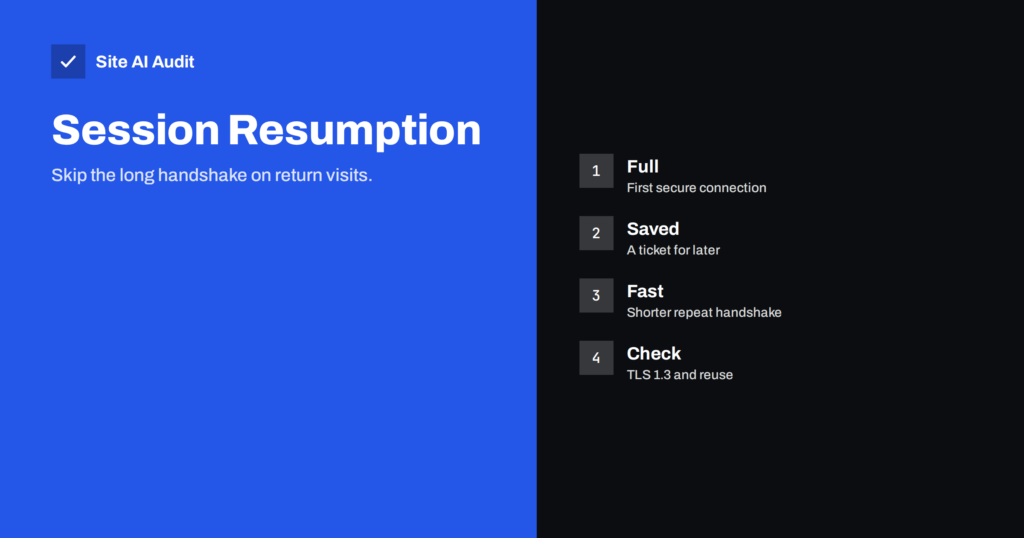
TLS Session Resumption: Faster HTTPS Connections
Every new HTTPS connection starts with a handshake that costs time. Learn how session resumption, TLS 1.3 and connection reuse make repeat visits faster.
 4 нояб. 2026 г. · Время чтения: 8 мин
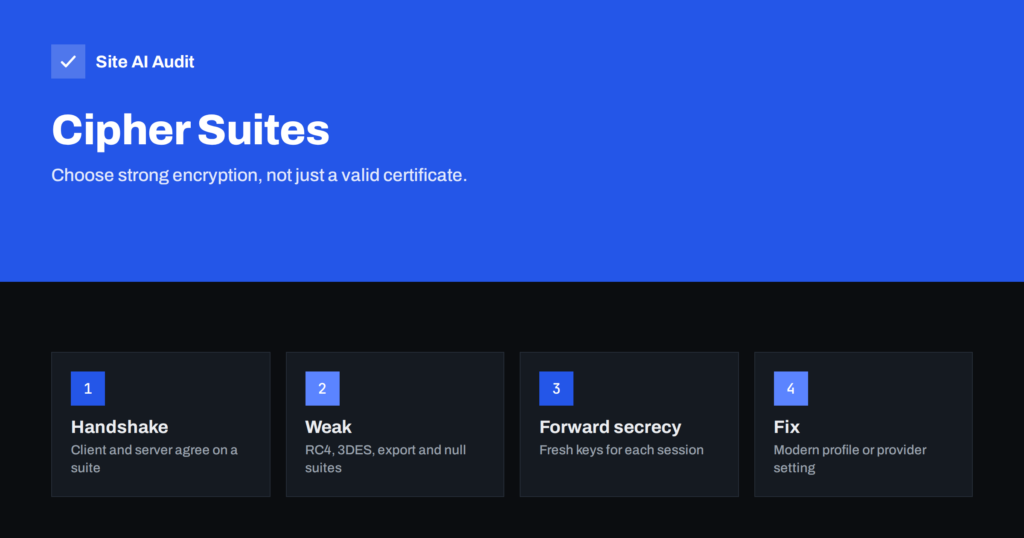
Weak TLS Cipher Suites and Forward Secrecy Explained
A valid certificate does not guarantee strong encryption. Learn what cipher suites are, why forward secrecy matters and which weak settings to switch off.
 31 окт. 2026 г. · Время чтения: 8 мин
Cache-Control for Private Pages: no-store, private, no-cache
The wrong cache rules can show one user's account page to another or keep private data on shared computers. Learn what no-store, private and…
 14 окт. 2026 г. · Время чтения: 7 мин
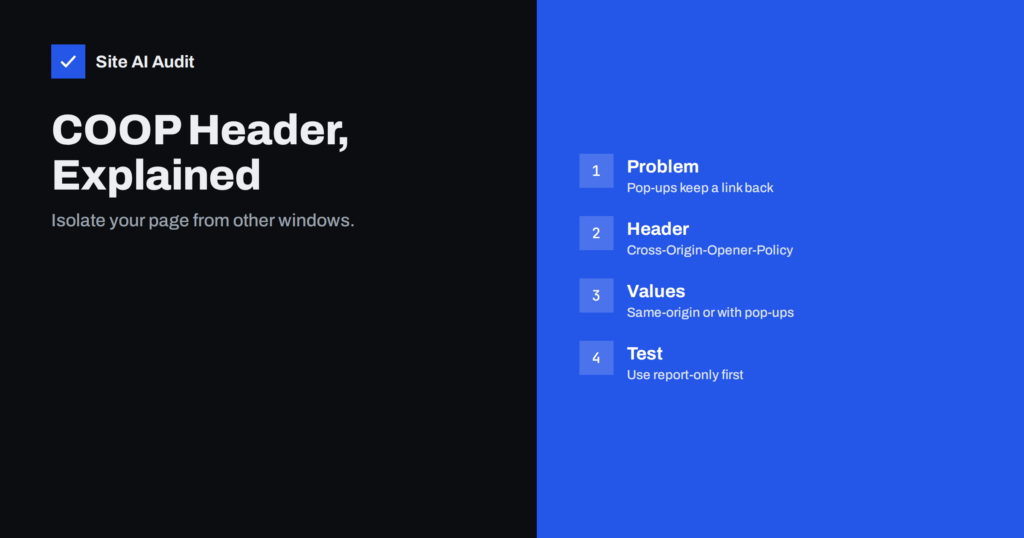
Cross-Origin-Opener-Policy: What COOP Does and When to Use It
COOP is a security header that separates your pages from windows opened by other sites. Learn its values, what it can break and how…
 11 окт. 2026 г. · Время чтения: 7 мин
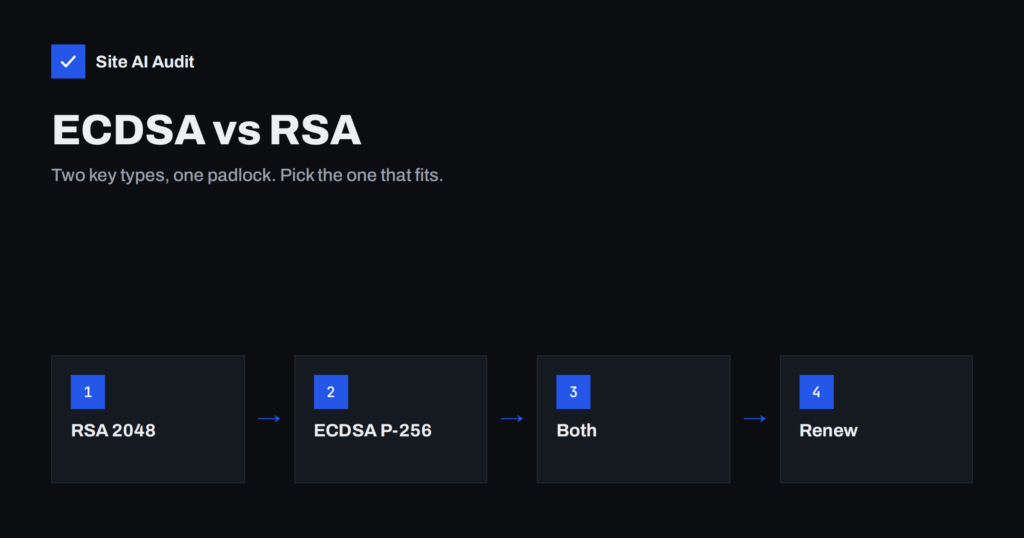
ECDSA vs RSA SSL Certificates: Which Key Type Should You Use?
SSL certificates use either RSA or ECDSA keys. Learn how they differ in speed, security and compatibility, and when serving both certificates makes sense.
 1 окт. 2026 г. · Время чтения: 8 мин
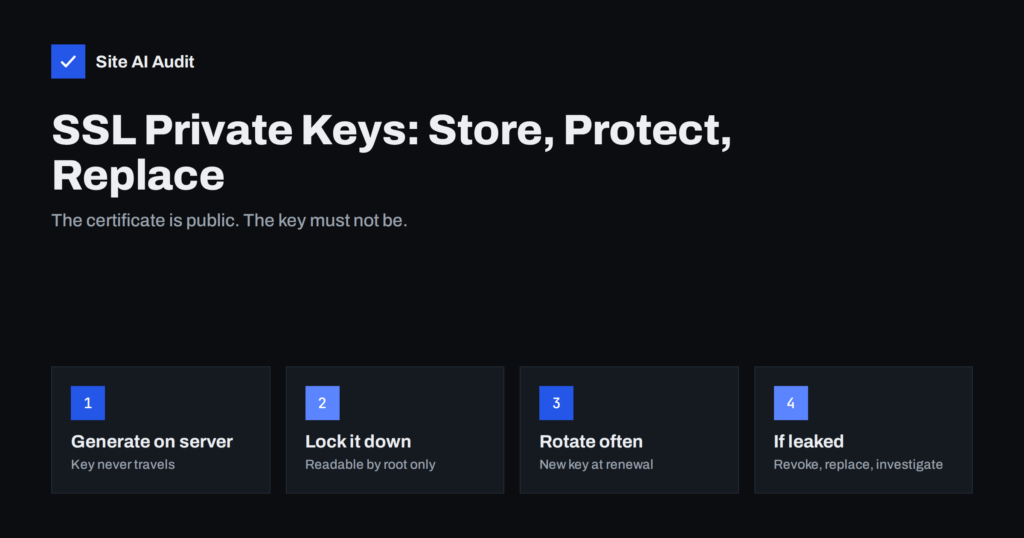
SSL Private Keys: How to Store, Protect and Replace Them
Your SSL certificate is only as safe as its private key. Learn where keys should live, who may access them, and what to do…
 1 окт. 2026 г. · Время чтения: 8 мин
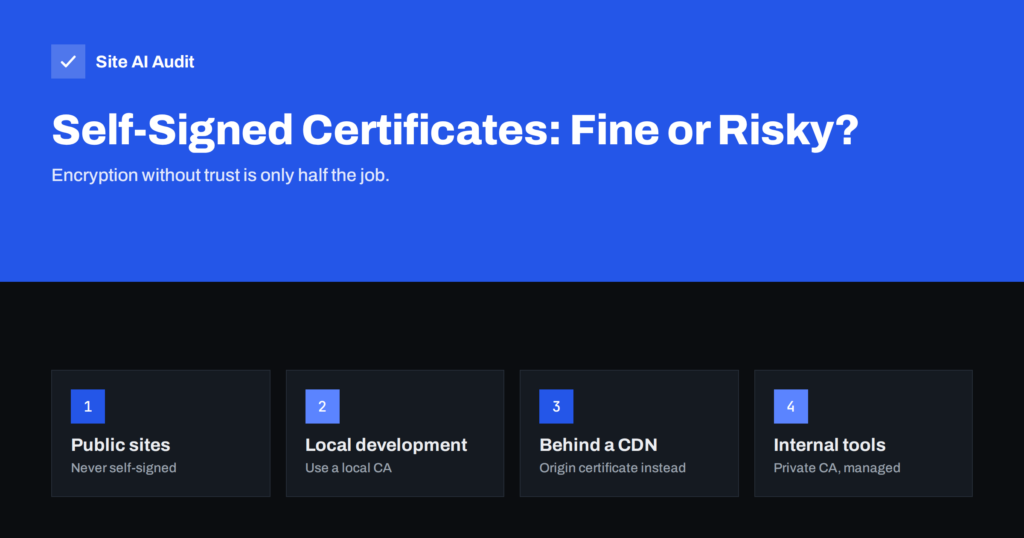
Self-Signed SSL Certificates: When Are They Acceptable?
Self-signed certificates encrypt traffic but browsers do not trust them. Learn where they are acceptable, where they are risky, and the better free options.
 30 сент. 2026 г. · Время чтения: 8 мин
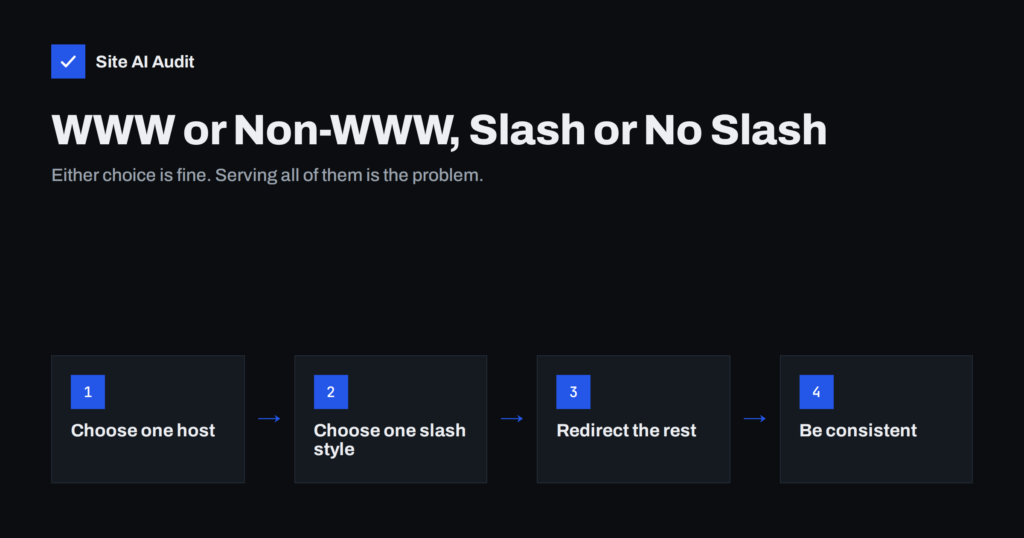
WWW or Non-WWW, Slash or No Slash: Pick One URL Version
WWW or not, trailing slash or not: search engines treat each variant as a separate URL. Learn how to pick one version, redirect the…