 ENEnglish
 LTLietuviškai
 DEDeutsch
 FRFrançais
 RUРусский
 ESEspañol
 PLPolski
 ITItaliano
 UKУкраїнська
 CSČeština
 PTPortuguês
 JA日本語
 LVLatviešu valoda
 ETEesti
 HUMagyar
 IDBahasa Indonesia
 TRTürkçe
 HIहिन्दी
 ELΕλληνικά
 ARالعربية
 THไทย
 VITiếng Việt
 RORomână
 MSBahasa Melayu
 BNবাংলা
#DKIM
DKIM (DomainKeys Identified Mail) adds a cryptographic signature to every outgoing message. The public key is published in DNS under a selector, and receiving servers use it to confirm that the message was signed by the domain and not altered on the way. Each sending service, such as a mail host or a newsletter platform, usually needs its own DKIM key. DKIM survives most forwarding, which makes it the most reliable basis for DMARC alignment. The articles under this tag explain setup, key length, rotation and signature failures.
 14 nov. 2026 · 7 min de citit
DKIM Key Not Found: What This Site AI Audit Notice Means
"No DKIM key found at common selectors" is a notice in your Site AI Audit report. Learn what it checks, why it can be…
 11 nov. 2026 · 7 min de citit
Gmail Send Mail As: Using Your Domain Without Failing DMARC
Sending from your own domain through a Gmail account can fail SPF, DKIM or DMARC checks. Learn the safe setups, the pitfalls and how…
 5 nov. 2026 · 8 min de citit
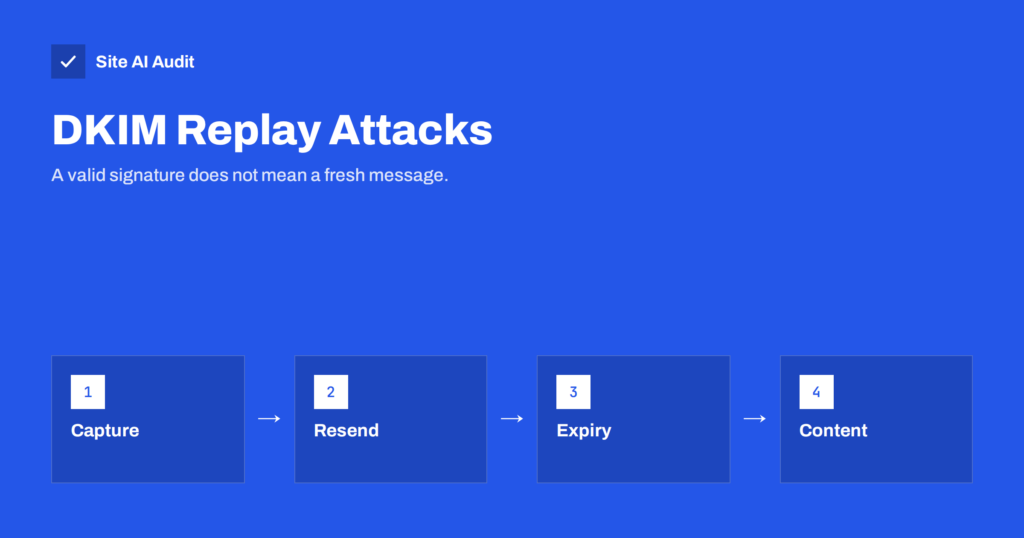
DKIM Replay Attacks: When a Signed Email Is Sent Again
A DKIM replay attack resends a genuine signed email to new victims, so it still passes authentication. Learn how it works and how senders…
 4 nov. 2026 · 8 min de citit
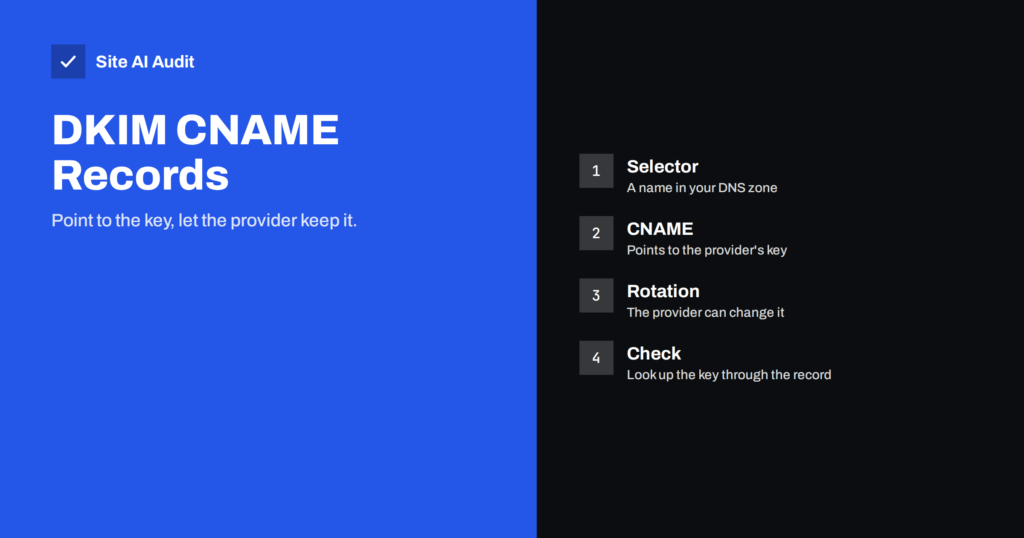
DKIM CNAME Records: Keys Your Email Provider Manages
Many email providers ask you to publish DKIM as CNAME records instead of a text key. Learn how this works, what it saves you…
 26 oct. 2026 · 8 min de citit
DNS TXT Records Over 255 Characters: Splitting DKIM and SPF
A long DKIM key will not fit in one 255-character string. See how TXT records are split into strings, how receivers join them and…
 7 oct. 2026 · 8 min de citit
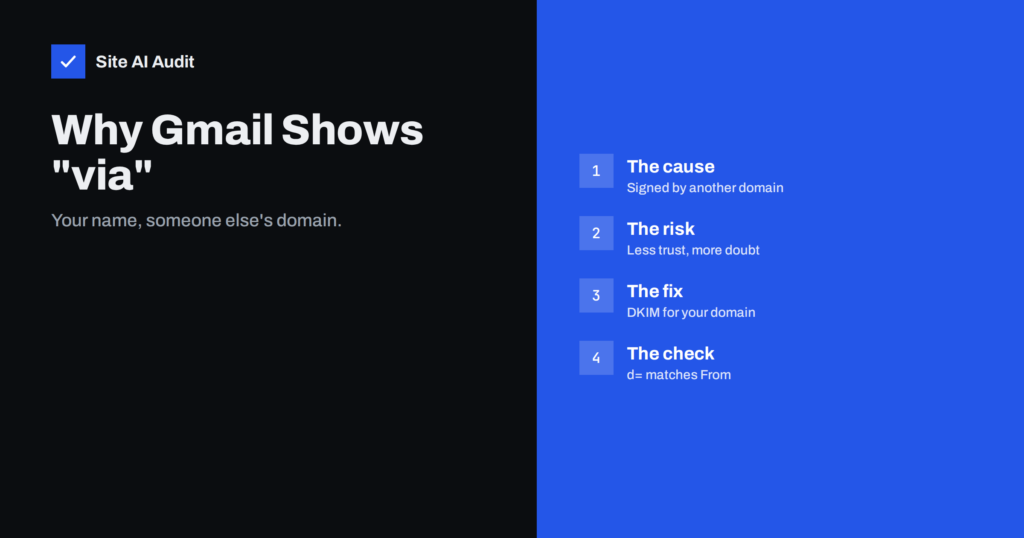
Why Gmail Shows “via” Next to Your Sender Name and How to Fix It
Gmail adds "via" and another domain next to your name when the sending service does not sign mail for your domain. Learn why it…
 4 oct. 2026 · 8 min de citit
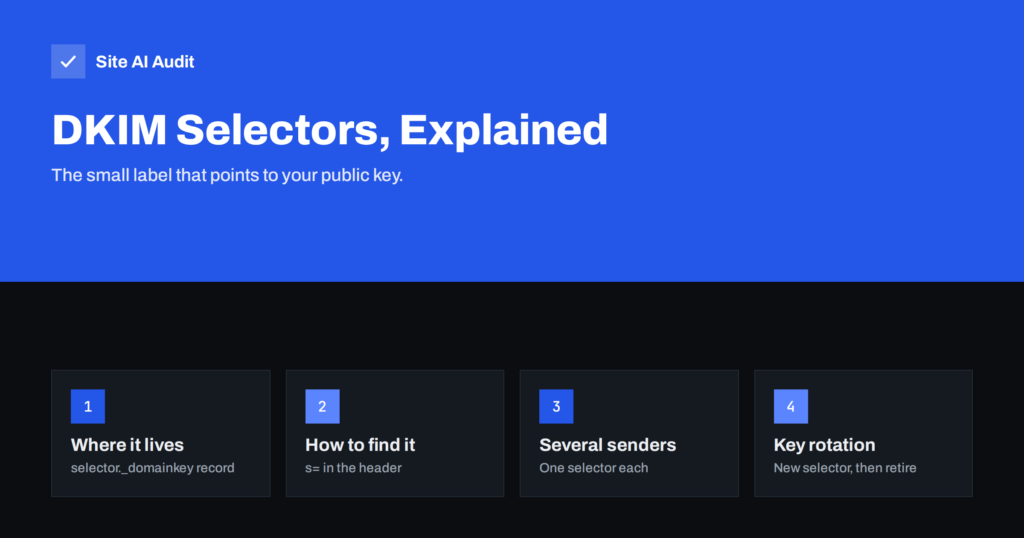
DKIM Selectors Explained: How to Find Yours and Use Several
A DKIM selector tells receivers where to find your public key. Learn how to find the selector you use, run several senders and rotate…
 29 sept. 2026 · 7 min de citit
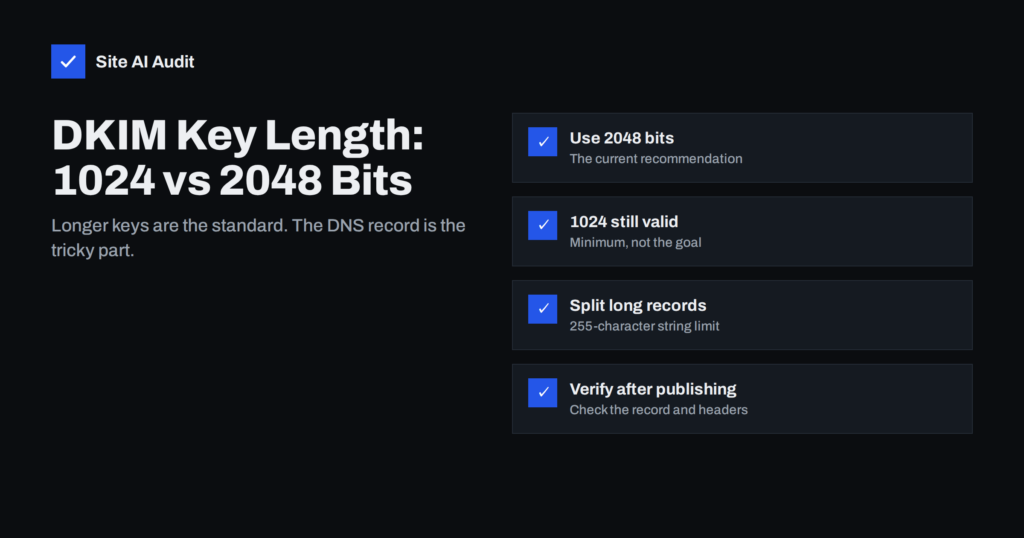
DKIM Key Length: 1024 vs 2048 Bits and Long DNS Records
Should your DKIM key be 1024 or 2048 bits? Learn what the standard recommends, how to publish long keys in DNS without errors and…
 19 sept. 2026 · 7 min de citit
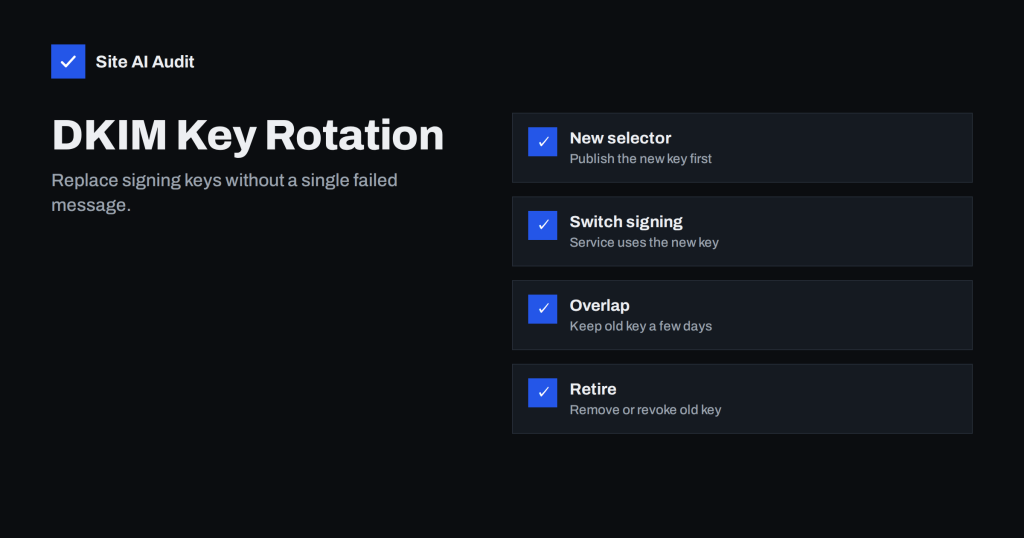
DKIM Key Rotation: When and How to Replace Your Keys Safely
DKIM keys should not live forever. Learn why to rotate them, how often, and a step-by-step process that replaces keys without breaking e-mail delivery.
 14 sept. 2026 · 7 min de citit
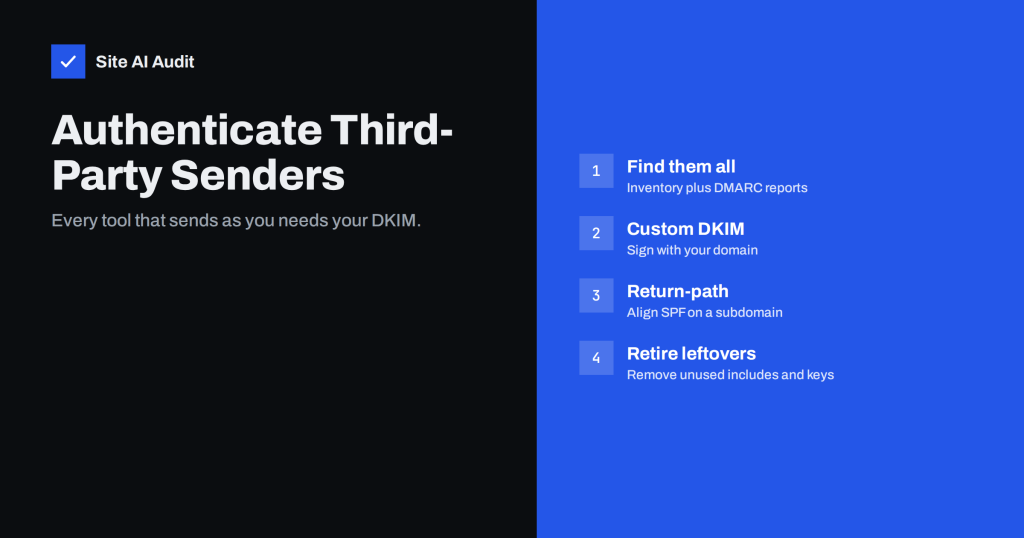
How to Authenticate Third-Party Email Senders for Your Domain
CRMs, helpdesks, newsletter and invoicing tools often send as your domain without proper authentication. Learn how to find them and align each with DMARC.
 11 sept. 2026 · 8 min de citit
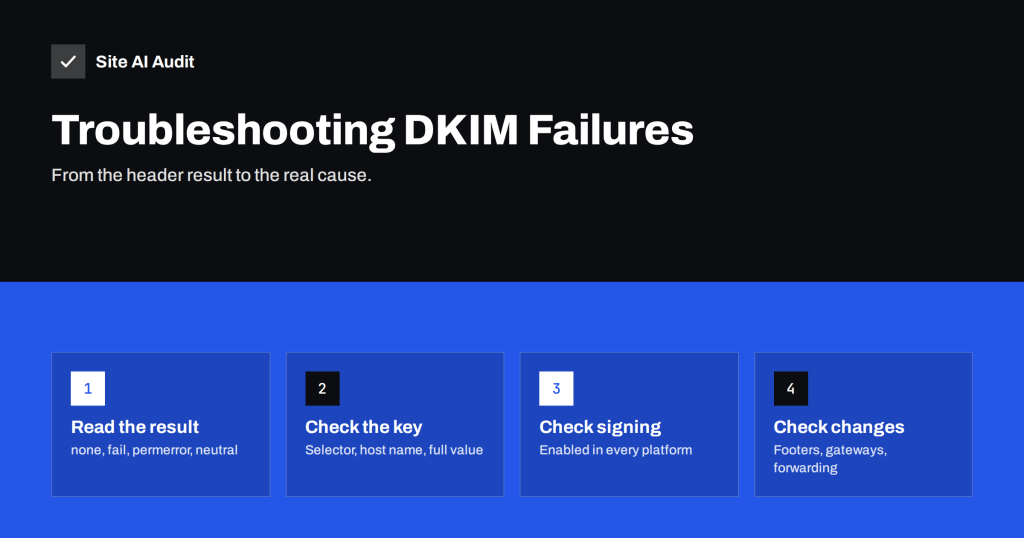
DKIM Failing? How to Troubleshoot dkim=fail and dkim=none
A step-by-step guide to fixing DKIM failures: missing keys, wrong selectors, truncated records, modified messages and signatures that use the wrong domain.
 8 sept. 2026 · 8 min de citit
DMARC Alignment Explained: Relaxed vs Strict Mode
DMARC passes only when SPF or DKIM aligns with your From domain. Learn how relaxed and strict alignment differ, and which mode suits your…