 ENEnglish
 LTLietuviškai
 DEDeutsch
 FRFrançais
 RUРусский
 ESEspañol
 PLPolski
 ITItaliano
 UKУкраїнська
 CSČeština
 PTPortuguês
 JA日本語
 LVLatviešu valoda
 ETEesti
 HUMagyar
 IDBahasa Indonesia
 TRTürkçe
 HIहिन्दी
 ELΕλληνικά
 ARالعربية
 THไทย
 VITiếng Việt
 RORomână
 MSBahasa Melayu
 BNবাংলা
#WordPress security
WordPress powers a large share of the web, which makes it a frequent target for automated attacks. Articles tagged here explain how to protect a WordPress site without turning it into a maintenance burden. They cover updates, plugins, themes, user accounts, login protection, file permissions and backups. Each guide separates the measures that really matter from the ones that only look reassuring. The advice works for small business sites, blogs and online shops alike. Read them before and after installing a new plugin or theme.
 27 de out. de 2026 · 8 min de leitura
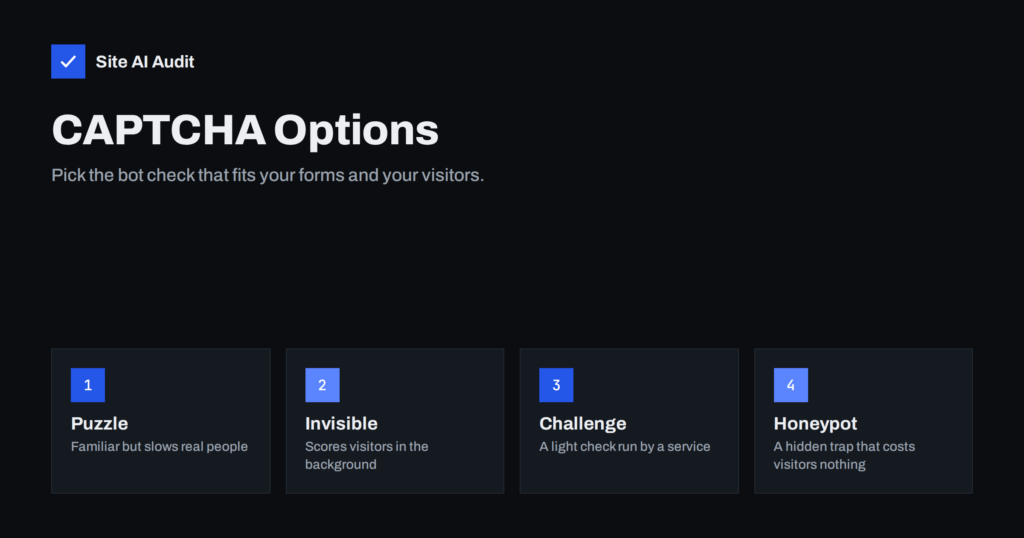
CAPTCHA Options Compared: reCAPTCHA, Turnstile, Honeypots
Which bot check suits your forms? Compare puzzle CAPTCHAs, invisible scoring, challenge services and honeypots on spam blocked, privacy, speed and access.
 27 de out. de 2026 · 8 min de leitura
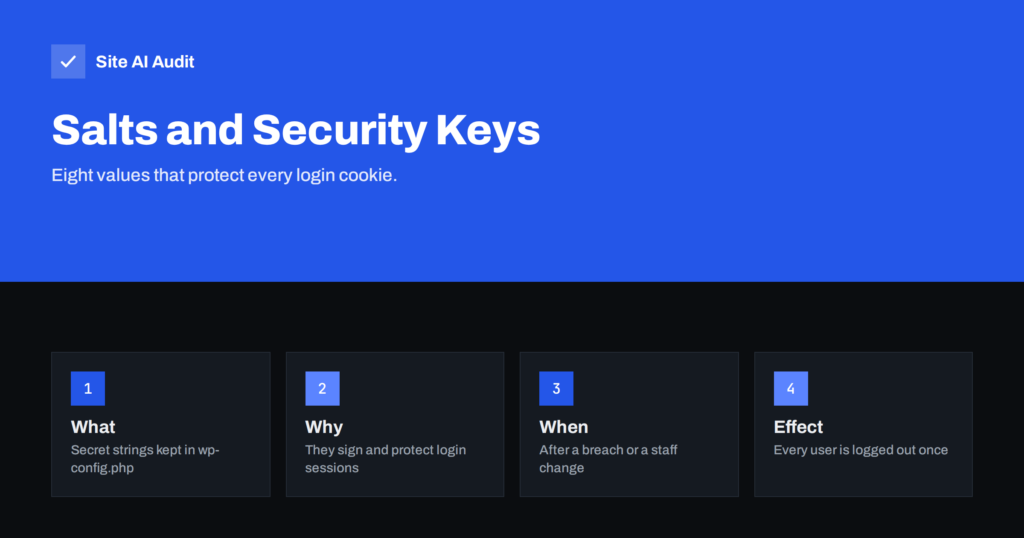
WordPress Salts and Security Keys: When to Change Them
WordPress keys and salts protect login cookies. See what the eight values do, when to replace them, what happens to logged-in users and how…
 26 de out. de 2026 · 8 min de leitura
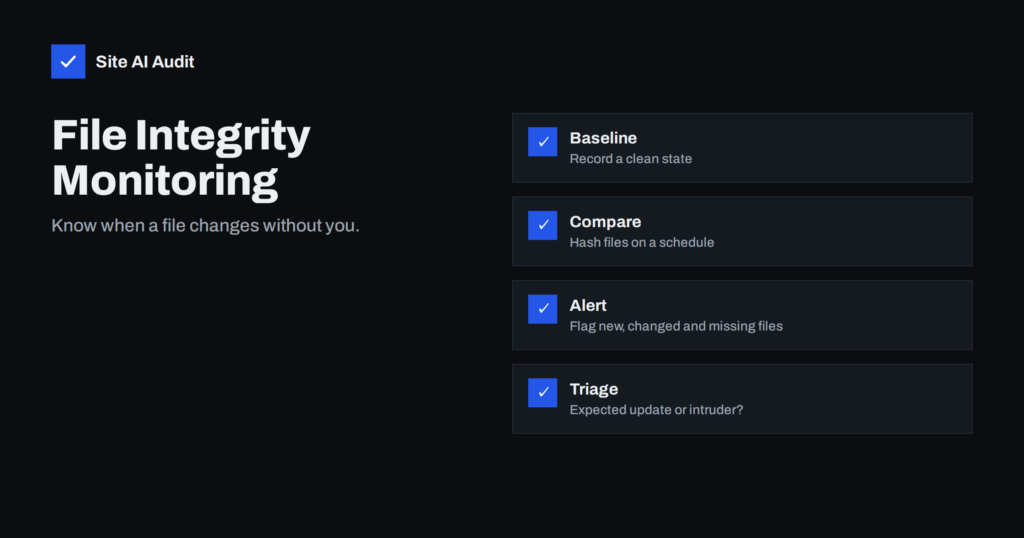
File Integrity Monitoring: Spot Changed Files on Your Website
Hackers often leave new or altered files behind. Learn how file integrity monitoring compares your files with a clean baseline and how to react…
 26 de out. de 2026 · 8 min de leitura
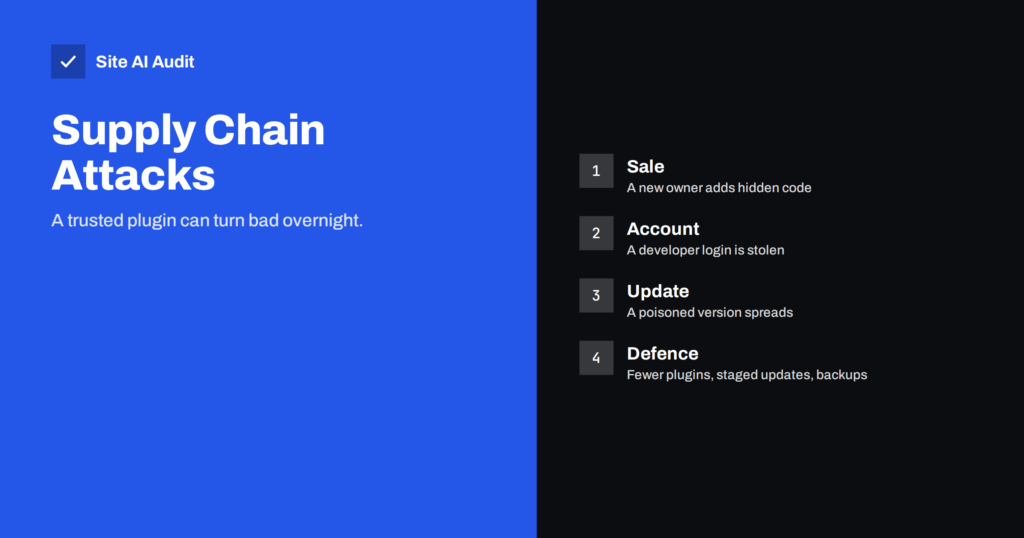
Plugin Supply Chain Attacks: When a Trusted Update Turns Bad
A plugin you trusted can turn harmful after a sale, a stolen account or a poisoned update. See how these attacks work and how…
 25 de out. de 2026 · 8 min de leitura
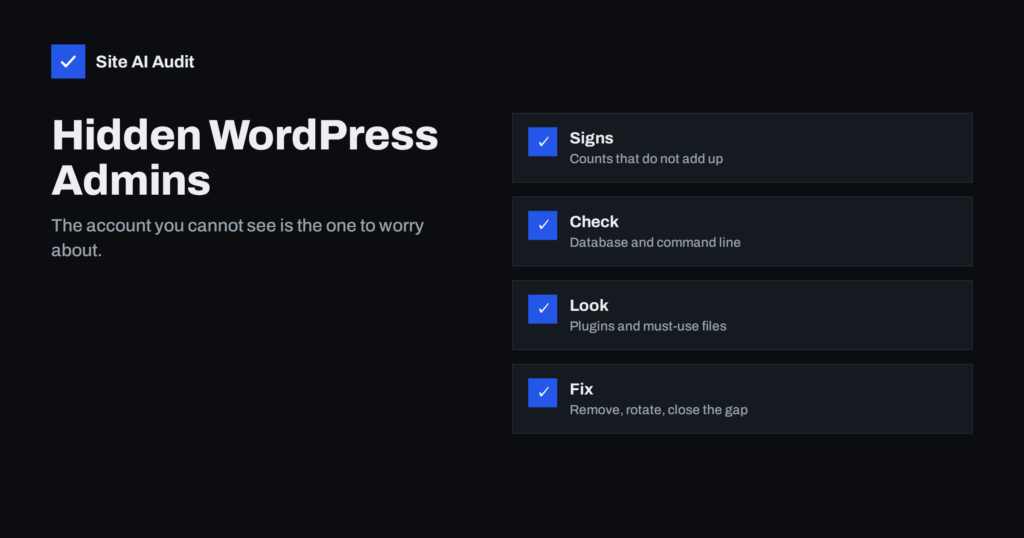
Hidden Admin Users in WordPress: How to Find Them
Attackers often add an administrator account and hide it from the Users screen. Learn the warning signs, how to find hidden admins and what…
 24 de out. de 2026 · 8 min de leitura
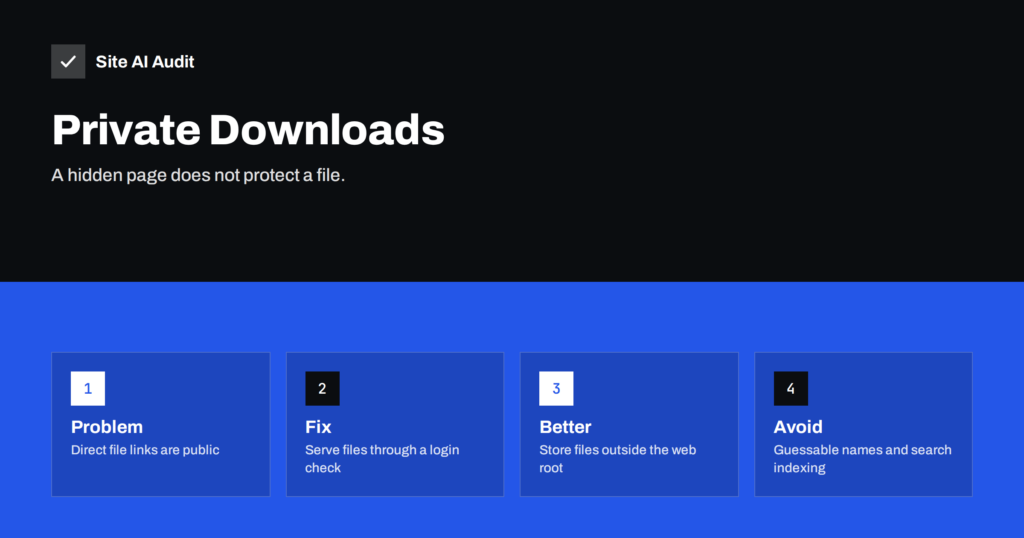
Protecting Private Downloads on a WordPress Website
Files in the WordPress uploads folder are public to anyone with the link, even on a members-only page. Learn how to protect private downloads…
 24 de out. de 2026 · 8 min de leitura
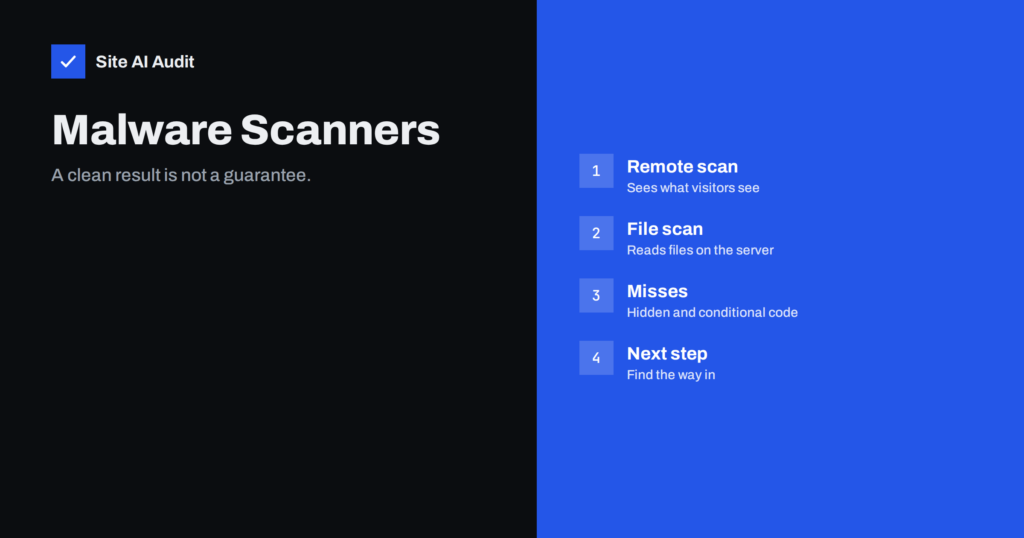
Website Malware Scanners: What They Catch and What They Miss
A clean scan does not always mean a clean website. Learn how malware scanners work, where they fail and what to do next when…
 24 de out. de 2026 · 8 min de leitura
WordPress REST API Security: What to Expose and Restrict
The WordPress REST API is on by default and shows more than many owners expect. Learn what it exposes, what can stay public and…
 23 de out. de 2026 · 8 min de leitura
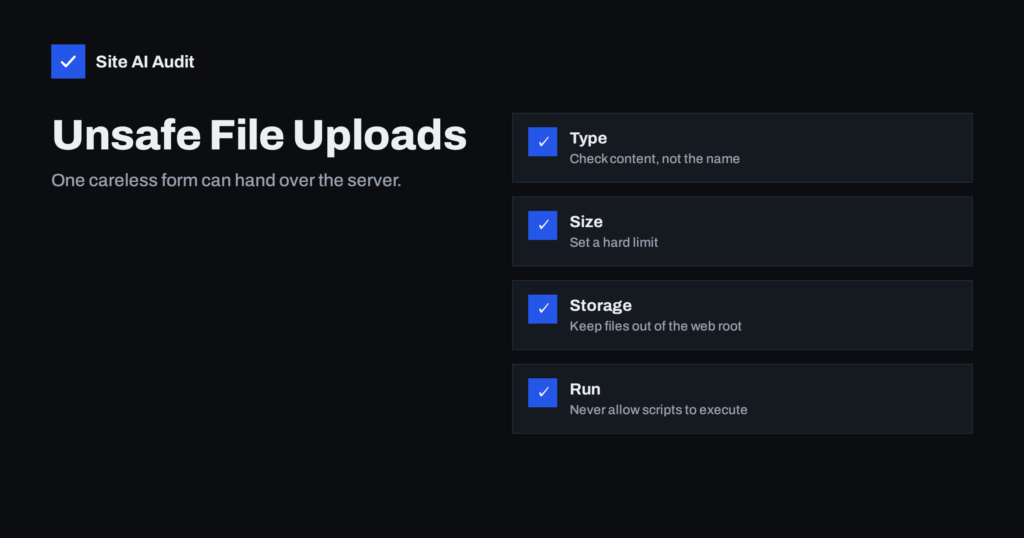
Unrestricted File Upload Vulnerabilities and How to Block Them
A careless upload form can let attackers place a script on your server. Learn how file upload flaws work and the checks that keep…
 21 de out. de 2026 · 8 min de leitura
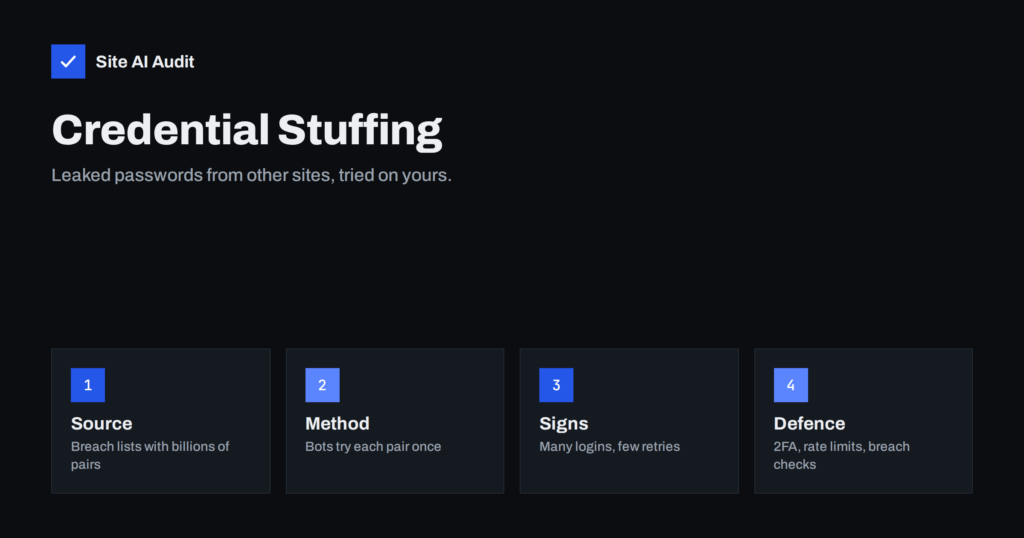
Credential Stuffing: Why Leaked Passwords Threaten Your Site
Credential stuffing uses passwords leaked elsewhere to log in to your site. Learn how it differs from brute force, how to spot it and…
 20 de out. de 2026 · 8 min de leitura
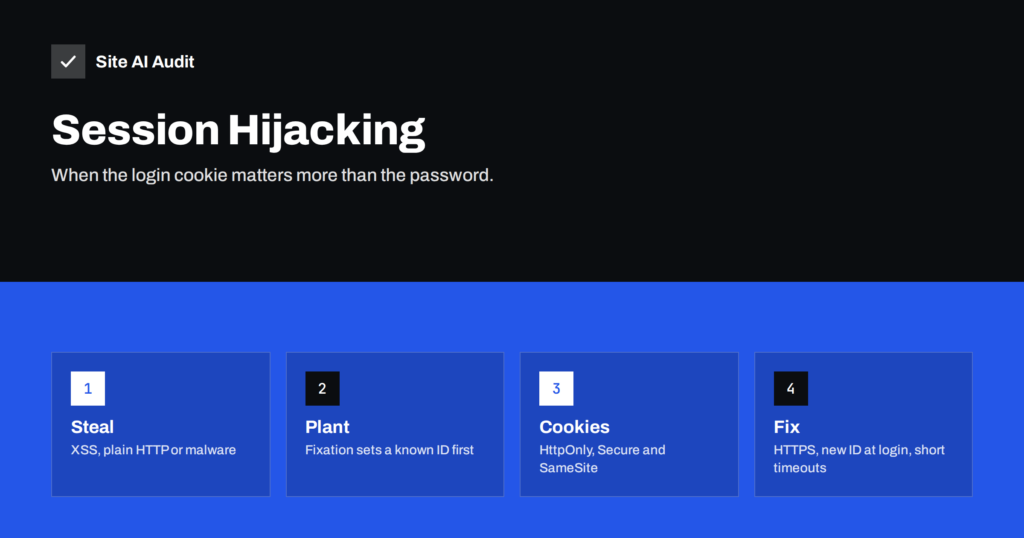
Session Hijacking and Fixation: Protect Logged-In Users
A stolen or planted session ID lets an attacker act as a logged-in user without a password. Learn how these attacks work and the…
 20 de out. de 2026 · 8 min de leitura
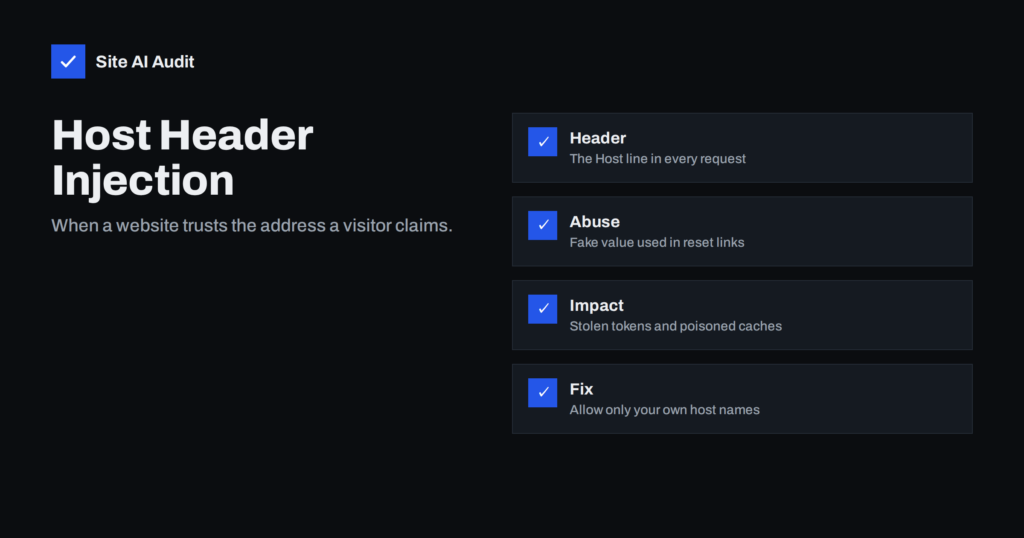
Host Header Injection: How Password Reset Links Get Hijacked
A forged Host header can make a site send password reset links that point to an attacker. Learn how the attack works and how…