 ENEnglish
 LTLietuviškai
 DEDeutsch
 FRFrançais
 RUРусский
 ESEspañol
 PLPolski
 ITItaliano
 UKУкраїнська
 CSČeština
 PTPortuguês
 JA日本語
 LVLatviešu valoda
 ETEesti
 HUMagyar
 IDBahasa Indonesia
 TRTürkçe
 HIहिन्दी
 ELΕλληνικά
 ARالعربية
 THไทย
 VITiếng Việt
 RORomână
 MSBahasa Melayu
 BNবাংলা
Drošība un SSL
The security basics every website should have, explained without jargon. We cover SSL certificates and their expiry, HTTPS redirects, security headers and software versions that should not be visible. Articles show what visitors see when something is wrong and how browsers warn them away. Each guide gives clear steps you can hand to your host or developer. We also explain how monitoring catches an expiring certificate before customers notice. A safe site protects both your visitors and your search rankings.
 2026. gada 17. okt. · Lasīšanas laiks: 8 min
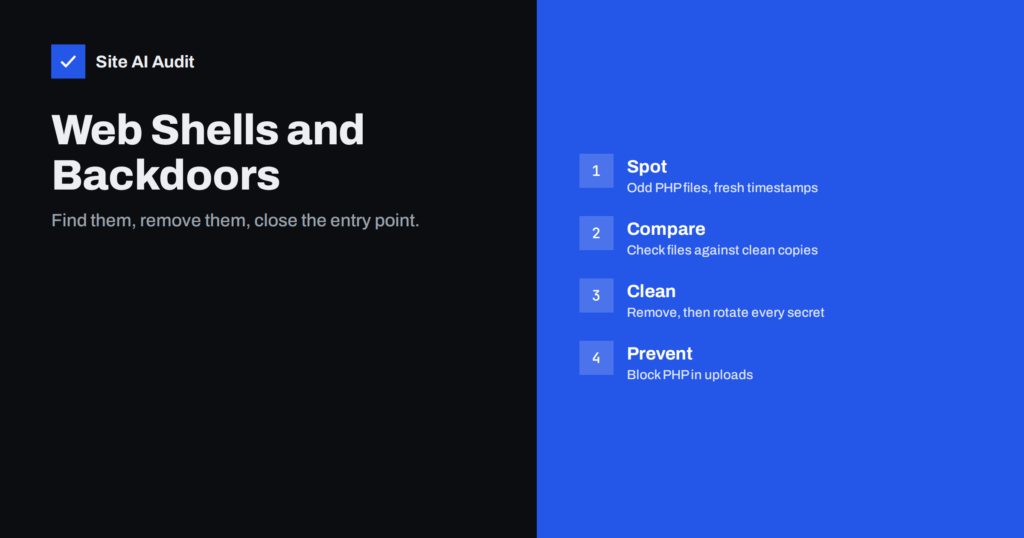
Web Shells and Backdoors: How to Find and Remove Them
A web shell gives an attacker remote control of your server and often survives a cleanup. Learn how to spot one, remove it properly…
 2026. gada 16. okt. · Lasīšanas laiks: 8 min
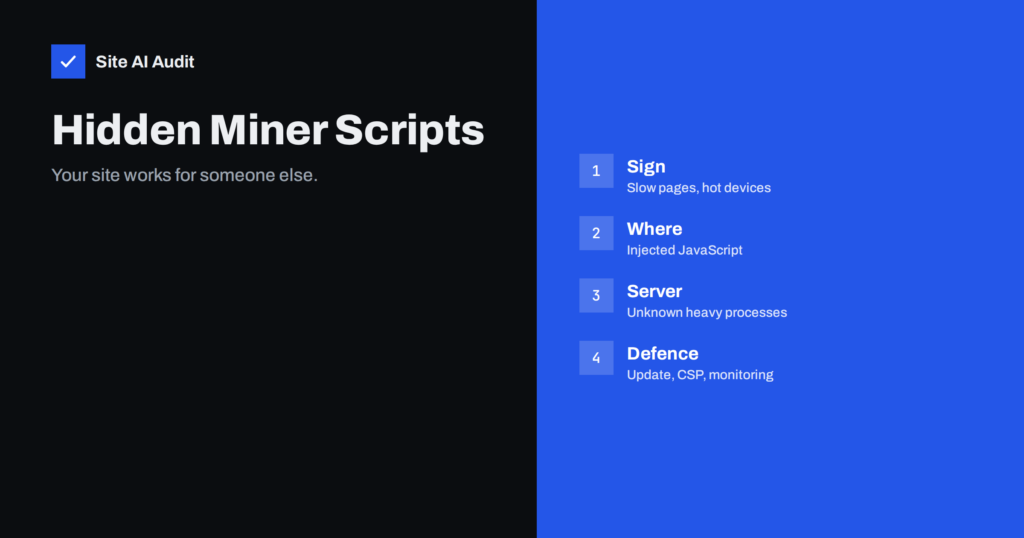
Cryptojacking: Hidden Miner Scripts on Your Website
Hidden scripts can use your visitors' devices or your server to mine cryptocurrency. Learn the warning signs, how to find them and how to…
 2026. gada 16. okt. · Lasīšanas laiks: 7 min
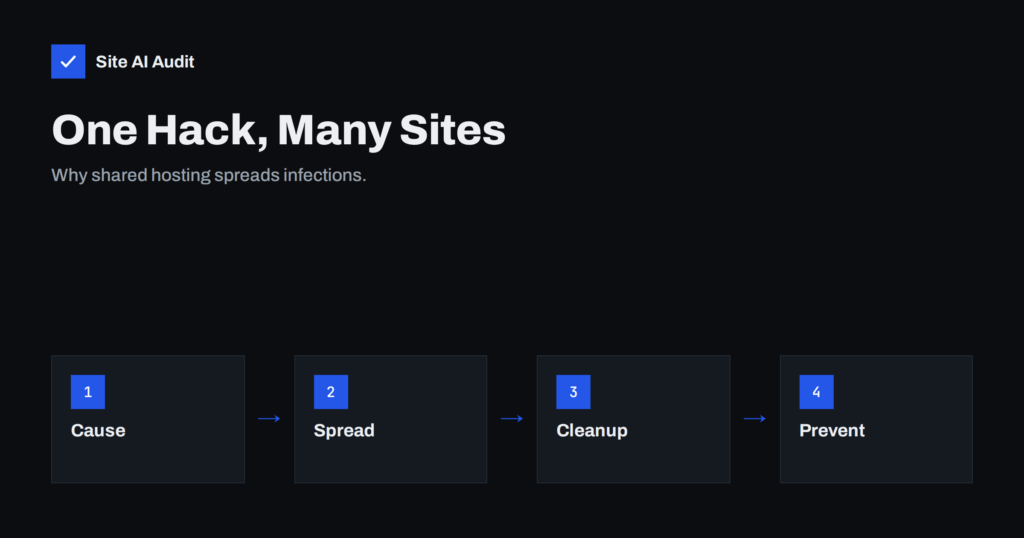
Shared Hosting Security: How One Hacked Site Infects Others
Several sites in one hosting account can fall together when one is hacked. Learn how cross-site infection happens and how to isolate your websites.
 2026. gada 16. okt. · Lasīšanas laiks: 7 min
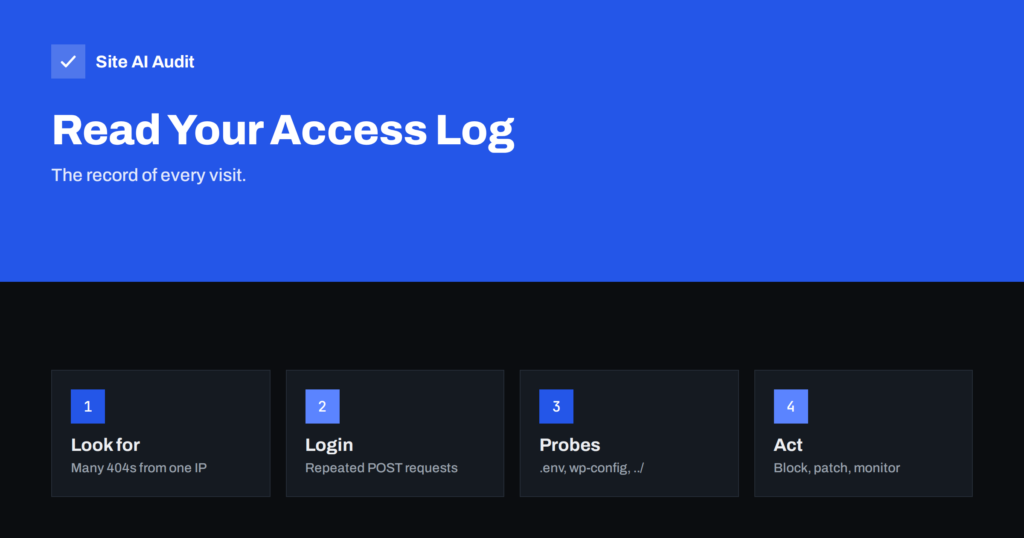
How to Read Web Server Access Logs to Spot Attacks
Your access log records every request to your site. Learn what each line means and which patterns reveal scanners, brute force and injection attempts.
 2026. gada 15. okt. · Lasīšanas laiks: 8 min
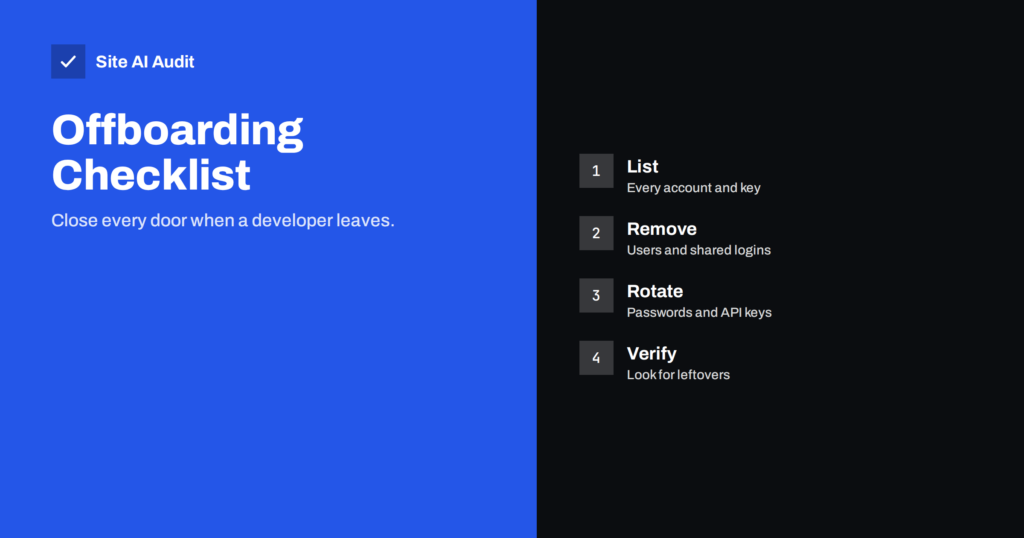
Website Access Offboarding: Remove Ex-Developers Safely
When a developer or agency leaves, their access often stays. Use this checklist to remove old logins, rotate keys and secure your website step…
 2026. gada 15. okt. · Lasīšanas laiks: 8 min
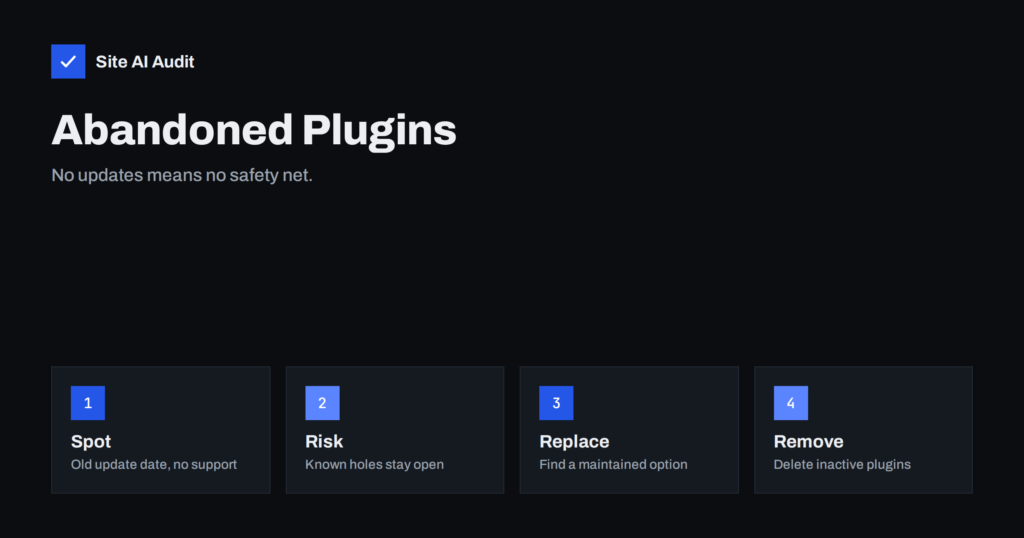
Abandoned WordPress Plugins: How to Spot and Replace Them
A plugin that is no longer updated can become an open door for attackers. Learn how to spot abandoned WordPress plugins and replace them…
 2026. gada 15. okt. · Lasīšanas laiks: 8 min
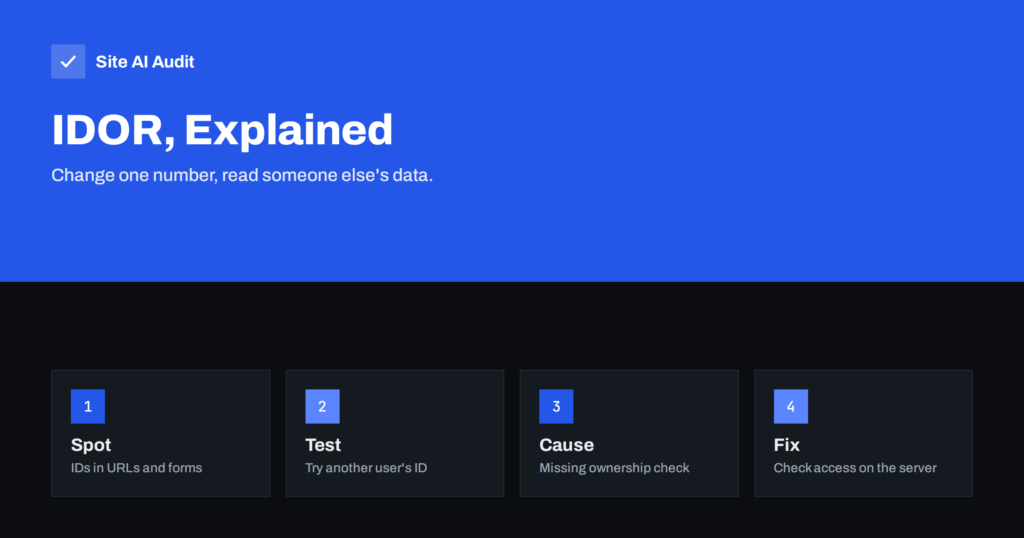
IDOR Vulnerability Explained: Broken Access Control Basics
An IDOR lets a visitor open other people's data by changing an ID in the address. Learn how broken access control works and how…
 2026. gada 14. okt. · Lasīšanas laiks: 8 min
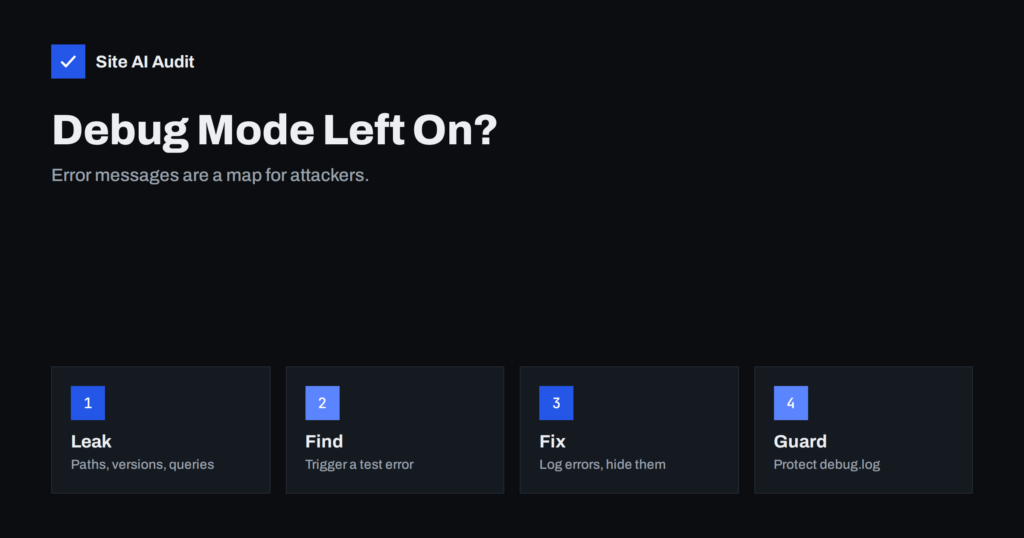
Exposed Error Messages and Debug Mode: Hide Them Now
PHP warnings, stack traces and debug logs give attackers a map of your site. Learn how to find exposed errors and switch debug mode…
 2026. gada 14. okt. · Lasīšanas laiks: 7 min
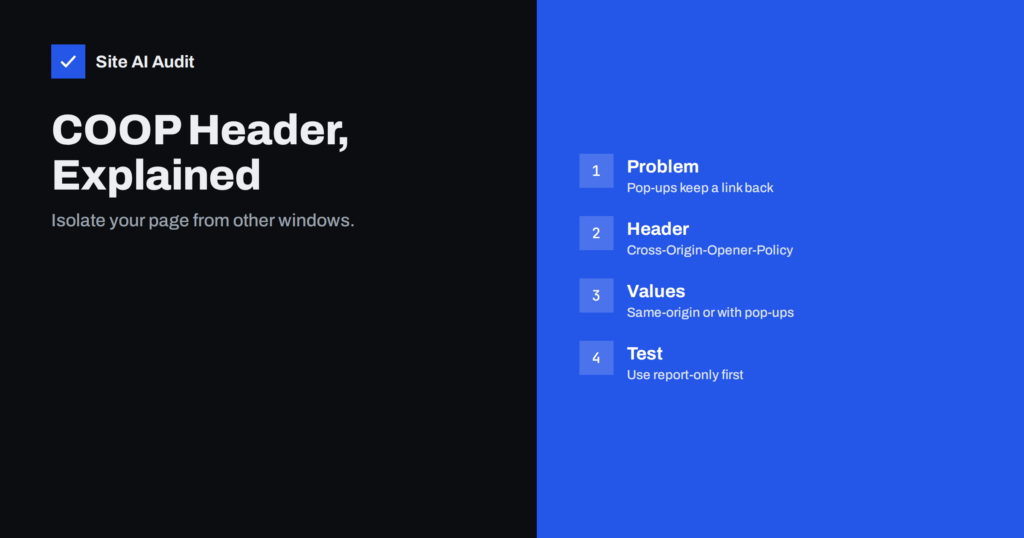
Cross-Origin-Opener-Policy: What COOP Does and When to Use It
COOP is a security header that separates your pages from windows opened by other sites. Learn its values, what it can break and how…
 2026. gada 14. okt. · Lasīšanas laiks: 7 min
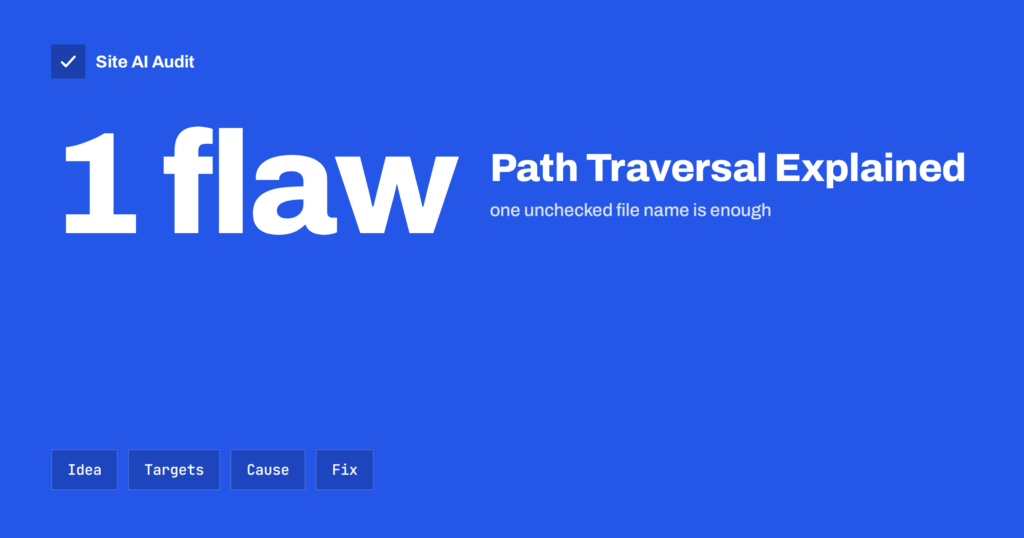
Path Traversal Attacks Explained: How to Stop Them
Path traversal lets attackers read files outside the web folder using ../ tricks. Learn how it works, how to spot it in logs and…
 2026. gada 13. okt. · Lasīšanas laiks: 8 min
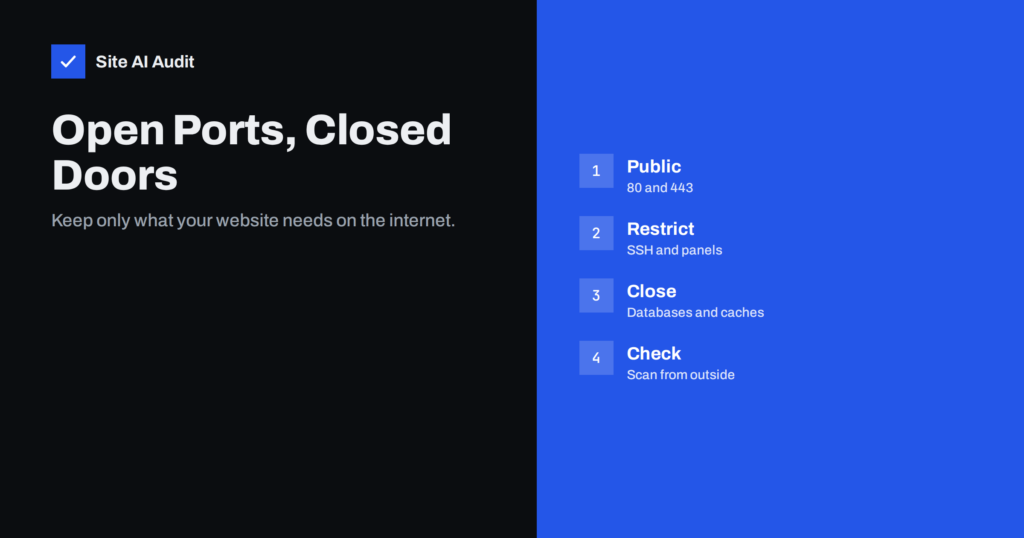
Open Ports on Your Web Server: Which Ones to Close
Every open port on your server is a door to the internet. Learn which ports a website needs, which to close or restrict, and…
 2026. gada 12. okt. · Lasīšanas laiks: 7 min
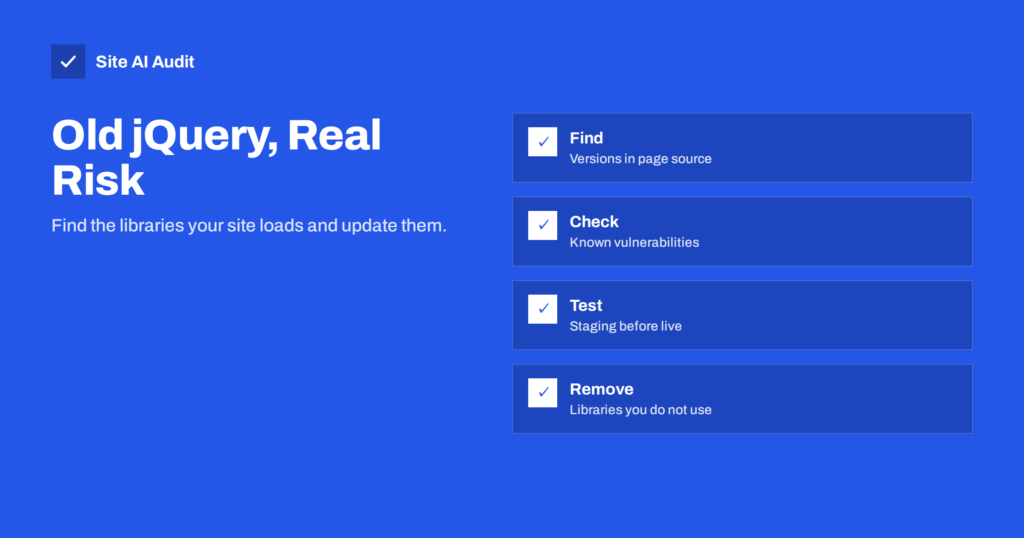
Outdated JavaScript Libraries: Why Old jQuery Is a Risk
Old jQuery, Bootstrap and other front-end libraries carry known security flaws. Learn how to find the versions your site loads and update them safely.