ENEnglish
 LTLietuviškai
 DEDeutsch
 FRFrançais
 RUРусский
 ESEspañol
 PLPolski
 ITItaliano
 UKУкраїнська
 CSČeština
 PTPortuguês
 JA日本語
 LVLatviešu valoda
 ETEesti
 HUMagyar
 IDBahasa Indonesia
 TRTürkçe
 HIहिन्दी
 ELΕλληνικά
 ARالعربية
 THไทย
 VITiếng Việt
 RORomână
 MSBahasa Melayu
 BNবাংলা
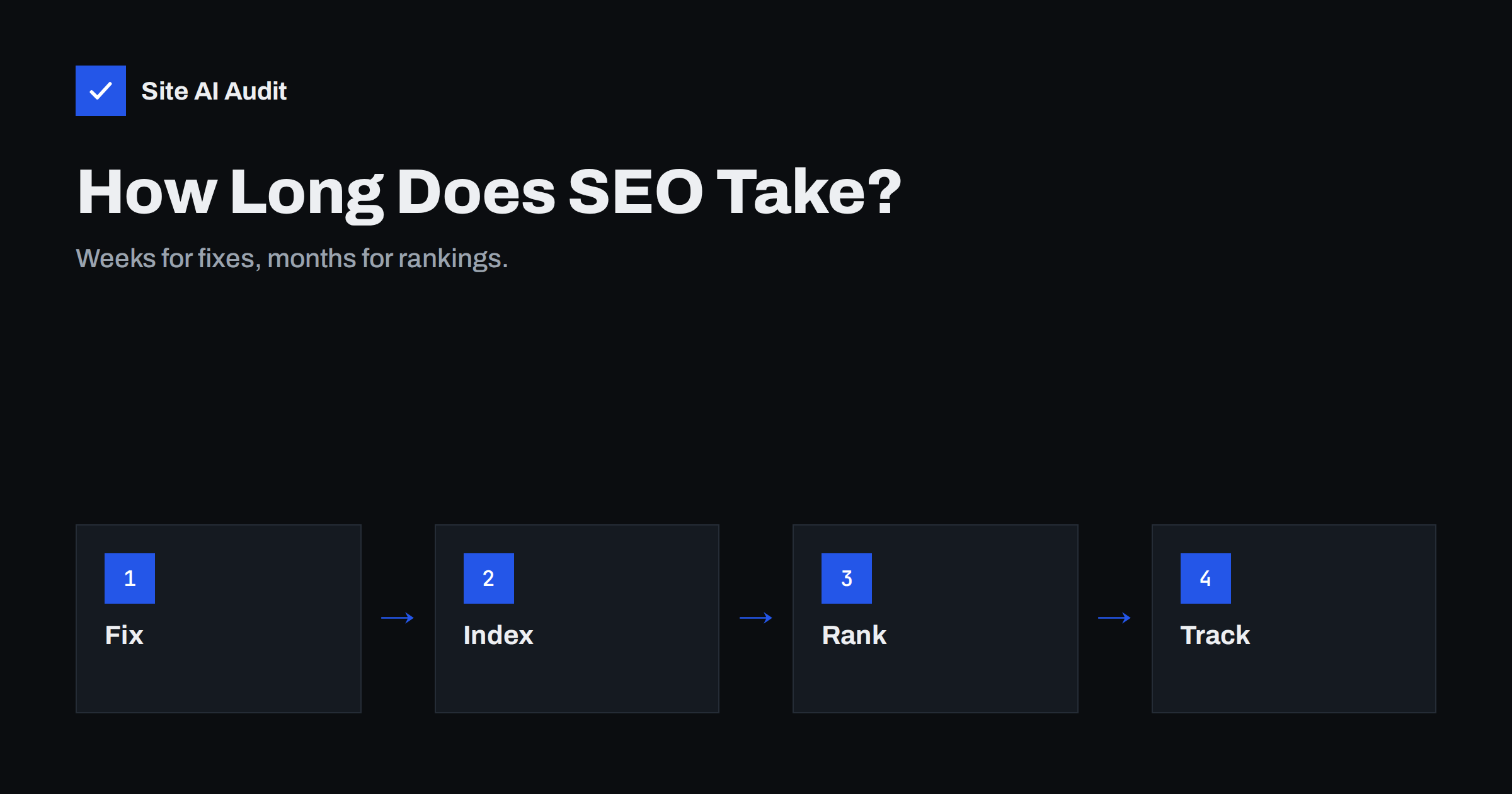
Short answer: Most small websites need several months of steady work before SEO brings a clear rise in traffic, and competitive topics can take a year or more. Technical fixes can be picked up by Google within days or weeks, but rankings depend on competition, the age of the site, the quality of the content and the links it earns. Anyone promising first-page results in a few days is guessing or selling something.
Why there is no single answer
People ask this question as if SEO were a delivery service with a standard transit time. It is closer to growing a garden. You can prepare the soil quickly, but the plants grow at their own speed, and the weather, which in this case means your competitors and Google’s own changes, is outside your control.
Search engines have to discover your page, process it, decide which questions it answers and compare it with every other page that answers the same questions. Each step takes time, and the last step is the slowest, because it depends on how many strong pages already exist for the topic. A local plumber in a small town and an online shop selling mobile phones are both doing SEO, but they are not running the same race.
What decides how fast results arrive
Five factors explain most of the difference between sites that move quickly and sites that move slowly.
- Competition. A phrase that dozens of established businesses target is much harder than a narrow phrase that only a few pages answer well.
- Site age and history. A website that has existed for years with a clean record usually gets crawled more often and trusted sooner than a brand new domain.
- Technical health. If pages are blocked, duplicated or very slow, no amount of writing will help until the problem is fixed.
- Content quality. Pages that match what searchers want, and say something useful that other pages do not, win more often. Our guide to search intent explains how to check this.
- Links and mentions. Other websites that reference yours act as evidence that the content is worth showing. Earning them takes time and effort, as the article on backlinks for small businesses describes.
A realistic timeline, step by step
The timeline below is a rough guide, not a promise. Your own numbers can be faster or slower, and the order of events matters more than the exact dates.
Days 1 to 14: fixing and discovery
The first weeks are about removing obstacles. You make sure the site can be crawled, that pages are not accidentally set to noindex, that titles and descriptions exist and that the sitemap is submitted. Google may start re-crawling changed pages within days, especially if the site is already known. You will usually see nothing in traffic yet, but you may see more pages appear in the index.
Months 1 to 3: indexing and first movement
New or improved pages get indexed and start to appear for long, specific searches. These are phrases with few searches each, such as a service plus a town name. Impressions in Google Search Console begin to rise, and a few clicks arrive. If you are new to that tool, our Search Console setup guide shows what to connect first.
Months 3 to 6: gaining traction
If the content is useful and the technical base is sound, pages begin to climb for broader phrases. This is where small businesses often notice the first real enquiries from search. Improvement is rarely smooth. Positions go up and down for weeks before they settle.
Months 6 to 12 and beyond: compounding
Older pages gain trust, internal links spread authority between pages and new content ranks faster because the site already has a track record. Competitive phrases may still need a year or more, and they may need real links and brand recognition, not only on-page work.
Early signs that SEO is working
Traffic is a late signal. Several earlier signs tell you whether you are on the right path, and they are worth checking every few weeks:
- The number of indexed pages grows and the “not indexed” list shrinks for pages you want to rank.
- Impressions rise in Search Console even if clicks are still low.
- Average position for your target phrases moves from the deep pages toward the first few pages of results.
- Pages start to appear for variations of the phrase you did not plan for.
- Click-through rate improves after you rewrite titles and descriptions.
Look at weekly or monthly trends. A single day of data is noise, because rankings and demand change from day to day.
Things that make SEO slower
Some delays are avoidable. The most common ones are mistakes that sit unnoticed for months.
- Changing everything at once. If you rewrite every page, change the URLs and redesign the site in the same month, you cannot tell what helped or hurt, and you risk losing existing rankings.
- Publishing thin or duplicated pages. Pages that add nothing new are often ignored. See our article on thin content for how to spot them.
- Ignoring technical problems. Redirect chains, blocked resources and broken links waste crawl effort and weaken signals.
- Stopping too early. Many businesses give up after two months, just before the work would have started to show.
- Chasing myths. Tricks such as keyword stuffing or buying cheap links can cause harm that takes longer to repair than the original delay. The list in SEO myths for small businesses covers the usual ones.
Things that can speed it up
You cannot force Google to move faster, but you can remove friction and focus your effort where it counts.
- Choose realistic targets. Start with specific phrases that match your services and location, and expand once those pages perform.
- Fix the foundations first. Make sure pages can be crawled and indexed before investing in content. A short list from a website SEO audit checklist is enough to begin.
- Improve pages that are already close. A page sitting at position 11 to 20 often needs only a better title, clearer answers or more internal links. Refreshing it with the steps in how to update old content is faster than writing a new page.
- Link your pages together. Internal links help Google find and understand new pages quickly.
- Be consistent. Publishing and improving pages on a regular schedule builds more value than a burst of activity followed by silence.
How to set expectations with a boss or a client
If you have to report to someone else, agree on measures that match the timeline. Promise a technical clean-up with a visible before and after, a plan for pages and a monthly report on impressions, indexed pages and positions. Do not promise a ranking number or a date. Explain that traffic comes later than the work, and show the early signs as proof that the work is moving in the right direction.
It also helps to explain what is out of your control. A new competitor, a change in how Google shows results or a drop in seasonal demand can all affect traffic regardless of the quality of your work. Setting this out at the start avoids difficult conversations later.
How Site AI Audit helps
Site AI Audit checks the technical and on-page basics that decide whether your SEO work can start to pay off. The free check crawls up to 50 pages and lists findings such as missing or duplicate titles and descriptions, heading problems, broken links, redirect issues and sitemap, robots.txt or noindex problems, each with a plain-language fix. The Monitor plan re-checks a website every week and sends e-mail alerts when something breaks, which helps you catch new obstacles early. It does not predict rankings or traffic. You can run a free check of your website or see the plans.
Related reading
- New Website SEO Checklist: What to Do Before and After Launch
- Common SEO Mistakes Small Businesses Make (and How to Fix Them)
- How Often Should You Audit Your Website’s SEO?
- Google Traffic Dropped? How to Find the Cause Step by Step
The bottom line
Expect technical fixes to be noticed within days or weeks, first movement for specific phrases within a few months and steady growth over six to twelve months or more. Fix the foundations, improve pages that are close to ranking, keep publishing useful content and judge progress by trends in impressions, indexed pages and positions. Patience is part of the method, but it works best when the work behind it is steady and focused.
الأسئلة الشائعة
Can SEO work in one month?
Sometimes you will see small signs, such as new pages being indexed or impressions rising, but a clear gain in traffic after one month is unusual. Narrow phrases with little competition move fastest.
Why did my rankings drop after a few weeks of improvement?
Positions often rise and fall while Google tests how a page performs. Judge the trend over several weeks, and look for real problems such as errors or lost pages only if the drop continues.
Is a new website slower to rank than an old one?
Usually yes, because it has no history or links. A new site can still rank for specific phrases, but it needs patience and useful content to build trust.
Do paid ads make SEO faster?
No. Ads bring visitors while you wait, but they do not change how organic rankings are calculated. They can help test which phrases bring customers.
How do I know if my SEO agency is doing real work?
Ask for a clear list of changes made, before and after checks of technical issues, and a monthly report on impressions, indexed pages and positions. Vague promises and guaranteed rankings are warning signs.