 ENEnglish
 LTLietuviškai
 DEDeutsch
 FRFrançais
 RUРусский
 ESEspañol
 PLPolski
 ITItaliano
 UKУкраїнська
 CSČeština
 PTPortuguês
 JA日本語
 LVLatviešu valoda
 ETEesti
 HUMagyar
 IDBahasa Indonesia
 TRTürkçe
 HIहिन्दी
 ELΕλληνικά
 ARالعربية
 THไทย
 VITiếng Việt
 RORomână
 MSBahasa Melayu
 BNবাংলা
#TLS
TLS is the protocol that encrypts the connection between a browser and a web server, and it is what people usually mean by SSL today. Articles tagged here explain TLS versions, cipher settings, certificate chains and handshake errors. They show how to disable outdated protocols without locking out real visitors. You will learn how to read common browser error codes and what each one says about the server. The guides include commands and settings for popular servers and hosting panels. Use them when a TLS test gives a poor grade or a connection fails.
 Nov 12, 2026 · 8 min read
S/MIME and PGP: Encrypting the Email Message Itself
TLS protects mail only in transit. Learn how S/MIME and PGP encrypt and sign the message itself, how they differ and whether a small…
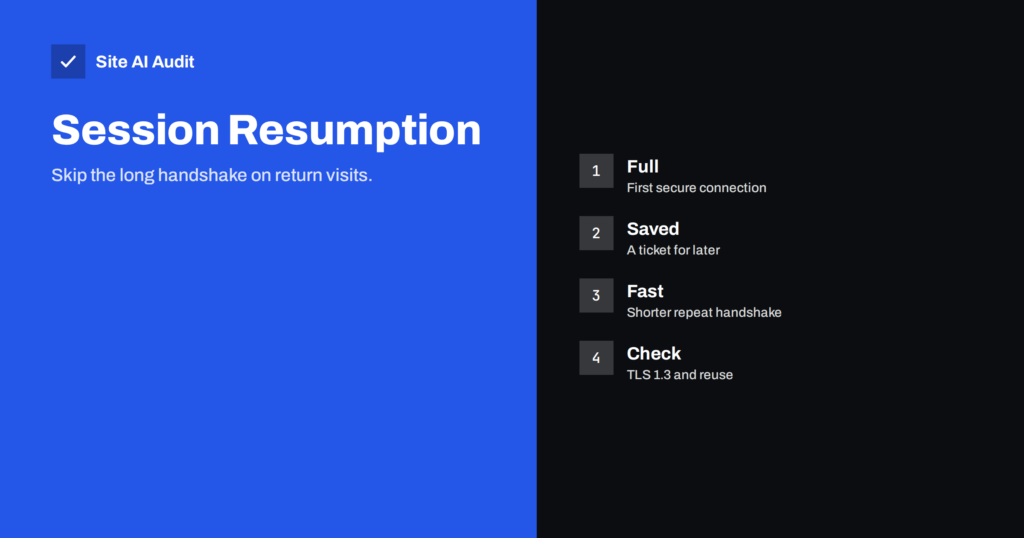 Nov 10, 2026 · 8 min read
TLS Session Resumption: Faster HTTPS Connections
Every new HTTPS connection starts with a handshake that costs time. Learn how session resumption, TLS 1.3 and connection reuse make repeat visits faster.
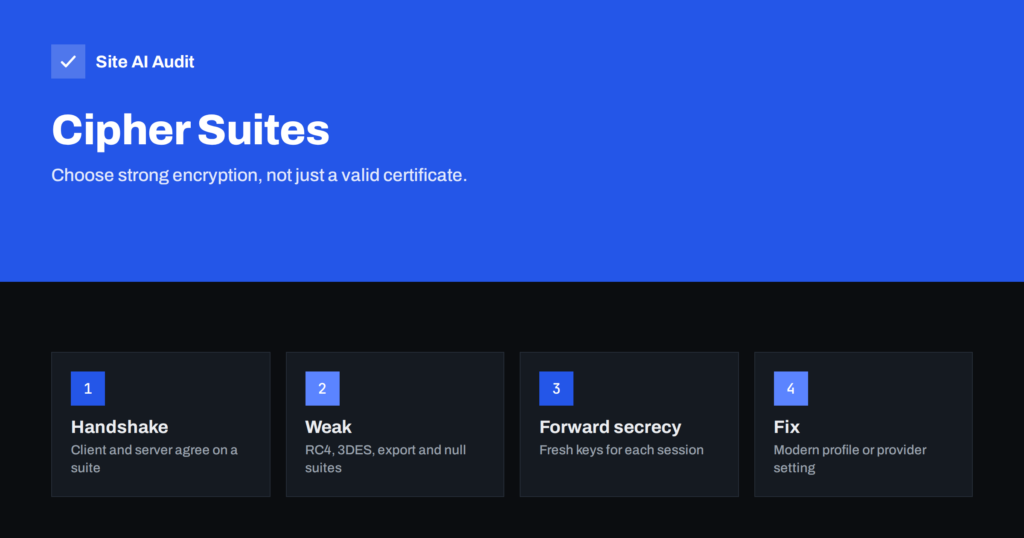 Nov 4, 2026 · 8 min read
Weak TLS Cipher Suites and Forward Secrecy Explained
A valid certificate does not guarantee strong encryption. Learn what cipher suites are, why forward secrecy matters and which weak settings to switch off.
 Nov 1, 2026 · 7 min read
SFTP vs FTP: Upload Website Files Without Exposing Passwords
Plain FTP sends your login and files unencrypted. Learn how SFTP and FTPS differ, why SFTP is safer for uploads and how to switch…
 Oct 21, 2026 · 8 min read
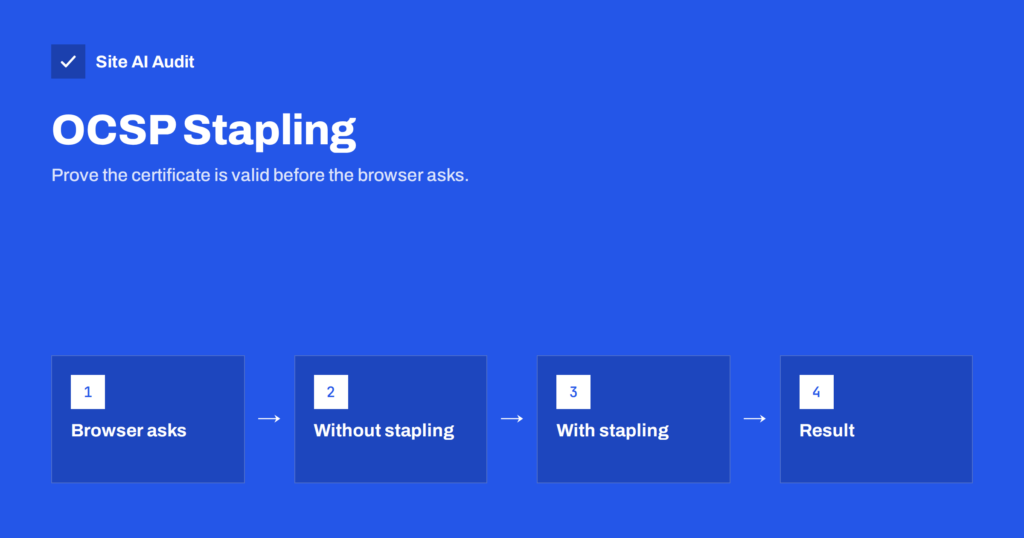
OCSP Stapling: Faster HTTPS Connections Explained Simply
OCSP stapling lets your server prove its certificate is valid, so browsers skip a slow extra lookup. Learn what it is, how to check…
 Oct 13, 2026 · 7 min read
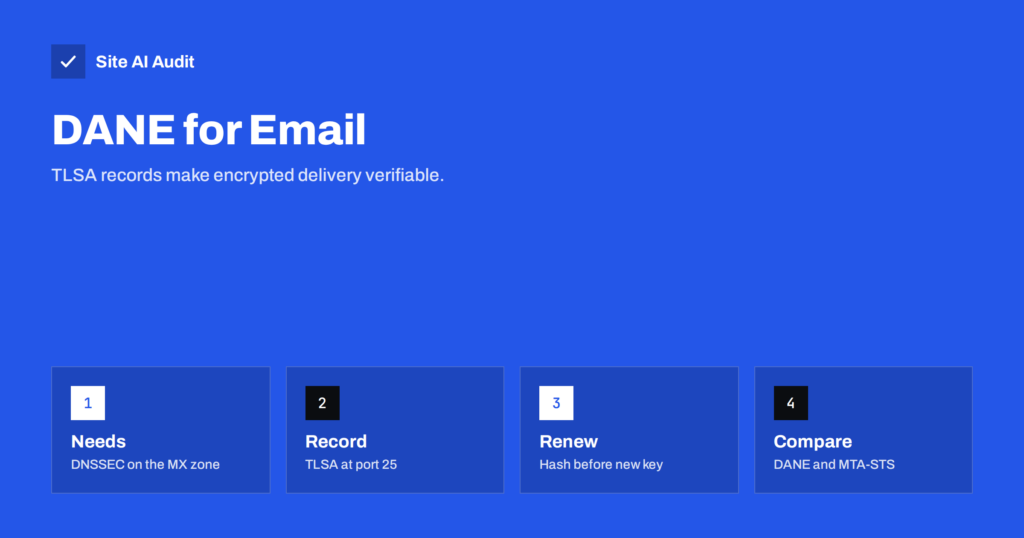
DANE for Email: How TLSA Records Compare to MTA-STS
DANE uses DNSSEC and TLSA records to make mail servers insist on encrypted, verified delivery. Learn how it works, what it needs and how…
 Oct 11, 2026 · 7 min read
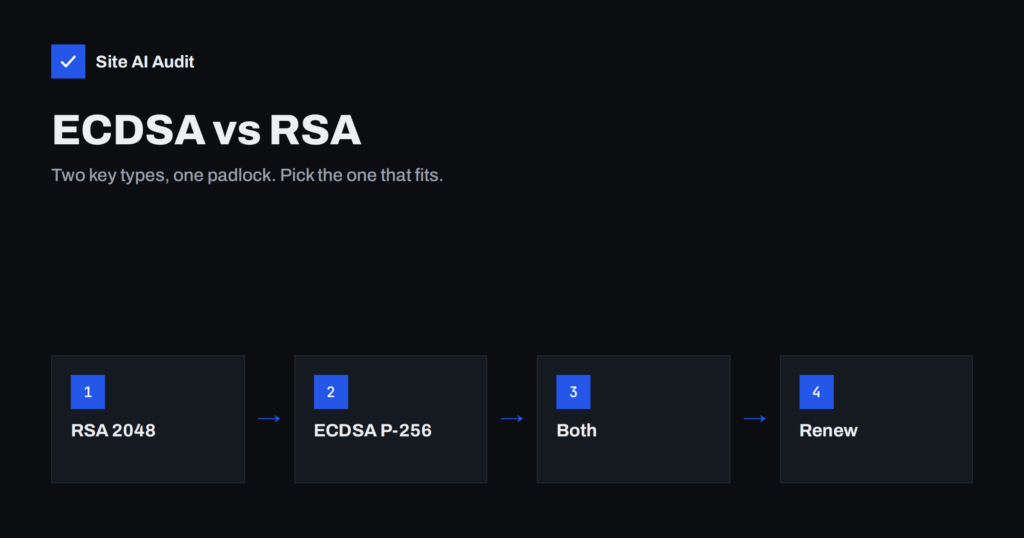
ECDSA vs RSA SSL Certificates: Which Key Type Should You Use?
SSL certificates use either RSA or ECDSA keys. Learn how they differ in speed, security and compatibility, and when serving both certificates makes sense.
 Oct 1, 2026 · 8 min read
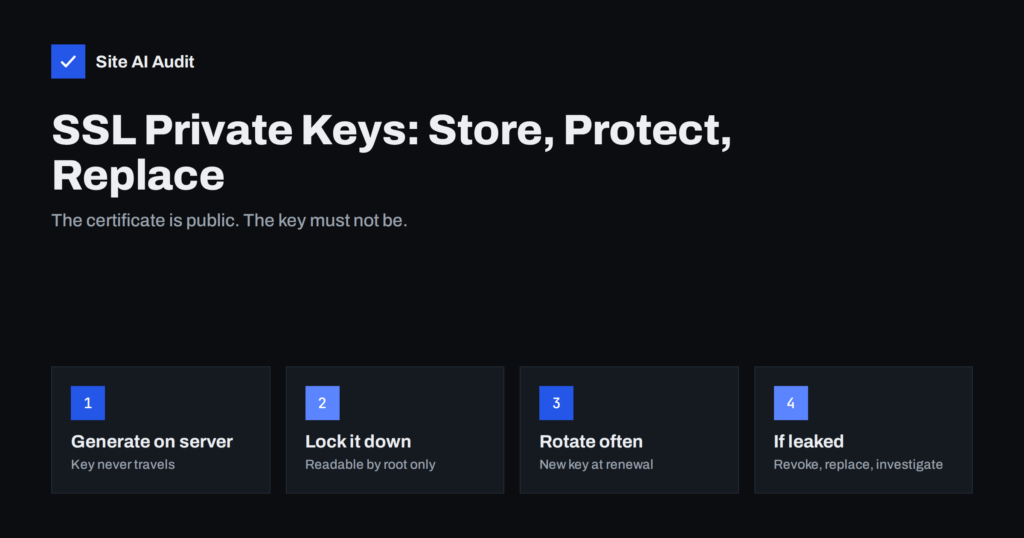
SSL Private Keys: How to Store, Protect and Replace Them
Your SSL certificate is only as safe as its private key. Learn where keys should live, who may access them, and what to do…
 Oct 1, 2026 · 8 min read
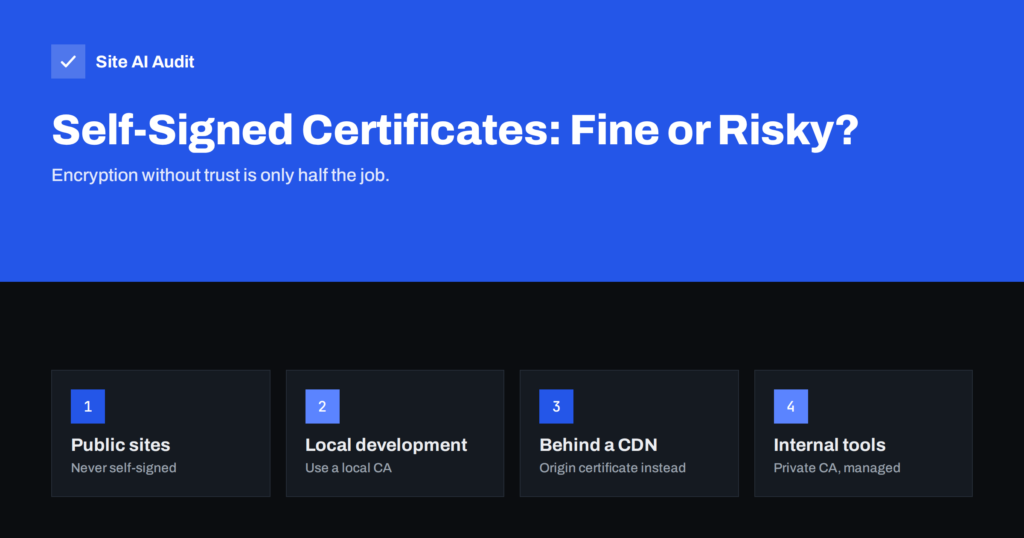
Self-Signed SSL Certificates: When Are They Acceptable?
Self-signed certificates encrypt traffic but browsers do not trust them. Learn where they are acceptable, where they are risky, and the better free options.
 Oct 1, 2026 · 8 min read
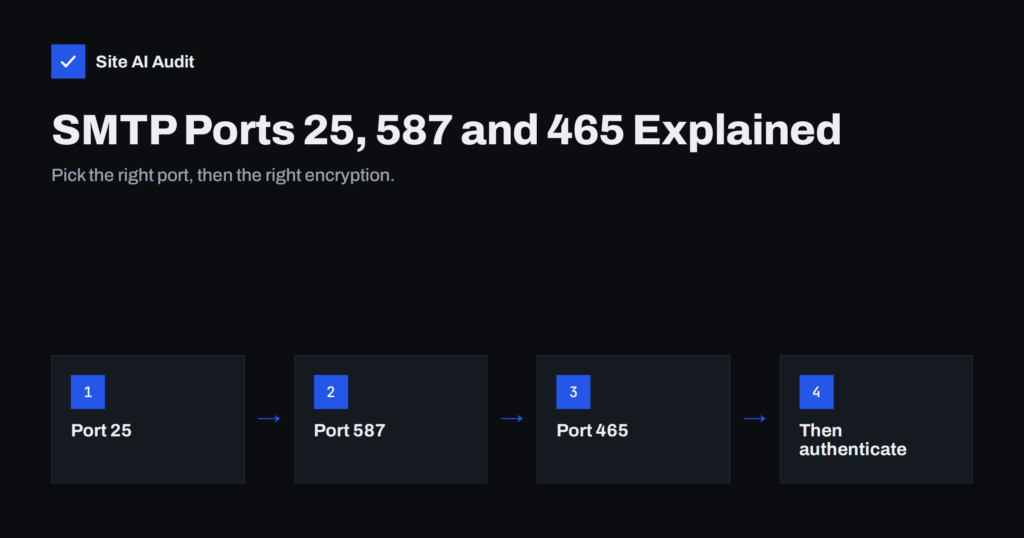
SMTP Ports 25, 587 and 465: Which One Should You Use?
Port 25, 587 or 465? Learn what each SMTP port is for, which to use for your website or mail app, and how to…
 Sep 29, 2026 · 7 min read
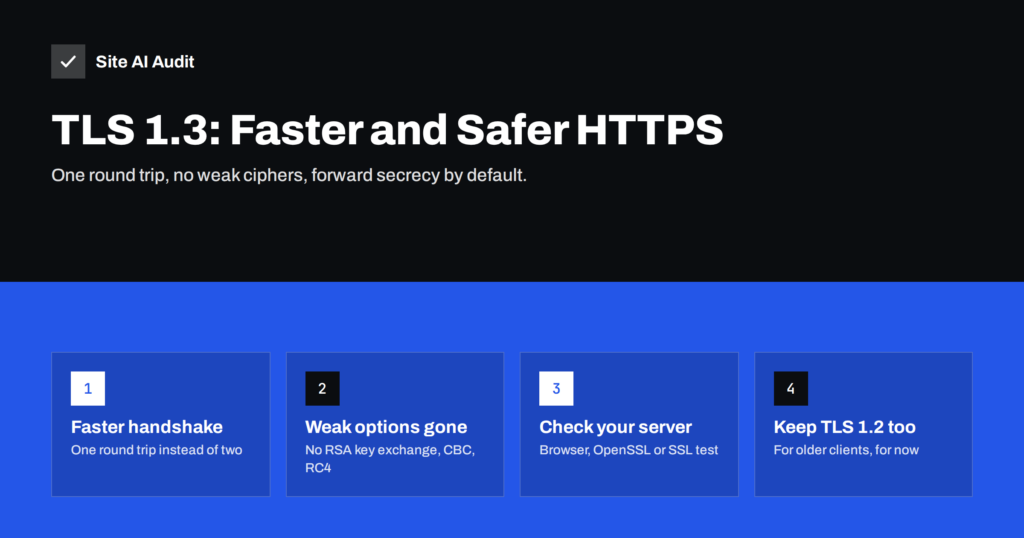
TLS 1.3 Explained: Why It Is Faster and How to Enable It
TLS 1.3 makes HTTPS connections faster and removes weak cryptography. Learn what changed, how to check your server and how to enable it safely.
 Sep 25, 2026 · 7 min read
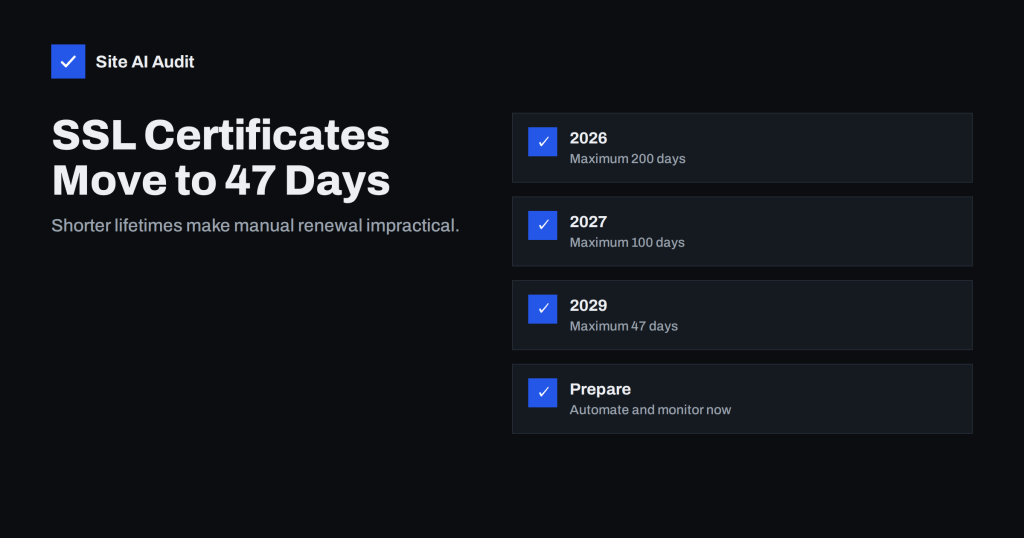
SSL Certificates Are Moving to 47 Days: What Site Owners Must Do
Maximum SSL certificate lifetimes are falling step by step to 47 days by 2029. Learn the timeline, who is affected and how to prepare…