 ENEnglish
 LTLietuviškai
 DEDeutsch
 FRFrançais
 RUРусский
 ESEspañol
 PLPolski
 ITItaliano
 UKУкраїнська
 CSČeština
 PTPortuguês
 JA日本語
 LVLatviešu valoda
 ETEesti
 HUMagyar
 IDBahasa Indonesia
 TRTürkçe
 HIहिन्दी
 ELΕλληνικά
 ARالعربية
 THไทย
 VITiếng Việt
 RORomână
 MSBahasa Melayu
 BNবাংলা
#SPF
SPF (Sender Policy Framework) is a DNS TXT record that lists the servers allowed to send e-mail for a domain. Receiving servers compare the connecting server with this list and treat unlisted senders with suspicion. A domain may publish only one SPF record, and the record may trigger at most ten DNS lookups during evaluation. Mistakes such as duplicate records or too many include statements are among the most common reasons for failed authentication. The articles under this tag cover SPF syntax, limits, qualifiers and troubleshooting.
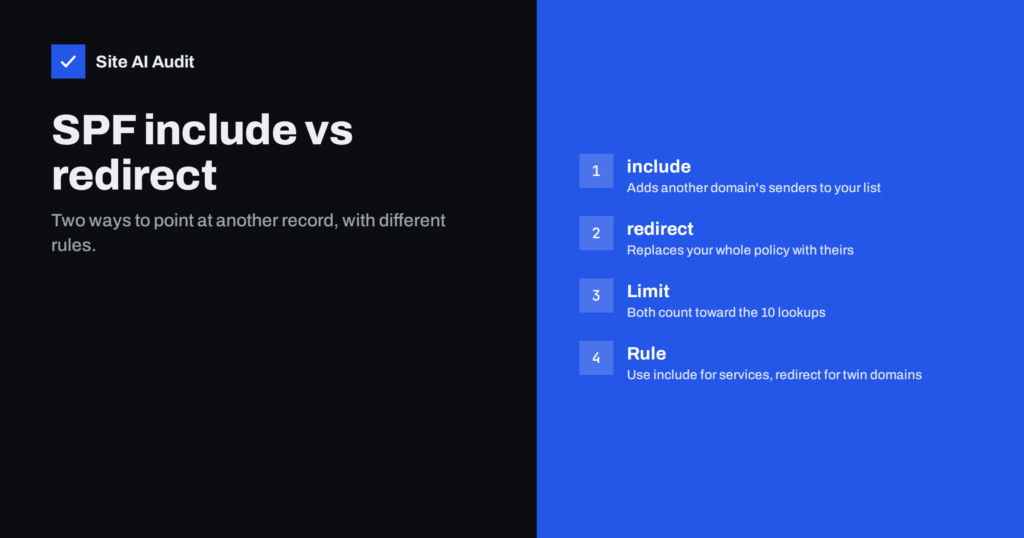 Oct 28, 2026 · 8 min read
SPF include vs redirect: What Is the Difference?
Both include and redirect point an SPF record to another domain, but they work very differently. Learn when to use each and how a…
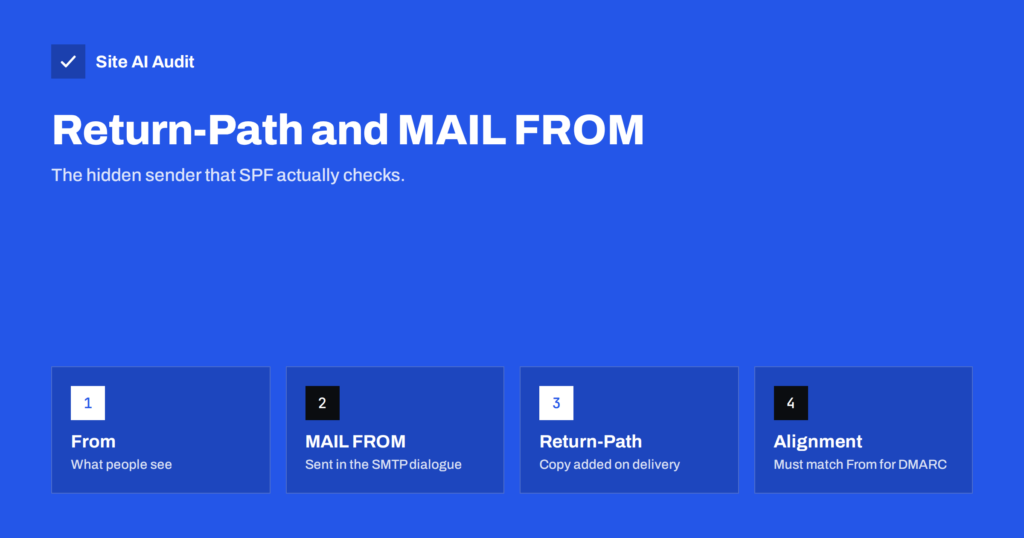 Oct 22, 2026 · 8 min read
Return-Path and MAIL FROM Explained: The Hidden Sender Address
Every email has a hidden sender address used for bounces and SPF checks. Learn what Return-Path and MAIL FROM are and why alignment matters…
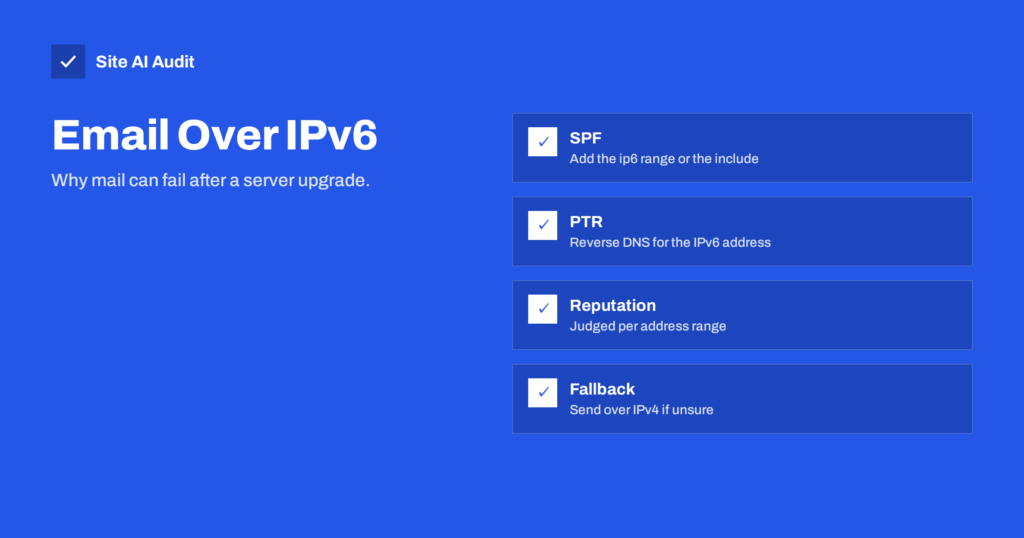 Oct 19, 2026 · 8 min read
Sending Email Over IPv6: What Can Go Wrong and How to Fix It
When your mail server sends over IPv6, an SPF record without ip6 or a missing reverse DNS entry can land mail in spam. Learn…
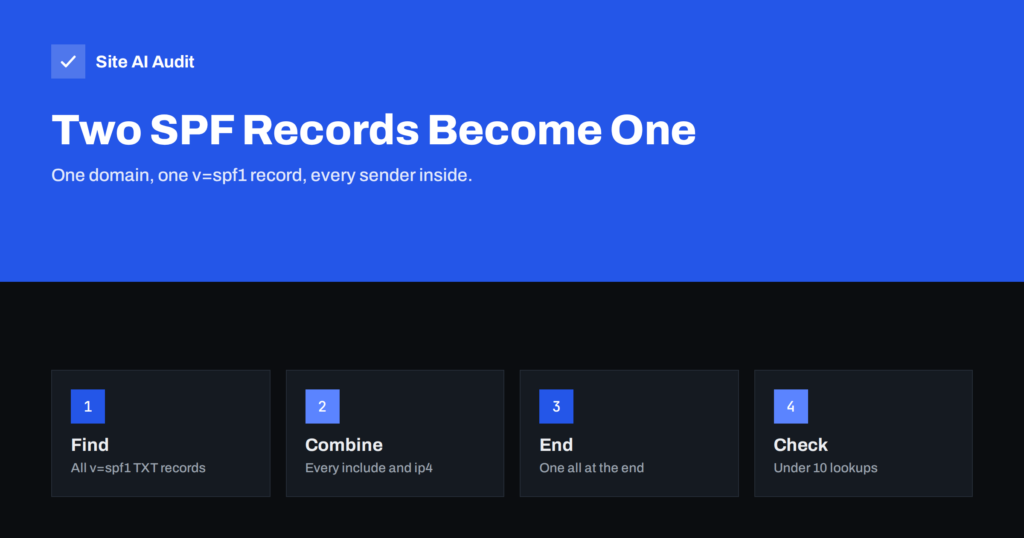 Oct 9, 2026 · 8 min read
Two SPF Records on One Domain? Why It Fails and How to Merge
A domain may have only one SPF record. Two v=spf1 records make SPF fail with a permanent error. Learn how to find duplicates and…
 Sep 26, 2026 · 8 min read
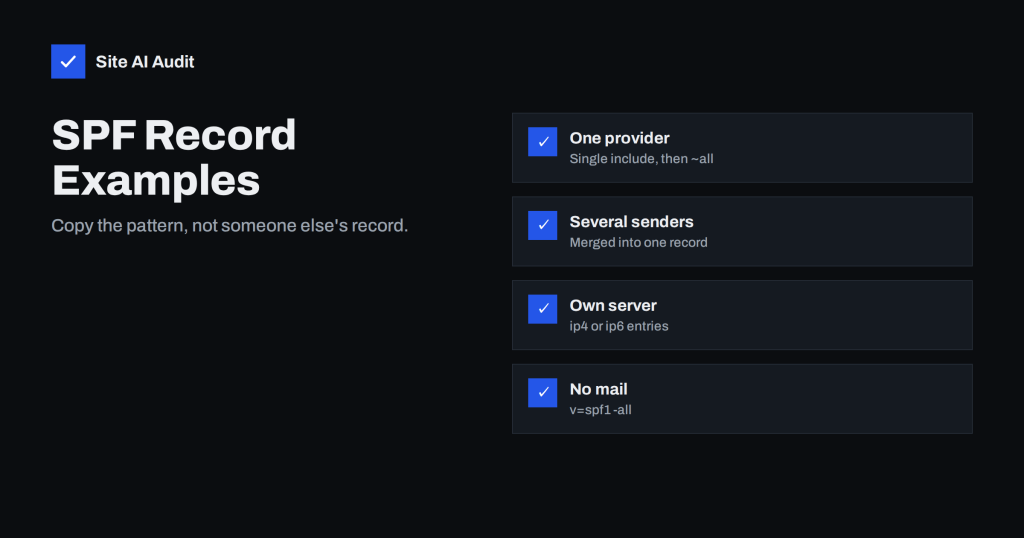
SPF Record Examples for Common Small Business Setups
Practical SPF record examples for Google Workspace, Microsoft 365, website mail, newsletter tools, own servers and parked domains, with the pitfalls to avoid.
 Sep 22, 2026 · 8 min read
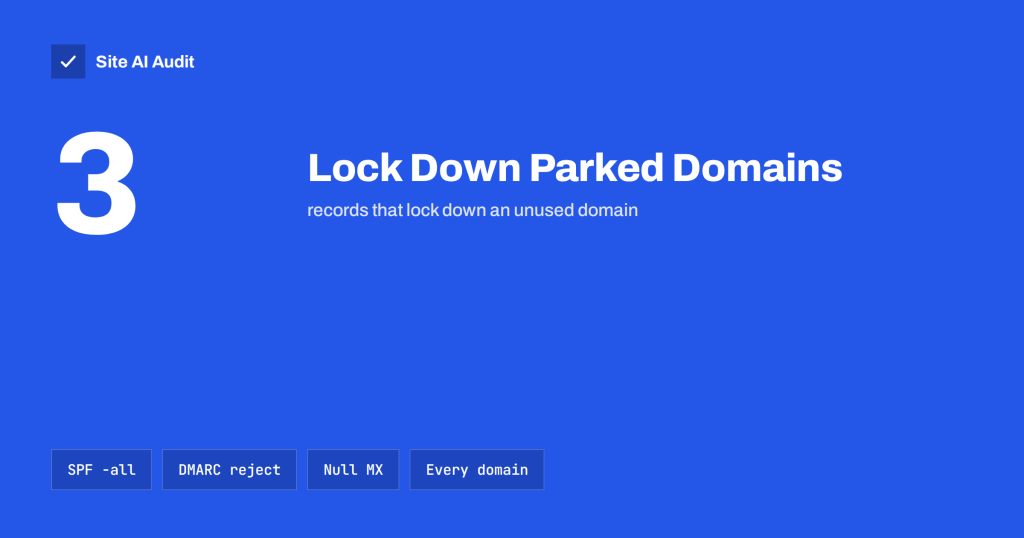
How to Protect Parked and Unused Domains from Email Abuse
Domains you never use for mail can still be spoofed. Learn the three DNS records that lock down a parked domain and how to…
 Sep 14, 2026 · 7 min read
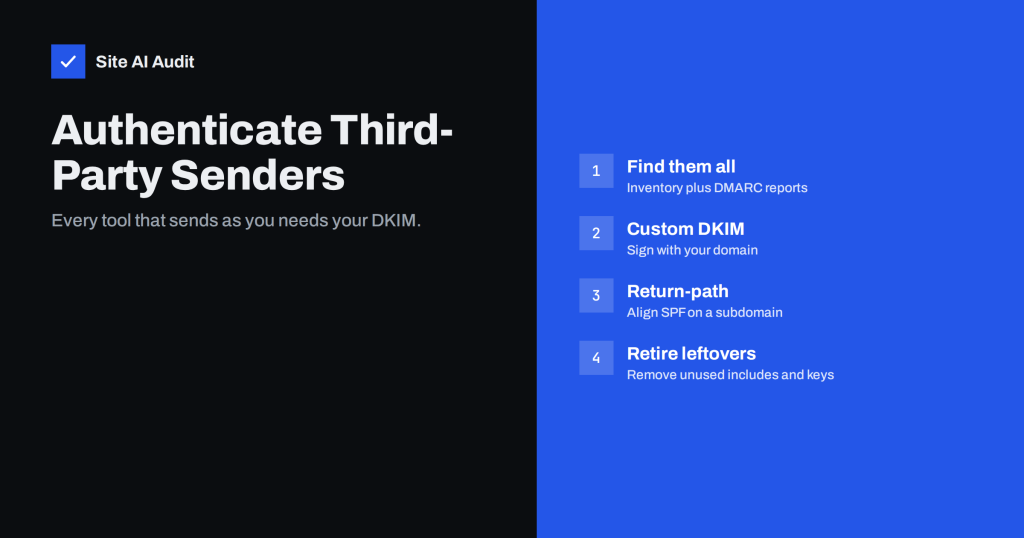
How to Authenticate Third-Party Email Senders for Your Domain
CRMs, helpdesks, newsletter and invoicing tools often send as your domain without proper authentication. Learn how to find them and align each with DMARC.
 Sep 9, 2026 · 7 min read
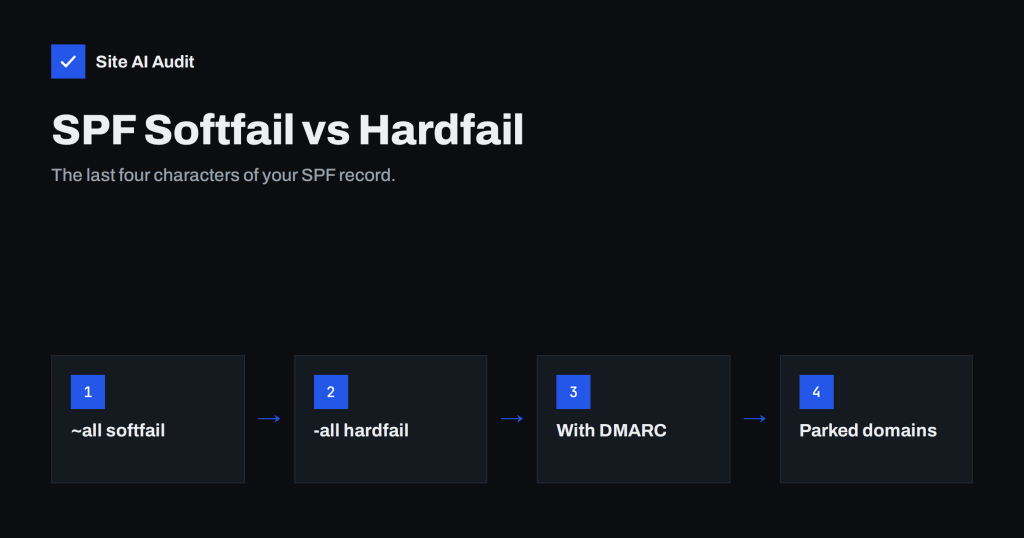
SPF Softfail vs Hardfail: Should You Use ~all or -all?
Should your SPF record end with ~all or -all? Learn what softfail and hardfail do, how receivers treat them with DMARC, and which ending…
 Sep 8, 2026 · 8 min read
DMARC Alignment Explained: Relaxed vs Strict Mode
DMARC passes only when SPF or DKIM aligns with your From domain. Learn how relaxed and strict alignment differ, and which mode suits your…
 Aug 28, 2026 · 8 min read
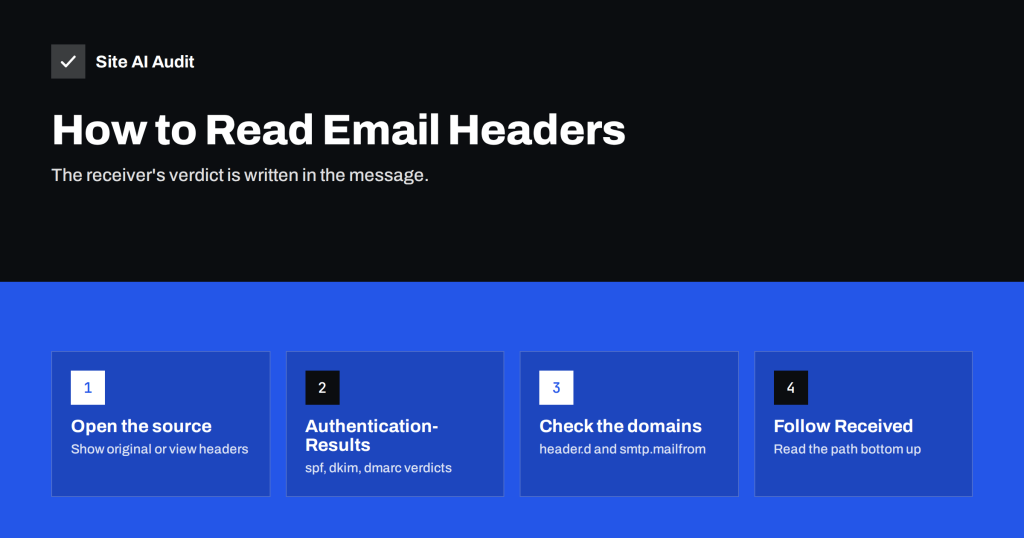
How to Read Email Headers to Check SPF, DKIM and DMARC
E-mail headers show exactly why a message passed or failed authentication. Learn how to open them in Gmail and Outlook and read Authentication-Results.
 Aug 27, 2026 · 8 min read
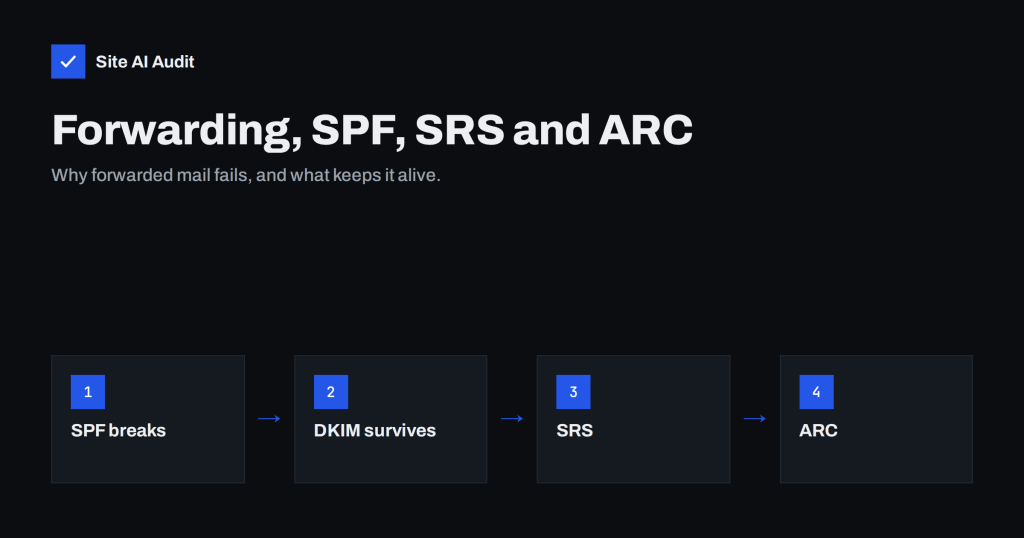
Email Forwarding and Authentication: SPF, SRS and ARC Explained
Forwarded e-mail often fails SPF and sometimes DMARC. Learn why forwarding breaks authentication and how DKIM, SRS and ARC keep forwarded mail deliverable.
 Aug 16, 2026 · 8 min read
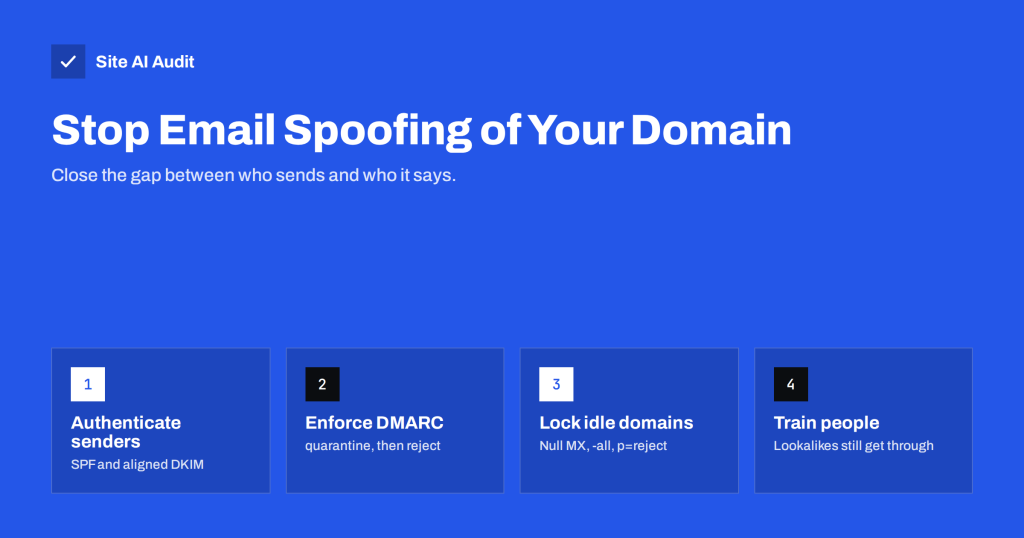
Email Spoofing: How to Stop People Sending Mail as Your Domain
Criminals can send e-mail that looks like it comes from your domain. Learn how spoofing works, which records stop it and what DMARC cannot…