 ENEnglish
 LTLietuviškai
 DEDeutsch
 FRFrançais
 RUРусский
 ESEspañol
 PLPolski
 ITItaliano
 UKУкраїнська
 CSČeština
 PTPortuguês
 JA日本語
JA日本語 LVLatviešu valoda
 ETEesti
 HUMagyar
 IDBahasa Indonesia
 TRTürkçe
 HIहिन्दी
 ELΕλληνικά
 ARالعربية
 THไทย
THไทย VITiếng Việt
 RORomână
 MSBahasa Melayu
 BNবাংলা
#robots.txt
The robots.txt file sits at the root of a domain and tells crawlers which paths they may request. It controls crawling, not indexing, which is a common source of confusion. A single wrong line can block an entire website from search engines. The file is public, so it should never be used to hide sensitive content. Articles under this tag explain the syntax, typical mistakes and safe ways to test changes.
 Oct 1, 2026 · 8 min read
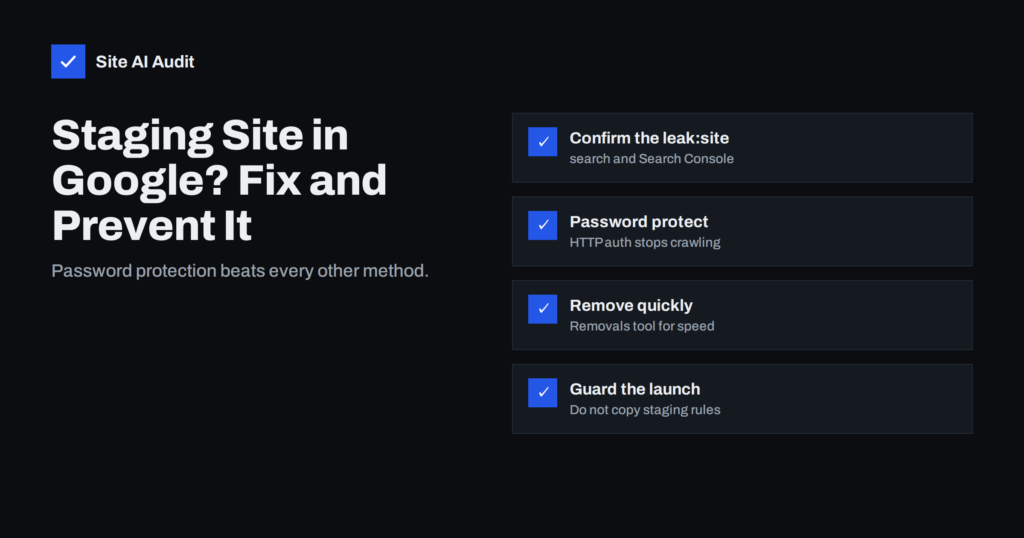
Staging Site Indexed by Google? How to Fix and Prevent It
Found your staging or dev site in Google results? Here is how to remove it quickly, why robots.txt alone fails, and how to keep…
 Aug 29, 2026 · 8 min read
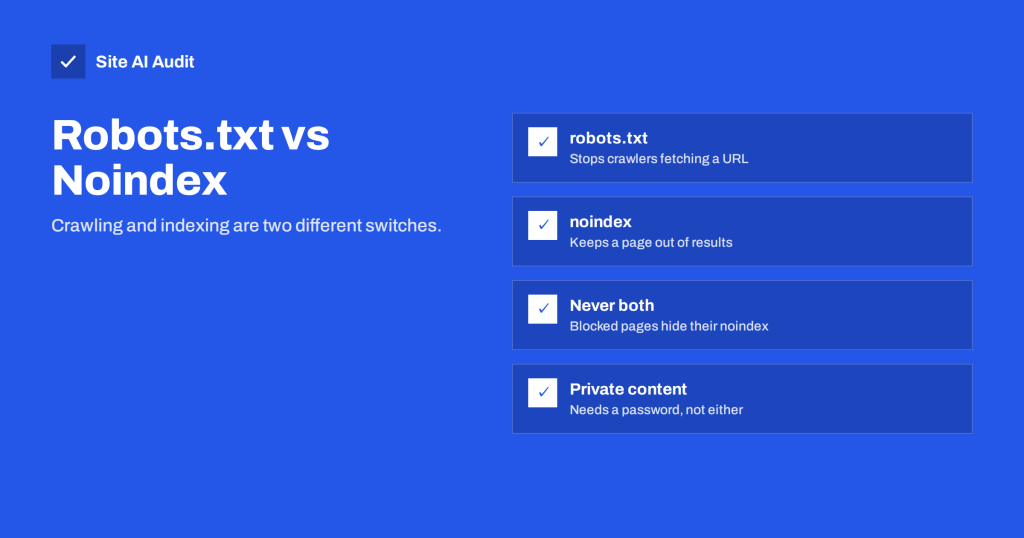
Robots.txt vs Noindex: Which One Should You Use?
Robots.txt controls crawling, noindex controls indexing. Learn the difference, which to use for common page types and why combining them backfires.
 Aug 10, 2026 · 8 min read
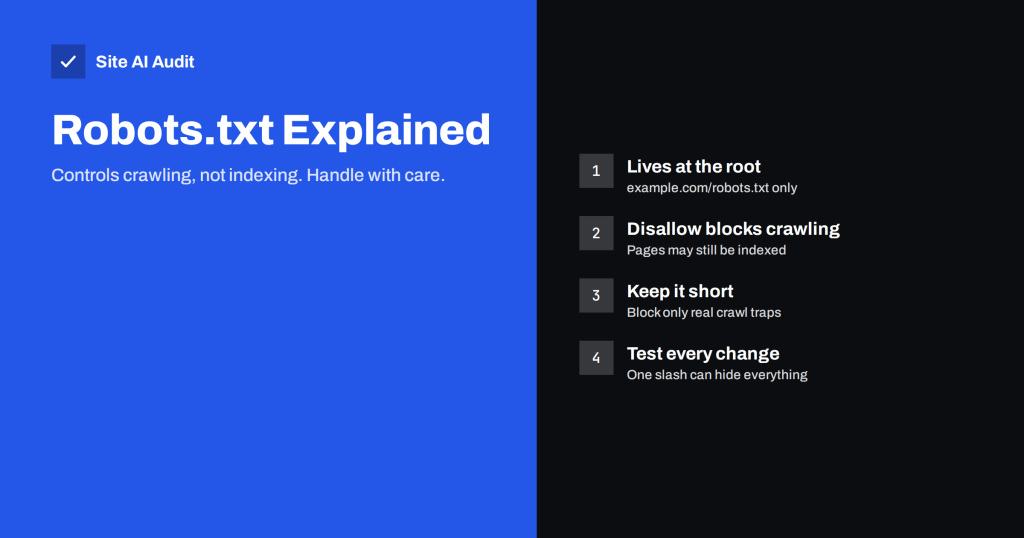
Robots.txt Explained: A Beginner’s Guide With Safe Examples
What robots.txt does and does not do, how its rules work, safe examples for WordPress and shops, and the mistakes that can block a…