 ENEnglish
 LTLietuviškai
 DEDeutsch
 FRFrançais
 RUРусский
 ESEspañol
 PLPolski
 ITItaliano
 UKУкраїнська
 CSČeština
 PTPortuguês
 JA日本語
 LVLatviešu valoda
 ETEesti
 HUMagyar
 IDBahasa Indonesia
 TRTürkçe
 HIहिन्दी
 ELΕλληνικά
 ARالعربية
 THไทย
 VITiếng Việt
 RORomână
 MSBahasa Melayu
 BNবাংলা
#Email Authentication
Email authentication is the set of DNS-based standards that prove a message really comes from the domain it claims. The core trio is SPF, DKIM and DMARC, supported by related standards such as BIMI, MTA-STS and reverse DNS. Mailbox providers use authentication results as one of the first signals when they decide whether to trust a message. Without it, legitimate mail is more likely to be filtered and criminals can impersonate the domain more easily. The articles under this tag explain how the standards fit together and how to check them.
 Nov 8, 2026 · 8 min read
SpamAssassin Scores Explained: How Spam Filters Add Up Points
Many mail servers score each message with hundreds of small tests. Learn how SpamAssassin points add up, how to read the headers and how…
 Nov 5, 2026 · 8 min read
DKIM Replay Attacks: When a Signed Email Is Sent Again
A DKIM replay attack resends a genuine signed email to new victims, so it still passes authentication. Learn how it works and how senders…
 Nov 5, 2026 · 8 min read
SMTP Smuggling: How Spoofed Email Slips Past SPF and DMARC
SMTP smuggling tricks mail servers into treating one message as two, letting fake senders pass checks. Learn how it works and what domain owners…
 Nov 4, 2026 · 8 min read
DKIM CNAME Records: Keys Your Email Provider Manages
Many email providers ask you to publish DKIM as CNAME records instead of a text key. Learn how this works, what it saves you…
 Nov 2, 2026 · 8 min read
Display Name Spoofing: Fake Senders That Pass Authentication
Display name spoofing shows a trusted name on a message from an unrelated address, so SPF and DMARC cannot stop it. Learn how to…
 Nov 1, 2026 · 8 min read
PHP mail() vs SMTP: Why Authenticated Sending Wins
Sending site email with PHP mail() often ends in spam. Learn how authenticated SMTP differs, why it delivers better and how to switch on…
 Oct 30, 2026 · 8 min read
QR Code Phishing in Email: Protect Your Team and Brand
Attackers hide malicious links inside QR codes in emails to slip past filters. Learn how quishing works and how to protect staff, customers and…
 Oct 28, 2026 · 8 min read
SPF include vs redirect: What Is the Difference?
Both include and redirect point an SPF record to another domain, but they work very differently. Learn when to use each and how a…
 Oct 28, 2026 · 8 min read
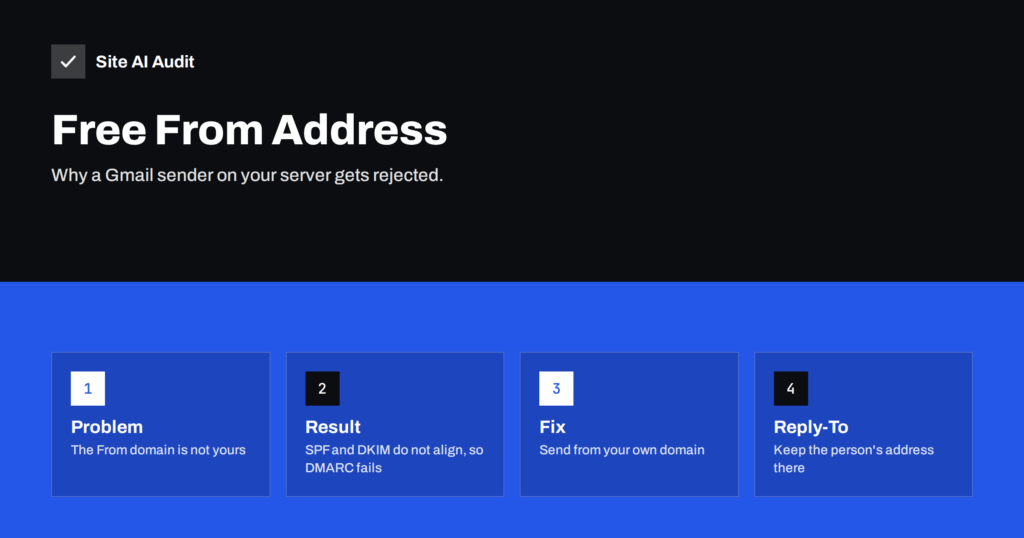
Why Mail From a Free Address Through Your Site Fails DMARC
Sending as a Gmail, Yahoo or Outlook address from your website, CRM or newsletter tool usually fails DMARC. See why it happens and the…
 Oct 26, 2026 · 8 min read
DNS TXT Records Over 255 Characters: Splitting DKIM and SPF
A long DKIM key will not fit in one 255-character string. See how TXT records are split into strings, how receivers join them and…
 Oct 23, 2026 · 8 min read
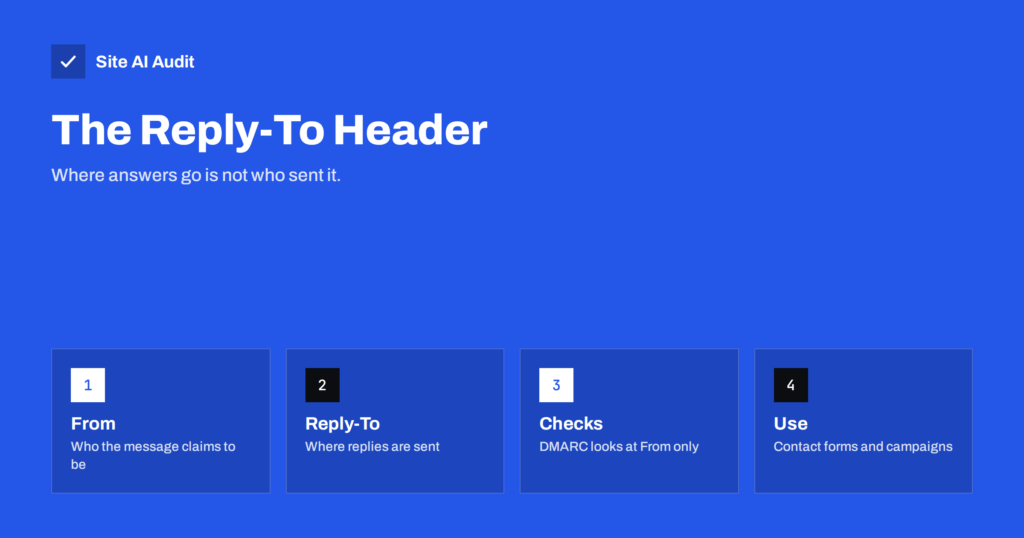
Reply-To Header Explained: When It Helps and When It Hurts
The Reply-To header decides where answers to your email go. Learn how it differs from From, when it is useful and which mistakes damage…
 Oct 22, 2026 · 8 min read
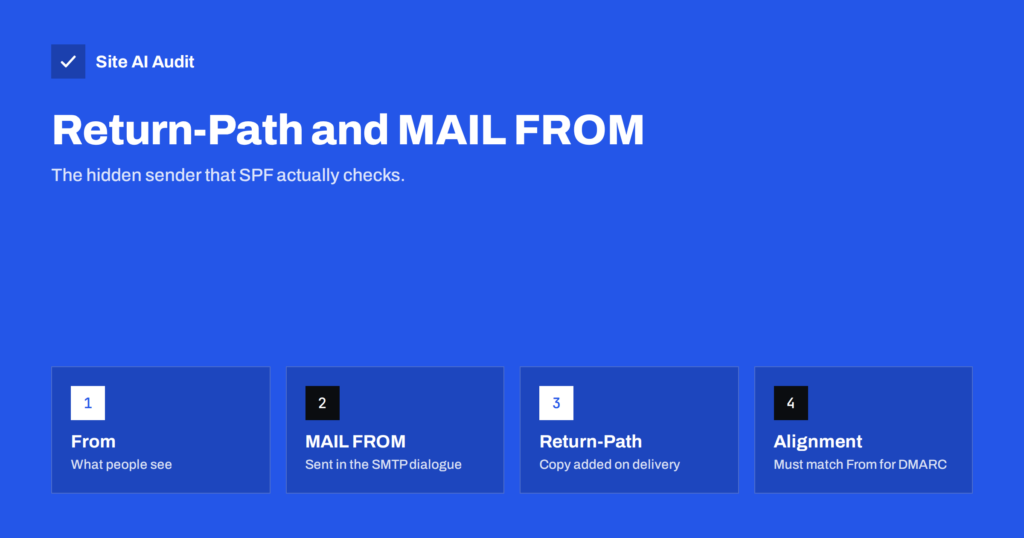
Return-Path and MAIL FROM Explained: The Hidden Sender Address
Every email has a hidden sender address used for bounces and SPF checks. Learn what Return-Path and MAIL FROM are and why alignment matters…