 ENEnglish
 LTLietuviškai
 DEDeutsch
 FRFrançais
 RUРусский
 ESEspañol
 PLPolski
 ITItaliano
 UKУкраїнська
 CSČeština
 PTPortuguês
 JA日本語
 LVLatviešu valoda
 ETEesti
 HUMagyar
 IDBahasa Indonesia
 TRTürkçe
 HIहिन्दी
 ELΕλληνικά
 ARالعربية
 THไทย
 VITiếng Việt
 RORomână
 MSBahasa Melayu
 BNবাংলা
#DNS
DNS (Domain Name System) translates domain names into the records that computers need, such as IP addresses, mail servers and verification strings. Many website and e-mail problems start with a missing, duplicated or outdated DNS record. Record types such as A, CNAME, MX and TXT each have a specific role and their own rules. Changes spread according to the record’s TTL, so planning matters when moving hosts or providers. The articles under this tag explain DNS records in practical terms and show how to avoid common mistakes.
 Oct 21, 2026 · 8 min read
HELO and EHLO Hostname: Why It Matters for Email Delivery
The first thing your mail server says is its HELO or EHLO name. Learn why a wrong, generic or unresolvable name gets mail filtered…
 Oct 20, 2026 · 8 min read
DNS Propagation and TTL: How Long Do Email Changes Take?
Changed an MX, SPF or DKIM record and nothing seems to work yet? Learn how DNS caching and TTL decide the wait, and how…
 Oct 13, 2026 · 7 min read
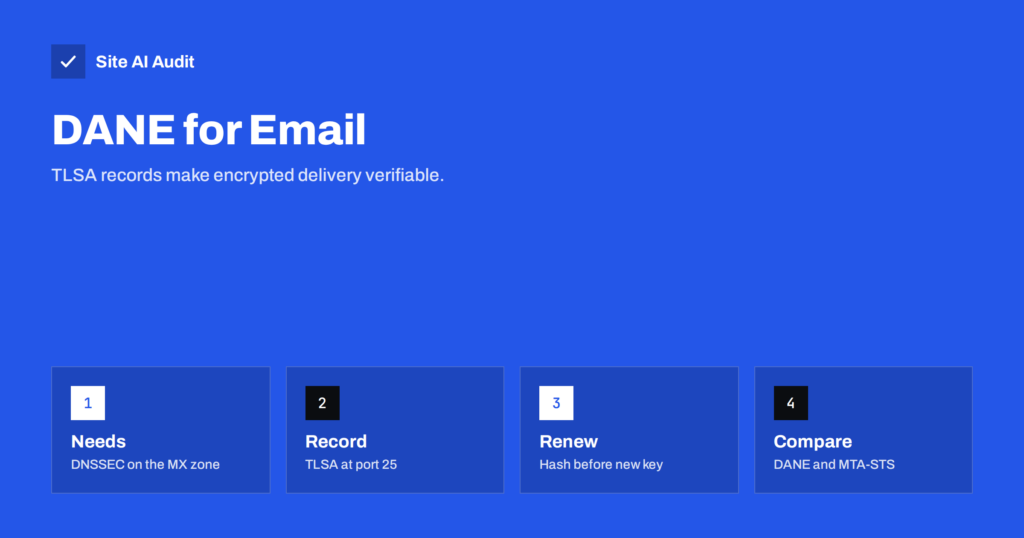
DANE for Email: How TLSA Records Compare to MTA-STS
DANE uses DNSSEC and TLSA records to make mail servers insist on encrypted, verified delivery. Learn how it works, what it needs and how…
 Oct 10, 2026 · 8 min read
Sending DMARC Reports to Another Domain: The Authorization Record
DMARC reports sent to an address on another domain arrive only if that domain authorizes them. Learn how the _report._dmarc record works and how…
 Oct 9, 2026 · 8 min read
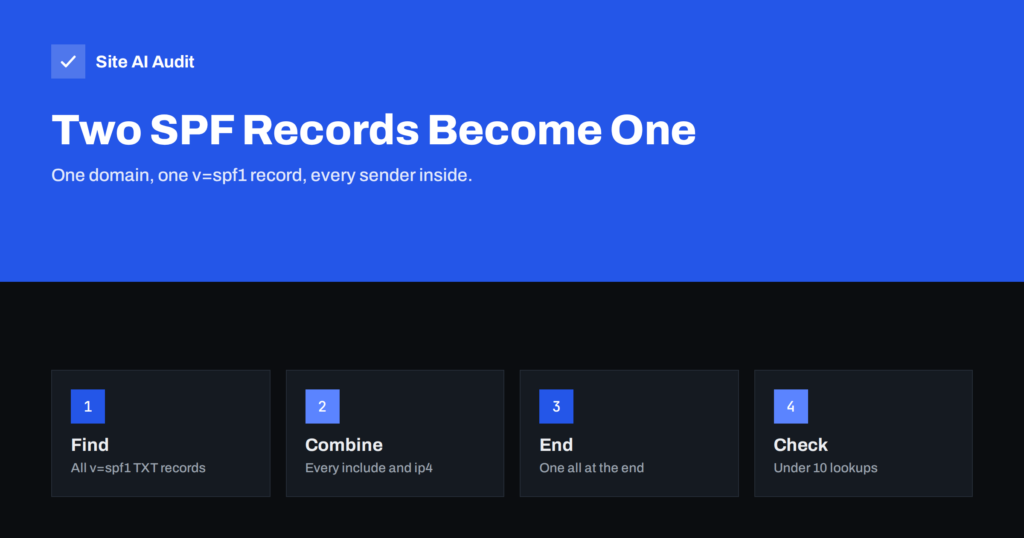
Two SPF Records on One Domain? Why It Fails and How to Merge
A domain may have only one SPF record. Two v=spf1 records make SPF fail with a permanent error. Learn how to find duplicates and…
 Oct 8, 2026 · 8 min read
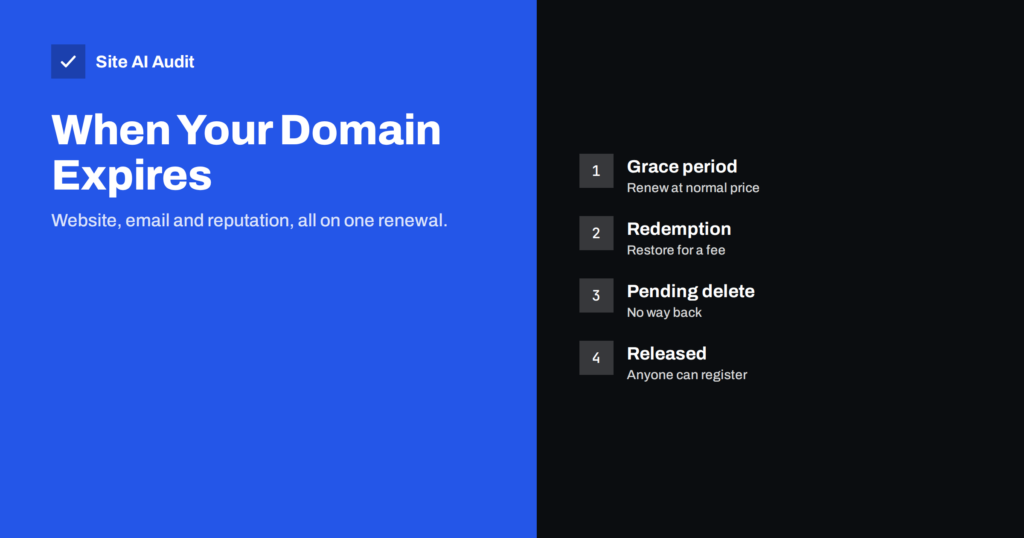
Domain Name Expiry: What Happens When Your Domain Lapses
When a domain registration expires, your website and email stop and the name can end up with someone else. Learn the stages after expiry…
 Oct 7, 2026 · 8 min read
Lookalike Domains and Typosquatting: How to Protect Your Brand
Lookalike domains imitate your name to phish customers and fake invoices. Learn how typosquatting works, how to spot new lookalikes and what you can…
 Sep 29, 2026 · 7 min read
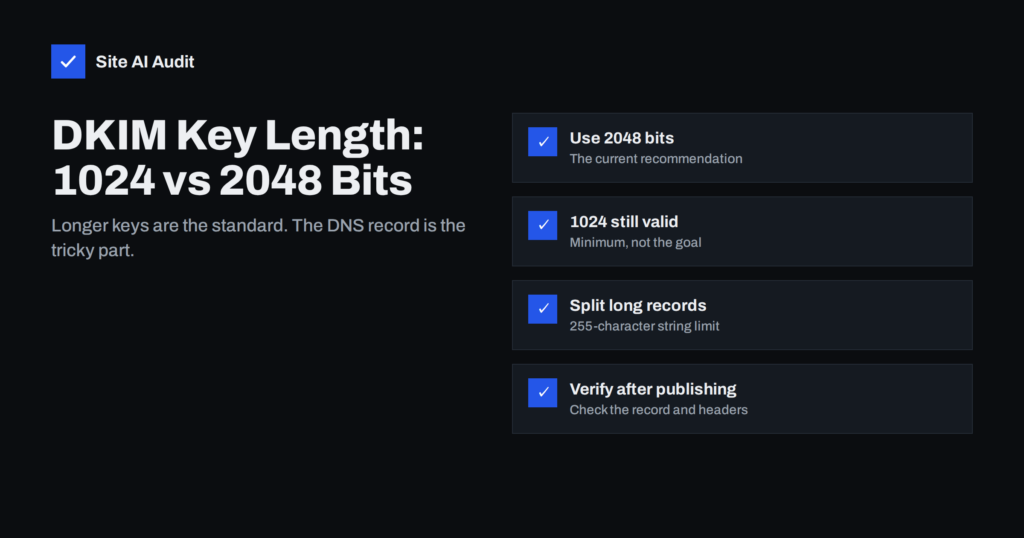
DKIM Key Length: 1024 vs 2048 Bits and Long DNS Records
Should your DKIM key be 1024 or 2048 bits? Learn what the standard recommends, how to publish long keys in DNS without errors and…
 Sep 28, 2026 · 8 min read
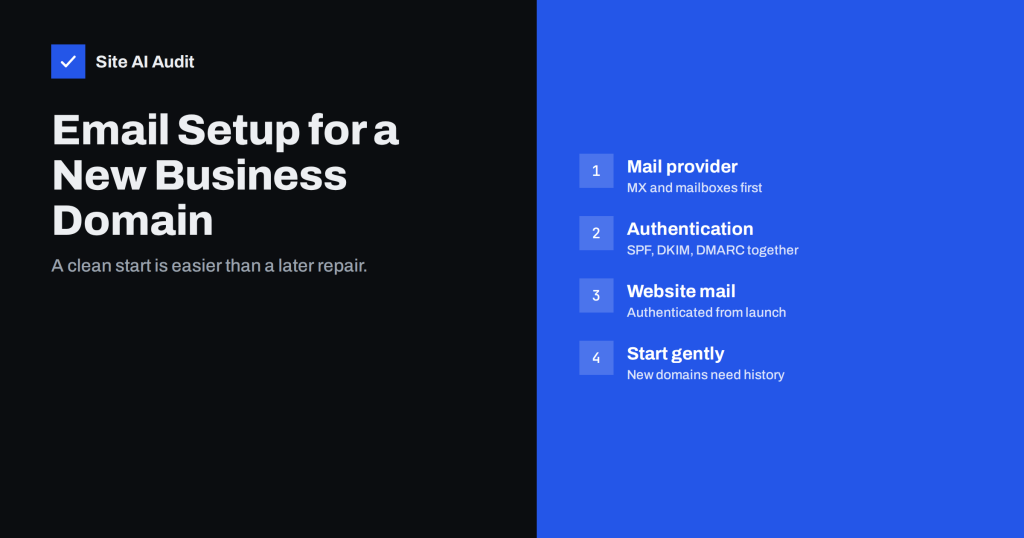
Email Setup for a New Business Domain: Get It Right on Day One
Starting a business or a new domain? Set up MX, SPF, DKIM and DMARC, website mail and sending habits correctly from day one, before…
 Sep 26, 2026 · 8 min read
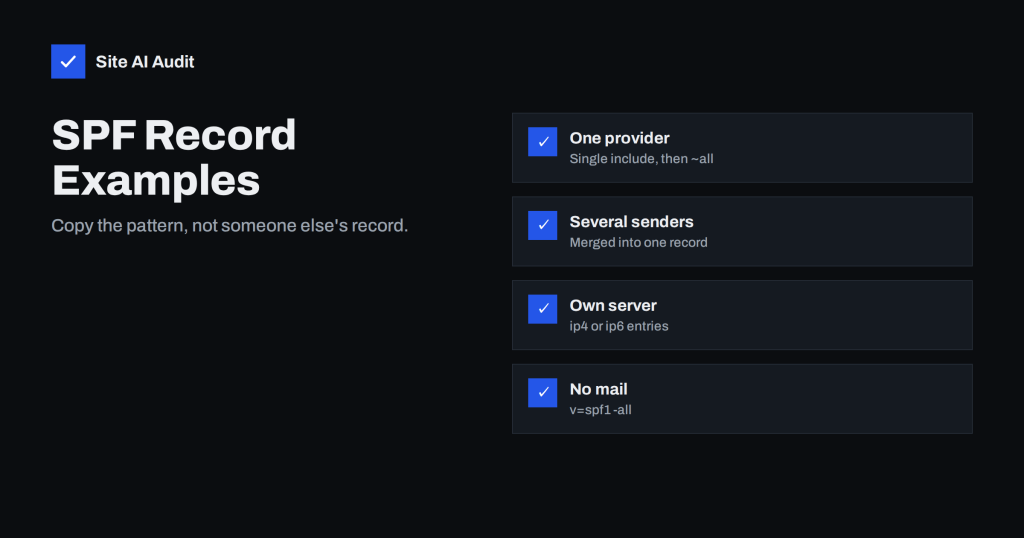
SPF Record Examples for Common Small Business Setups
Practical SPF record examples for Google Workspace, Microsoft 365, website mail, newsletter tools, own servers and parked domains, with the pitfalls to avoid.
 Sep 24, 2026 · 8 min read
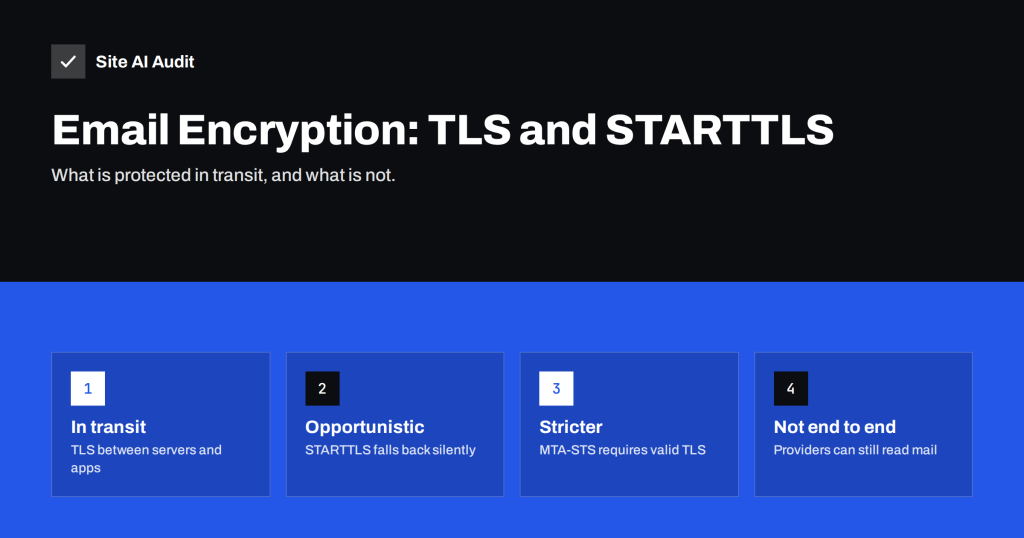
Is Your Email Encrypted? TLS and STARTTLS Explained Simply
Most e-mail is encrypted between servers with TLS, but not always and not end to end. Learn how STARTTLS works, how to check it…
 Sep 19, 2026 · 7 min read
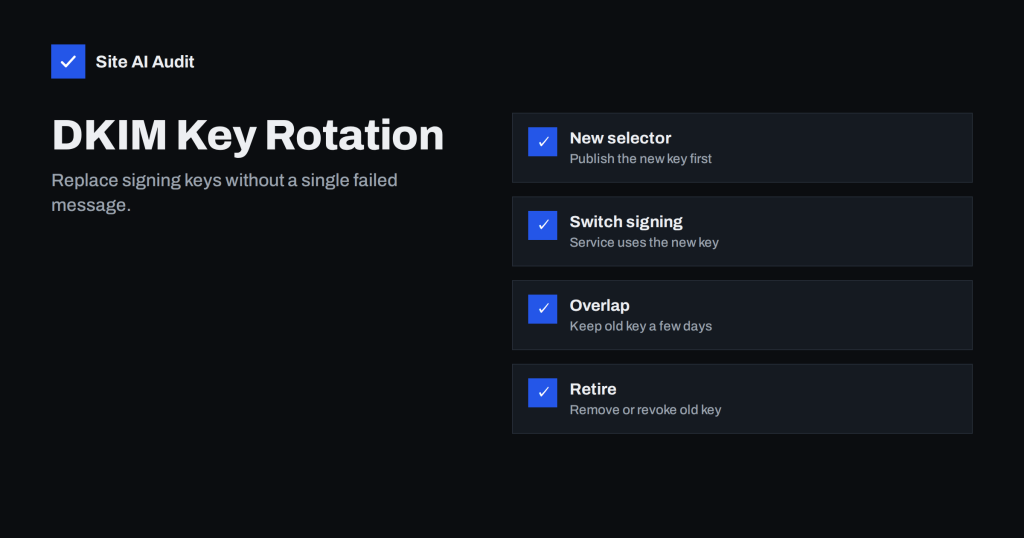
DKIM Key Rotation: When and How to Replace Your Keys Safely
DKIM keys should not live forever. Learn why to rotate them, how often, and a step-by-step process that replaces keys without breaking e-mail delivery.