 ENEnglish
 LTLietuviškai
 DEDeutsch
 FRFrançais
 RUРусский
 ESEspañol
 PLPolski
 ITItaliano
 UKУкраїнська
 CSČeština
 PTPortuguês
 JA日本語
 LVLatviešu valoda
 ETEesti
 HUMagyar
 IDBahasa Indonesia
 TRTürkçe
 HIहिन्दी
 ELΕλληνικά
 ARالعربية
 THไทย
 VITiếng Việt
 RORomână
 MSBahasa Melayu
 BNবাংলা
#Caching
Caching stores ready-made copies of files and pages so they do not have to be rebuilt or downloaded again. Articles tagged here explain browser caching, page caching, object caching and CDN caching. They show which cache headers to set and how long files should be kept. You will learn how to avoid serving stale content after an update. Guides cover common setups for WordPress and custom servers. A correct cache setup often cuts load times more than any other single change.
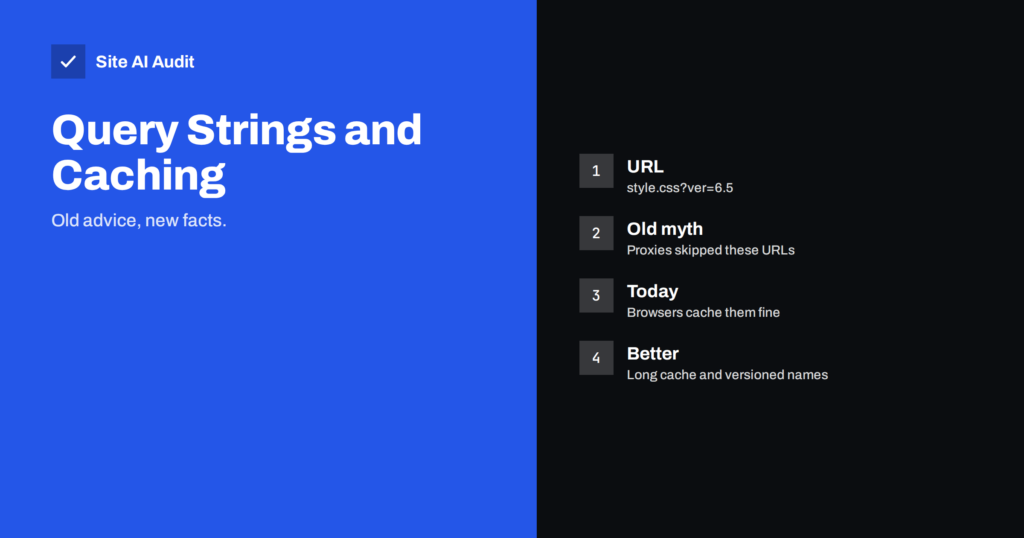 Nov 3, 2026 · 8 min read
Query Strings on Static Files: Do They Block Caching?
Should you remove ?ver= from CSS and JavaScript files? See when query strings affect caching, when they help and what to do instead of…
 Nov 2, 2026 · 7 min read
Caching HTML at the CDN Edge: Faster Pages, Fewer Risks
Caching full pages on a CDN can cut server response time sharply. Learn what to cache, what to bypass and how to avoid showing…
 Oct 31, 2026 · 8 min read
Cache-Control for Private Pages: no-store, private, no-cache
The wrong cache rules can show one user's account page to another or keep private data on shared computers. Learn what no-store, private and…
 Oct 29, 2026 · 8 min read
WordPress Transients: When Cached Data Slows the Database
Transients cache temporary data in WordPress, but they can bloat the database and slow every page. Learn how they work and how to keep…
 Oct 27, 2026 · 8 min read
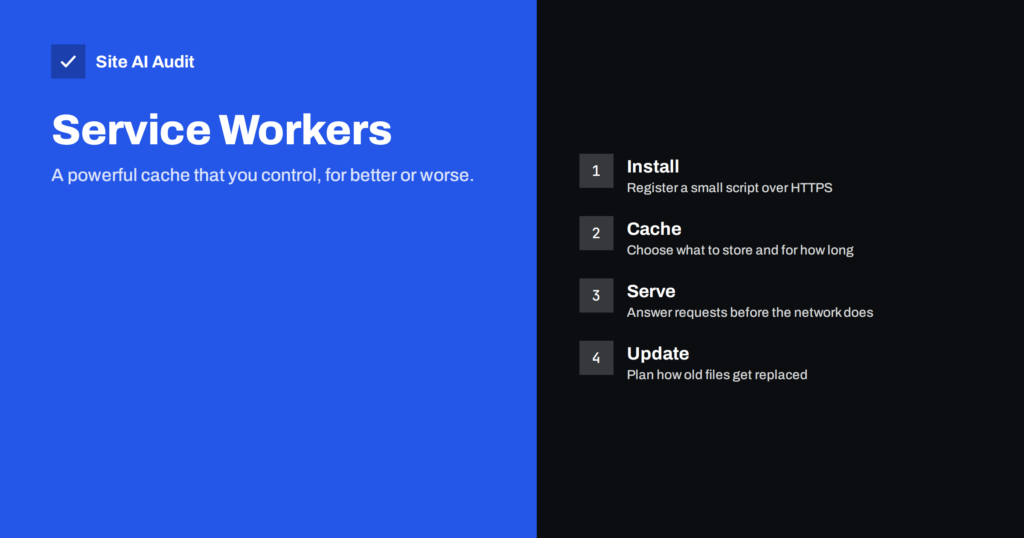
Service Workers and Offline Caching: Do Small Sites Need Them?
A service worker can cache files and serve pages without a network. Learn how it works, when it speeds up a small site and…
 Oct 22, 2026 · 8 min read
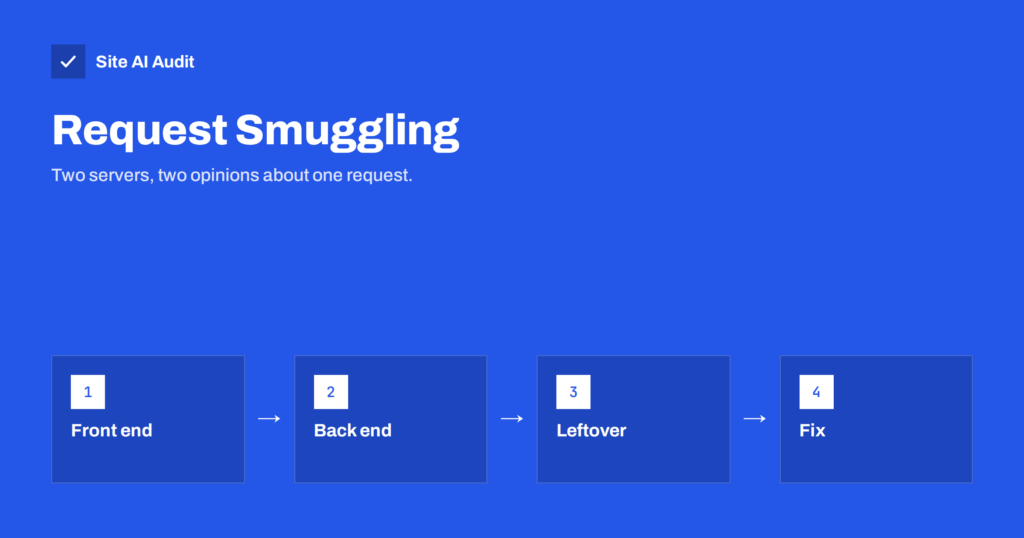
HTTP Request Smuggling Explained for Website Owners
Request smuggling happens when a proxy and a server disagree where one request ends. Learn how it works, what it can lead to and…
 Oct 21, 2026 · 8 min read
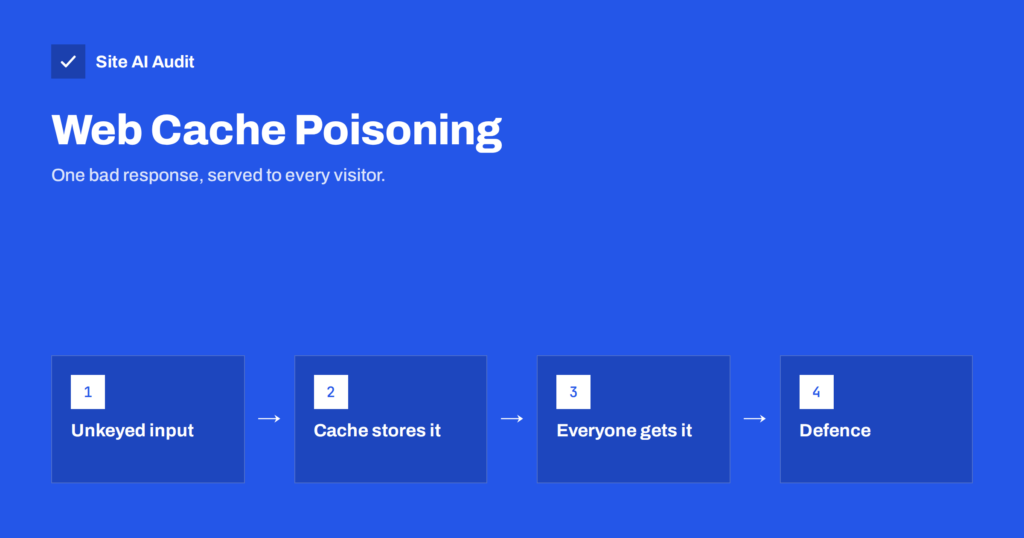
Web Cache Poisoning Explained for Website Owners
Web cache poisoning tricks your cache into storing a harmful page and serving it to everyone. Learn how it works, where caches are weak…
 Oct 20, 2026 · 8 min read
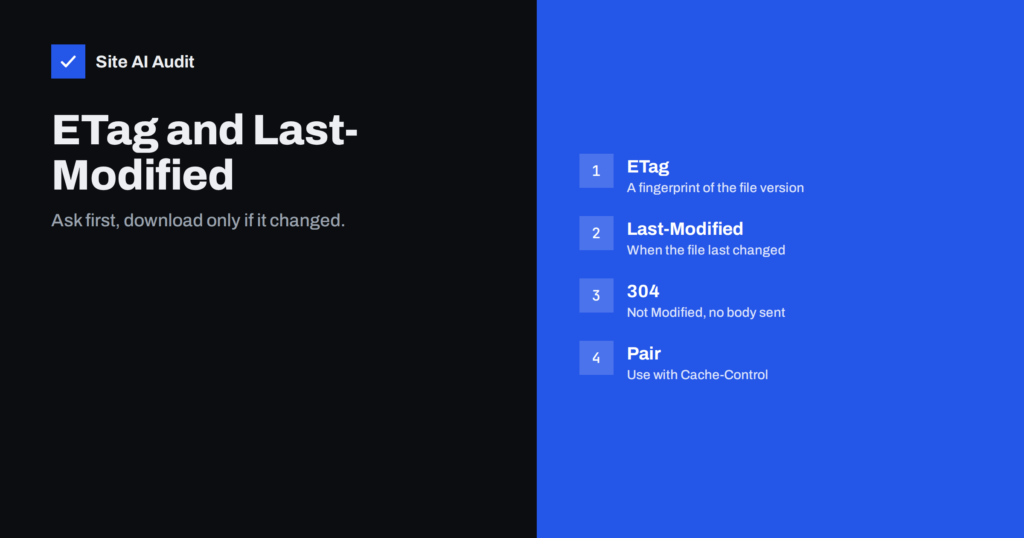
ETag and Last-Modified: How Conditional Requests Save Time
ETag and Last-Modified let browsers ask "has this changed?" instead of downloading again. Learn how 304 responses work and how to set caching up…
 Oct 17, 2026 · 8 min read
PHP OPcache: Faster PHP Without Changing Your Code
OPcache keeps compiled PHP code in memory so the server does not rebuild it on every request. Learn how to check it, size it…
 Oct 16, 2026 · 8 min read
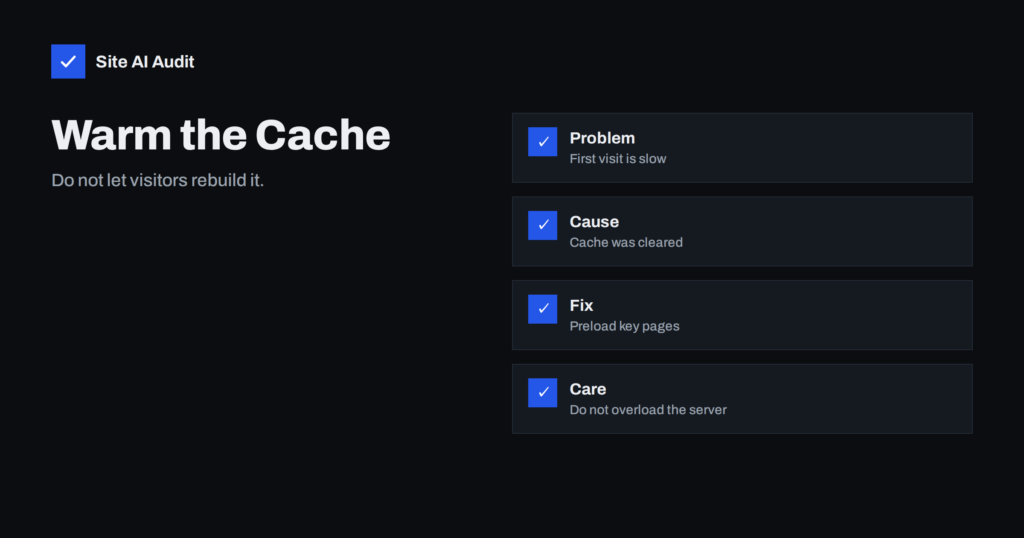
Cache Warming: Keep Your Site Fast After a Cache Purge
After you clear the cache, the next visitors wait for slow pages. Cache warming rebuilds the cache in advance. Learn how it works and…
 Oct 14, 2026 · 7 min read
Nginx vs Apache vs LiteSpeed: Does Web Server Software Matter?
Is Nginx, Apache or LiteSpeed faster for your site? See how they differ, when the choice matters and what usually has a bigger effect…
 Oct 5, 2026 · 8 min read
CDN Cache Hit Ratio: Why Your CDN Is Not Making You Faster
A CDN only speeds up your site when it serves pages from cache. Learn what cache hit ratio means, how to check it and…