 ENEnglish
 LTLietuviškai
 DEDeutsch
 FRFrançais
 RUРусский
 ESEspañol
 PLPolski
 ITItaliano
 UKУкраїнська
 CSČeština
 PTPortuguês
 JA日本語
JA日本語 LVLatviešu valoda
 ETEesti
 HUMagyar
 IDBahasa Indonesia
 TRTürkçe
 HIहिन्दी
 ELΕλληνικά
 ARالعربية
 THไทย
THไทย VITiếng Việt
 RORomână
 MSBahasa Melayu
 BNবাংলা
#SSL certificate
Everything about SSL certificates for a website: issuing, renewing and checking them. Articles tagged here explain expiry warnings, certificate chains and domain mismatches. They show how automatic renewal works with common hosts. You will learn what visitors see when a certificate fails. Guides include steps to check your certificate in a minute. Read them before a warning appears in your customers’ browsers.
 1 de set. de 2026 · 8 min de leitura
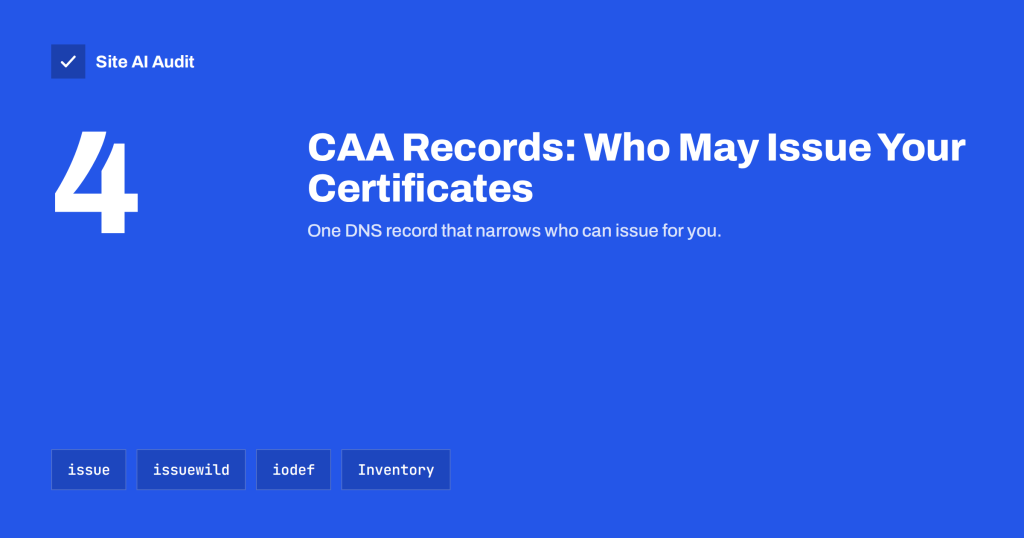
CAA Records Explained: Control Who Can Issue Your Certificates
A CAA DNS record lists which certificate authorities may issue certificates for your domain. Learn how it works, how to set it up and…
 24 de ago. de 2026 · 7 min de leitura
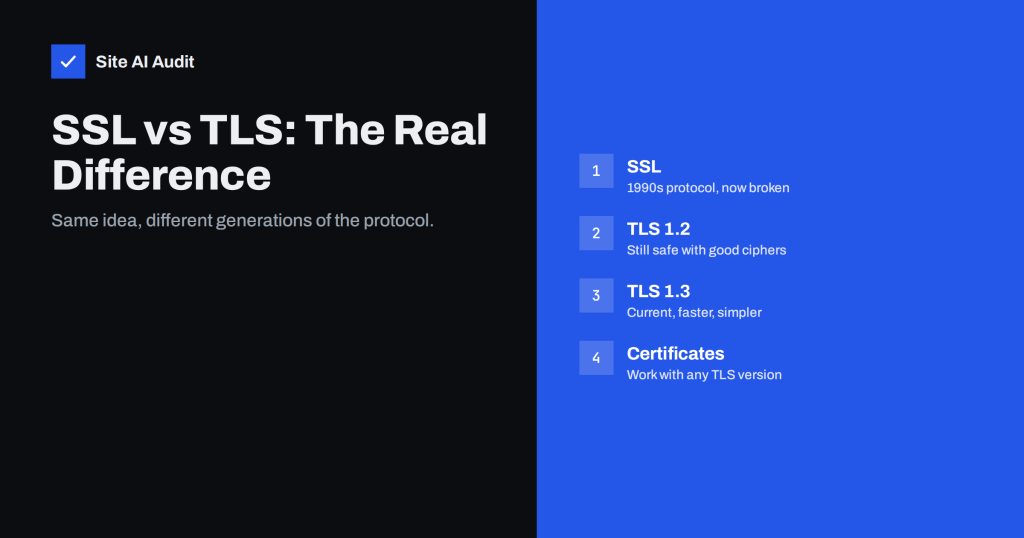
SSL vs TLS: What Is the Difference and Why It Still Matters
SSL and TLS are used as synonyms, but SSL is long obsolete. Learn how they differ, which versions are safe today and what "SSL…
 22 de ago. de 2026 · 8 min de leitura
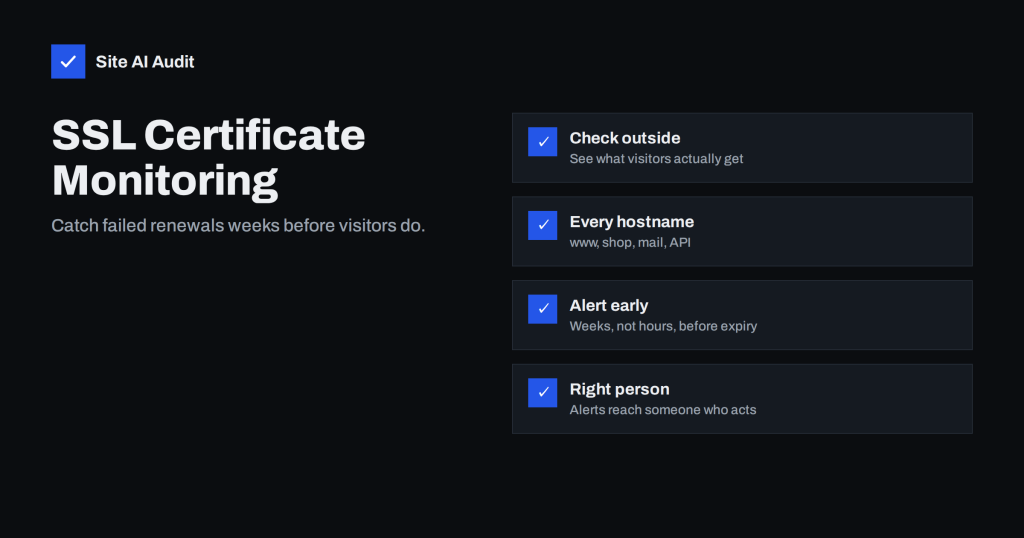
SSL Certificate Monitoring: How to Never Miss an Expiry Again
Automatic renewal fails more often than people think. Learn what SSL certificate monitoring should check, when alerts should fire and who should get them.
 21 de ago. de 2026 · 8 min de leitura
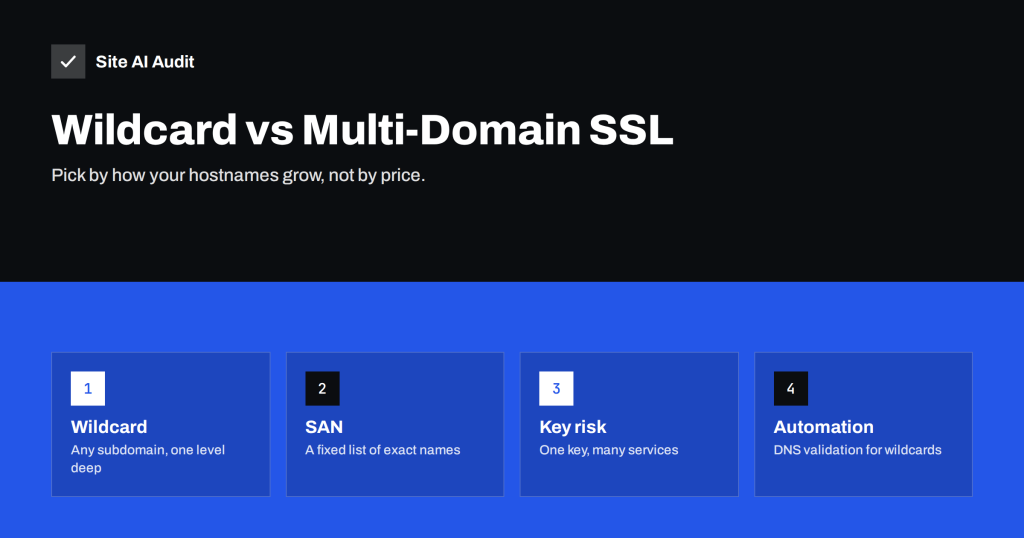
Wildcard vs Multi-Domain (SAN) SSL: Which Should You Choose?
Wildcard certificates cover every subdomain; multi-domain SAN certificates cover a list of names. Compare coverage, security, validation and renewal here.
 14 de ago. de 2026 · 8 min de leitura
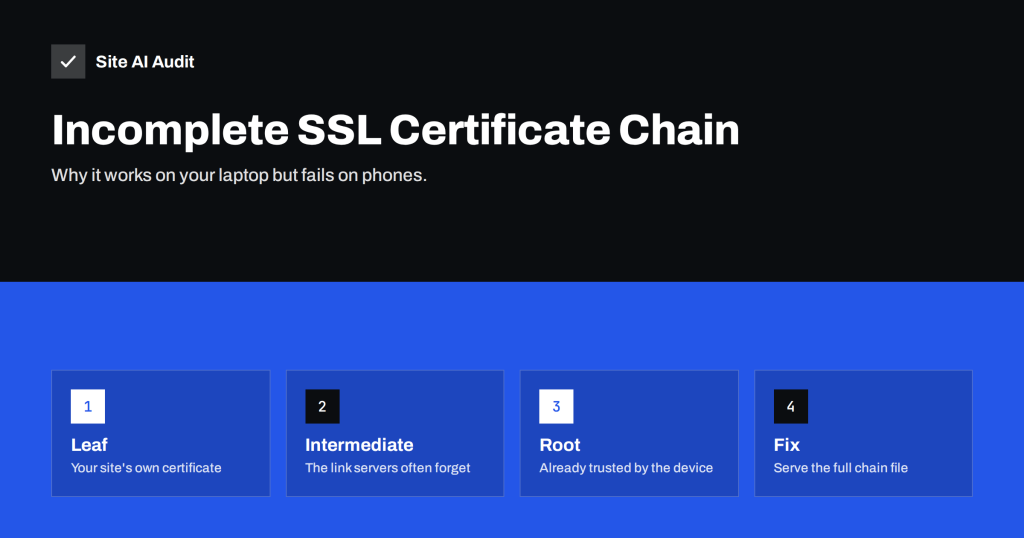
Incomplete SSL Certificate Chain: How to Find and Fix It
A missing intermediate certificate makes some browsers, phones and apps reject your site while others work. Learn how chains work and how to fix…
 12 de ago. de 2026 · 7 min de leitura
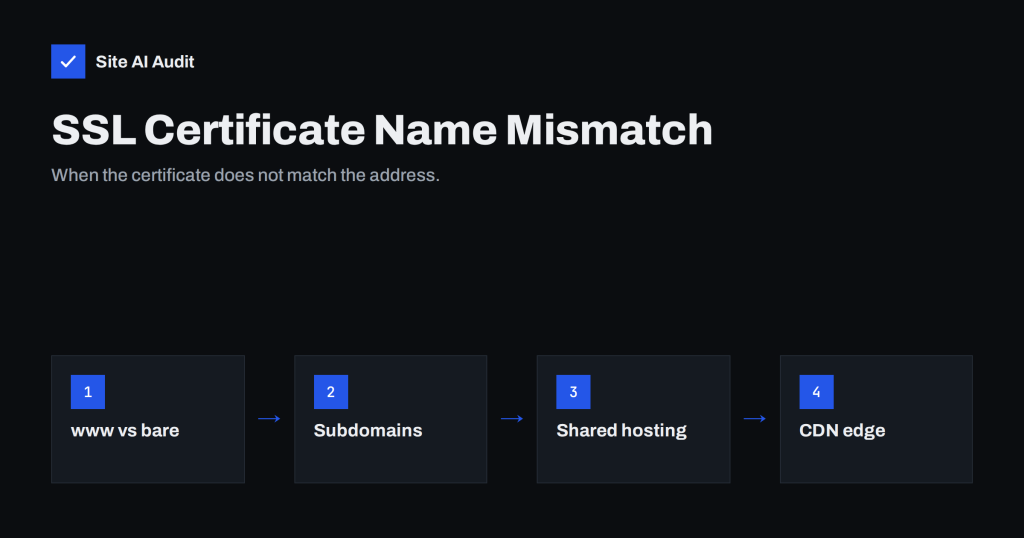
SSL Certificate Name Mismatch: Causes and How to Fix It
A name mismatch error means the certificate does not cover the address the visitor used. Learn the common causes – www, subdomains, CDNs –…
 11 de ago. de 2026 · 8 min de leitura
Free vs Paid SSL Certificates: Which Does Your Site Need?
Free SSL certificates encrypt just as well as paid ones. Learn where they differ – validation, warranty, lifetime, support – and when paying makes…
 10 de ago. de 2026 · 8 min de leitura
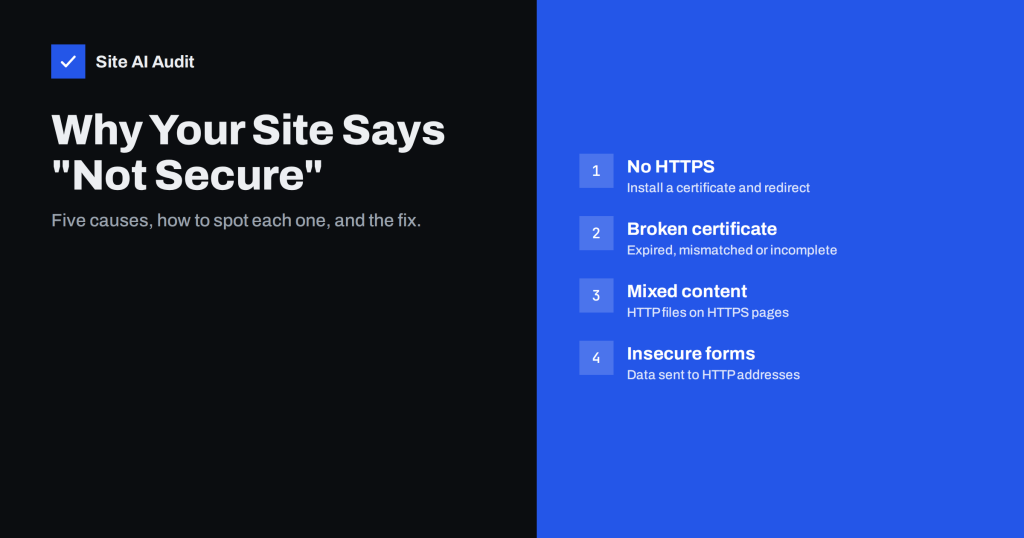
Why Your Website Says “Not Secure” and How to Fix It
The Not Secure label appears for a handful of reasons: no HTTPS, a broken certificate, mixed content or insecure forms. Here is how to…
 4 de ago. de 2026 · 8 min de leitura
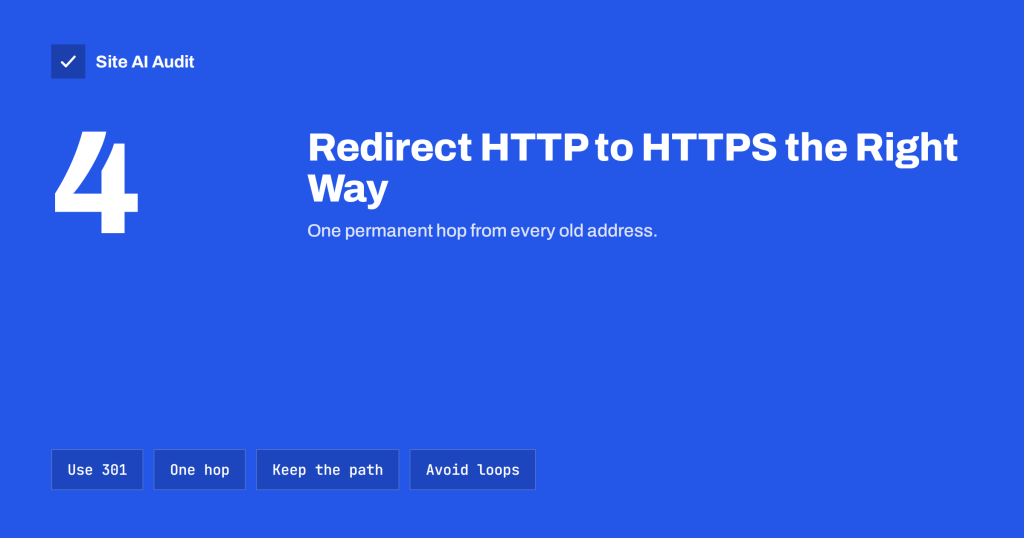
How to Redirect HTTP to HTTPS the Right Way (Without Loops)
A step-by-step guide to redirecting HTTP to HTTPS on Apache, Nginx, WordPress and CDNs: one permanent hop, no loops, no lost pages and no…
 2 de ago. de 2026 · 8 min de leitura
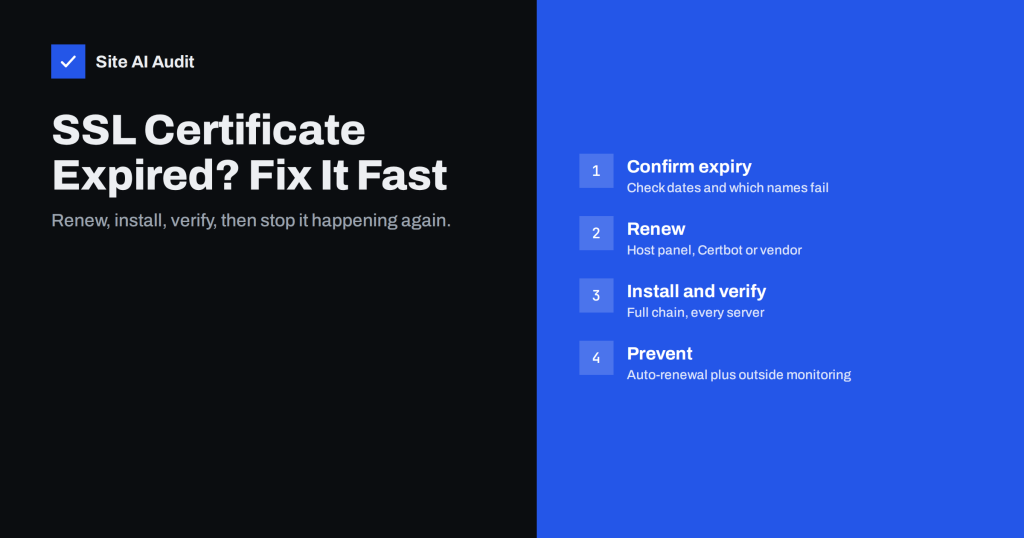
SSL Certificate Expired: What Happens and How to Fix It Fast
An expired SSL certificate puts a full-page warning in front of every visitor. Here is how to renew it quickly and make sure it…
 1 de ago. de 2026 · 8 min de leitura
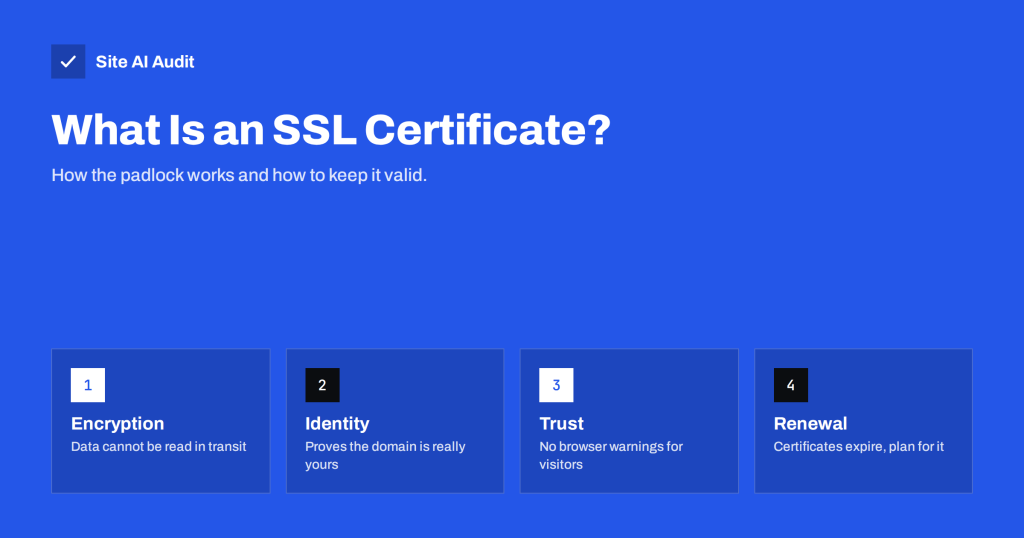
What Is an SSL Certificate and Why Does Your Website Need One?
An SSL certificate encrypts traffic and proves your site's identity. Learn how it works, which type you need, and how to keep it valid…