 ENEnglish
 LTLietuviškai
 DEDeutsch
 FRFrançais
 RUРусский
 ESEspañol
 PLPolski
 ITItaliano
 UKУкраїнська
 CSČeština
 PTPortuguês
 JA日本語
JA日本語 LVLatviešu valoda
 ETEesti
 HUMagyar
 IDBahasa Indonesia
 TRTürkçe
 HIहिन्दी
 ELΕλληνικά
 ARالعربية
 THไทย
THไทย VITiếng Việt
 RORomână
 MSBahasa Melayu
 BNবাংলা
#Image optimization
Image optimization means delivering pictures in the right format, size and quality so pages load fast without looking worse. Articles tagged here compare formats such as JPEG, PNG, WebP and AVIF. They explain responsive images, compression settings and lazy loading. You will learn why images are often the heaviest part of a page. Each guide shows practical steps for WordPress, shops and hand-built sites. Good image handling is usually the quickest speed win a website can get.
 1 de out. de 2026 · 8 min de leitura
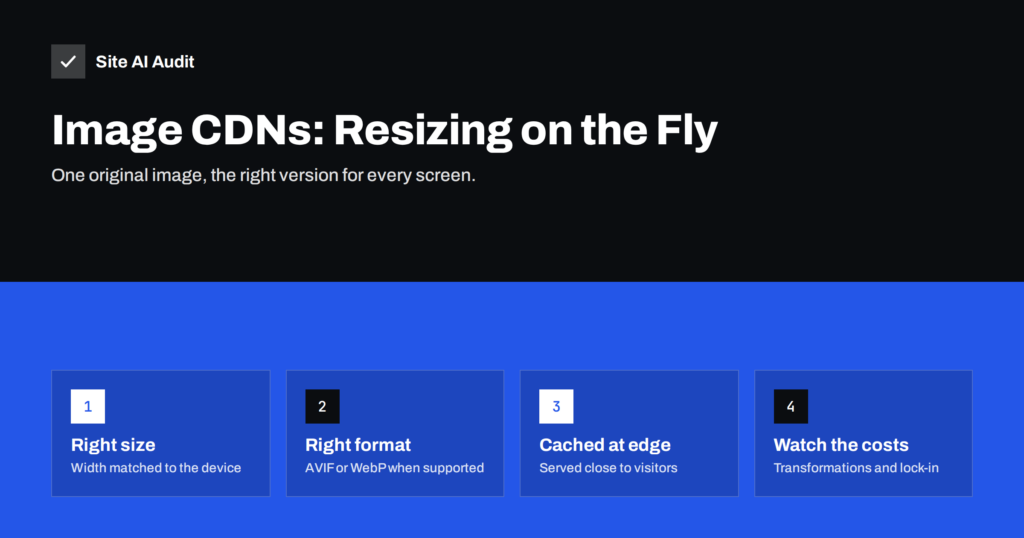
Image CDNs Explained: Automatic Resizing and Modern Formats
An image CDN resizes, compresses and converts images on the fly for each device. Learn how it works, what it costs, and when it…
 1 de out. de 2026 · 8 min de leitura
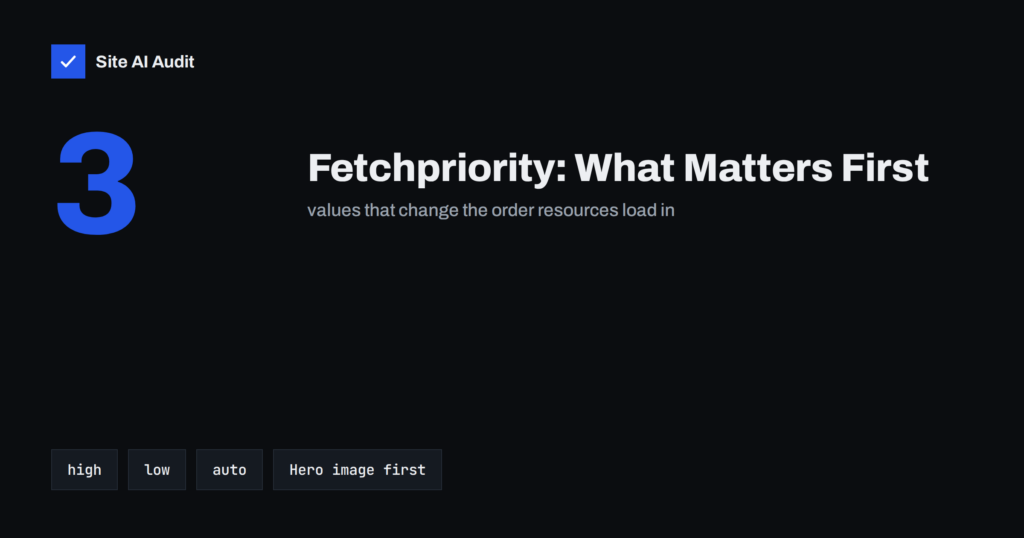
Fetchpriority Explained: Tell the Browser What Matters First
The fetchpriority attribute lets you tell browsers which image or script matters most. Learn when to use high and low, with examples and mistakes…
 30 de set. de 2026 · 8 min de leitura
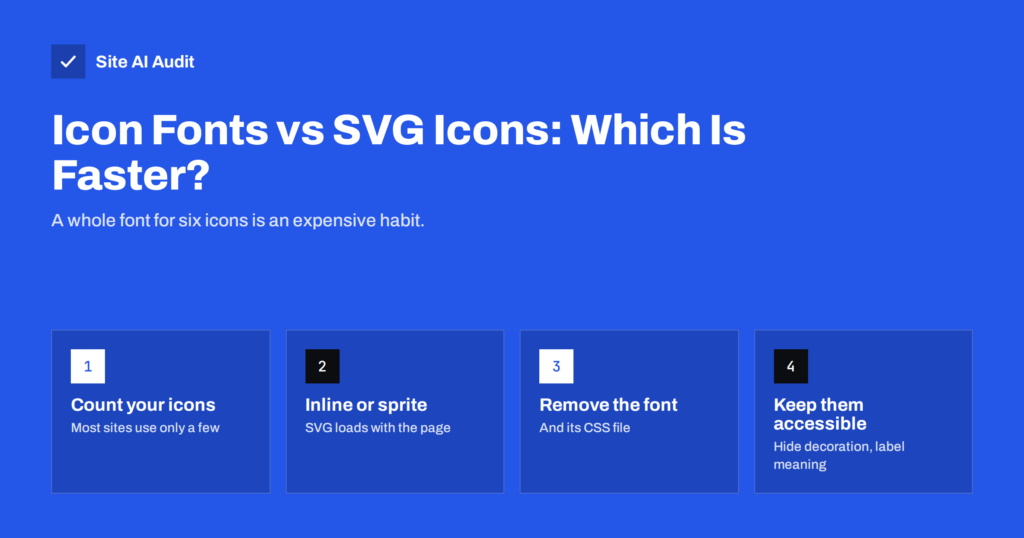
Icon Fonts vs SVG Icons: Which Is Better for Page Speed?
Icon fonts load a whole font for a few icons and can flash or shift on load. See why SVG icons are usually faster…
 29 de set. de 2026 · 8 min de leitura
Animated GIFs Slow Your Pages: Replace Them With Video
Animated GIFs are often the heaviest files on a page. Learn why, how to convert them to MP4 or WebM video, and how to…
 13 de set. de 2026 · 7 min de leitura
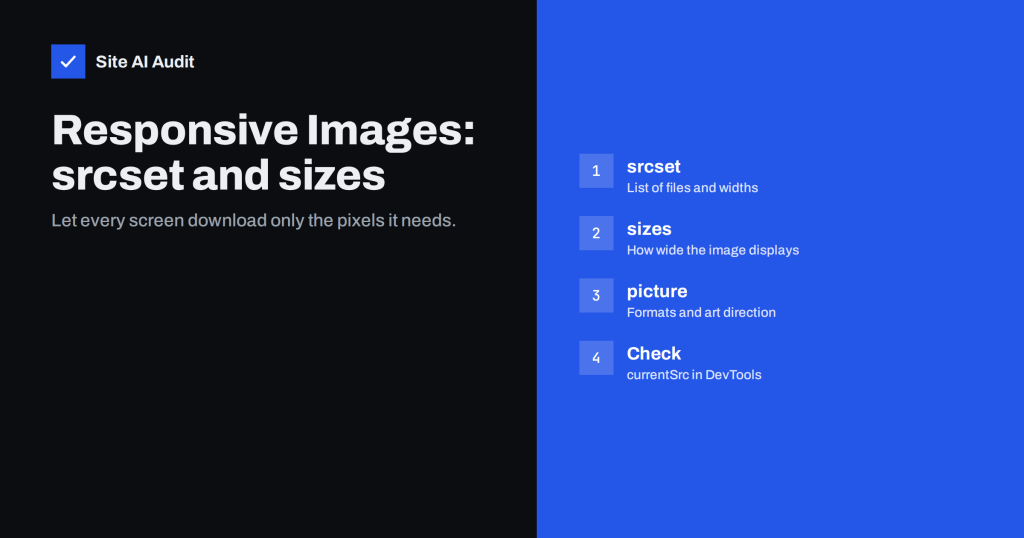
Responsive Images with srcset and sizes: A Practical Guide
srcset and sizes let each device download an image at the right size. Learn how they work, how to write the sizes attribute and…
 12 de set. de 2026 · 7 min de leitura
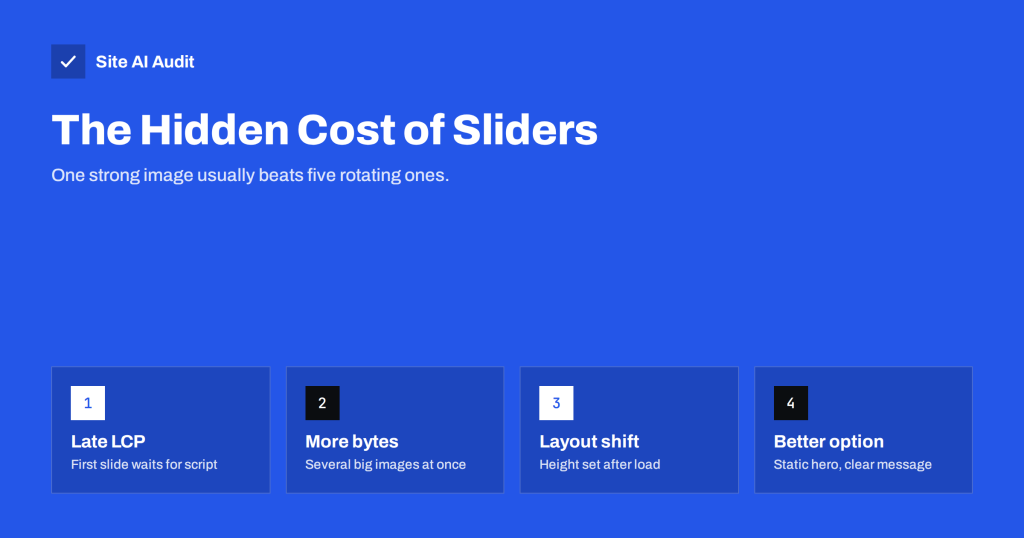
Hero Sliders and Carousels: The Hidden Cost to Page Speed
Homepage sliders look impressive but often delay the main image, add scripts and shift layouts. Learn what they cost and how to replace or…
 25 de ago. de 2026 · 7 min de leitura
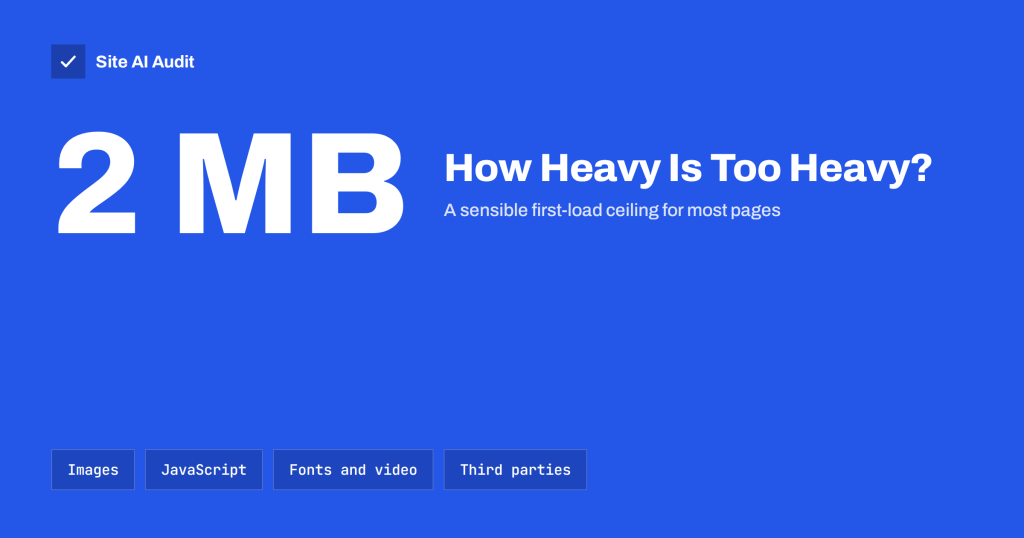
Page Weight: How Heavy Is Too Heavy and How to Trim It
Page weight is the total size of everything a page downloads. Learn what makes pages heavy, how to measure it, sensible targets and how…
 12 de ago. de 2026 · 7 min de leitura
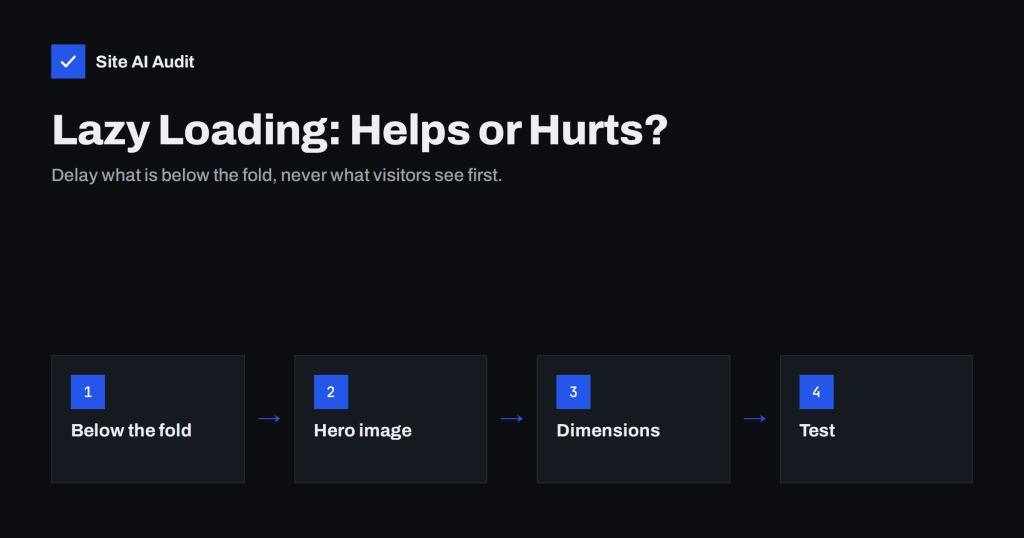
Lazy Loading Images: When It Helps and When It Hurts
Lazy loading can cut page weight or quietly slow your main content. Learn how native lazy loading works, which images to exclude and how…
 10 de ago. de 2026 · 8 min de leitura
WebP vs AVIF vs JPEG: Which Image Format Should You Use?
WebP, AVIF and JPEG compared for real websites: file size, quality, browser support, encoding speed and tools, with a simple rule for choosing the…
 9 de ago. de 2026 · 7 min de leitura
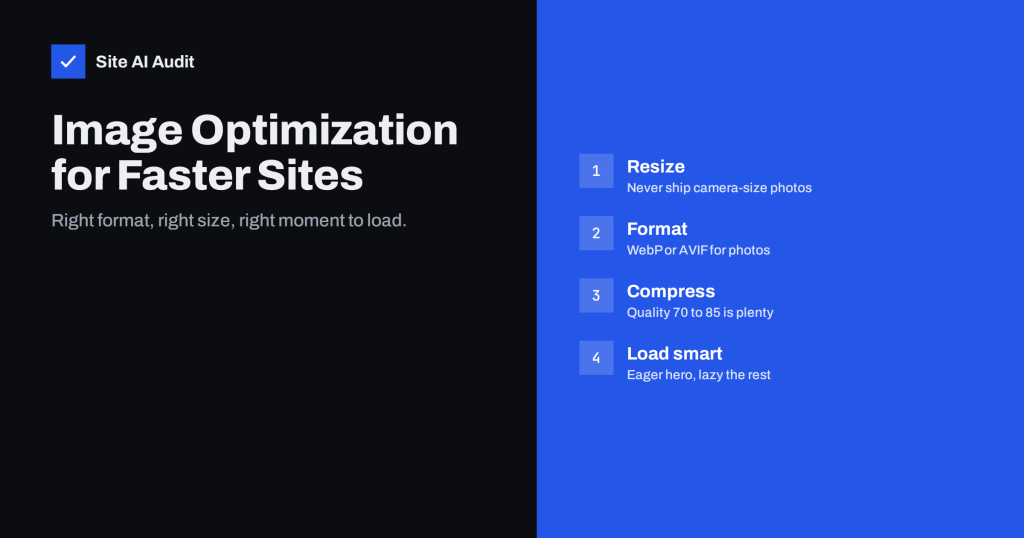
Image Optimization for Faster Websites: A Practical Guide
Images are often the heaviest part of a web page. Learn how to choose formats, resize, compress and load images so your site gets…
 3 de ago. de 2026 · 8 min de leitura
How to Improve Largest Contentful Paint (LCP) on Any Website
LCP measures when your main content appears. Learn how to find the LCP element, split the delay into four parts and fix the part…