 ENEnglish
 LTLietuviškai
 DEDeutsch
 FRFrançais
 RUРусский
 ESEspañol
 PLPolski
 ITItaliano
 UKУкраїнська
 CSČeština
 PTPortuguês
 JA日本語
JA日本語 LVLatviešu valoda
 ETEesti
 HUMagyar
 IDBahasa Indonesia
 TRTürkçe
 HIहिन्दी
 ELΕλληνικά
 ARالعربية
 THไทย
THไทย VITiếng Việt
 RORomână
 MSBahasa Melayu
 BNবাংলা
#DNS
DNS (Domain Name System) translates domain names into the records that computers need, such as IP addresses, mail servers and verification strings. Many website and e-mail problems start with a missing, duplicated or outdated DNS record. Record types such as A, CNAME, MX and TXT each have a specific role and their own rules. Changes spread according to the record’s TTL, so planning matters when moving hosts or providers. The articles under this tag explain DNS records in practical terms and show how to avoid common mistakes.
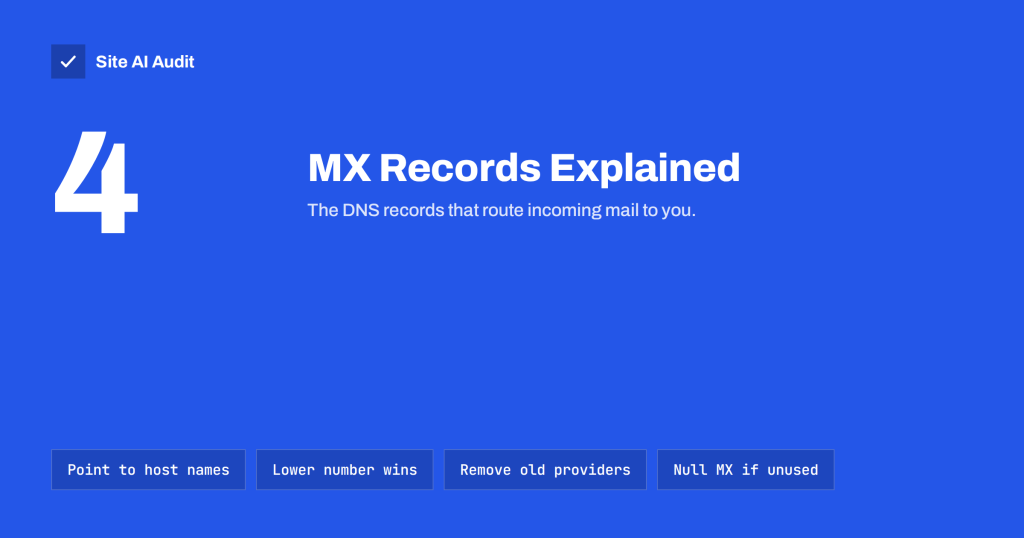 11 de ago. de 2026 · 8 min de leitura
MX Records Explained: How Email Finds Your Mail Server
MX records tell the internet where to deliver mail for your domain. Learn how priorities work, how to check and change them, and the…
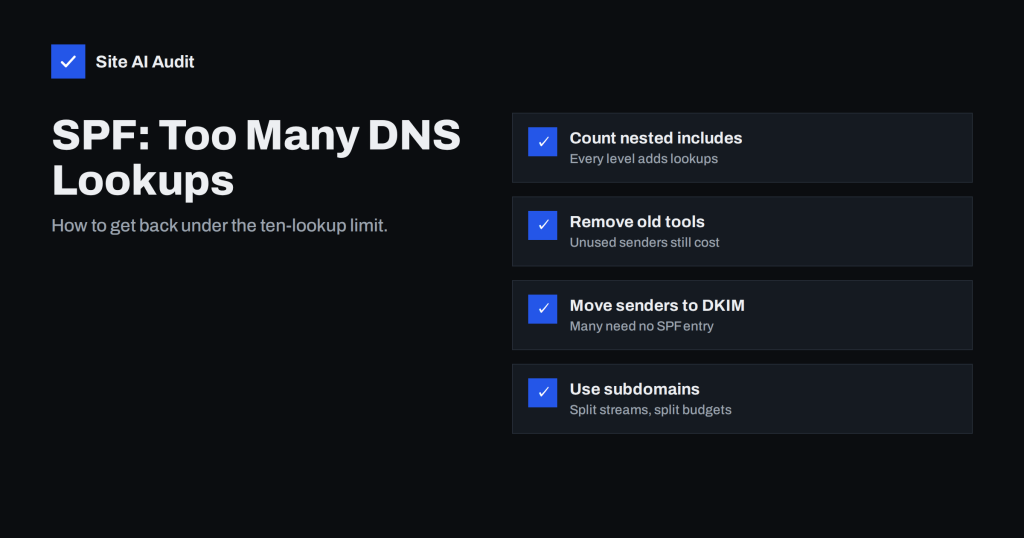 8 de ago. de 2026 · 8 min de leitura
SPF Too Many DNS Lookups: How to Fix the 10-Lookup Limit
An SPF record that needs more than ten DNS lookups fails with a permerror. Learn how to count lookups, what to remove and when…
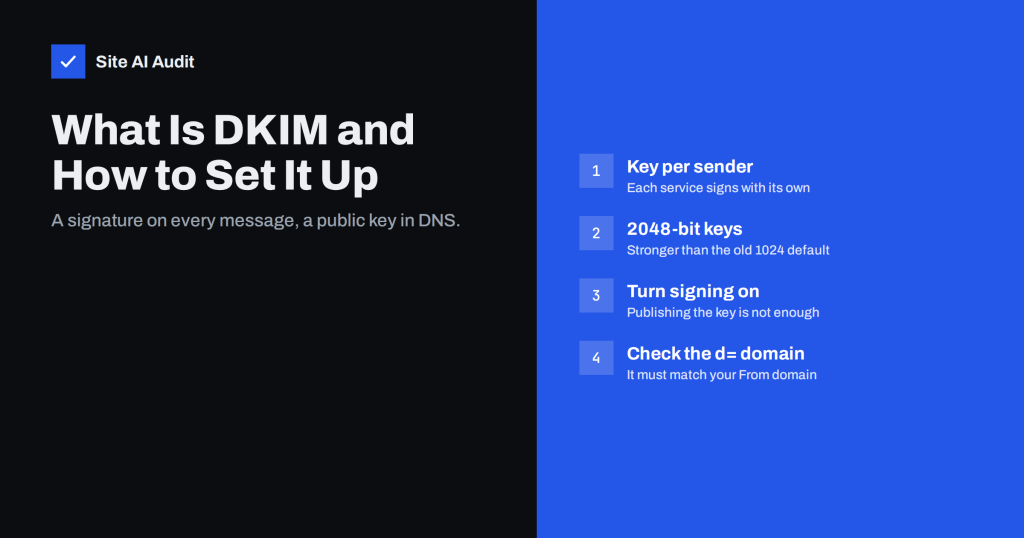 3 de ago. de 2026 · 8 min de leitura
What Is DKIM and How to Set It Up for Your Domain
DKIM signs every message so receivers can trust it came from your domain. Learn how it works, how to set it up for each…
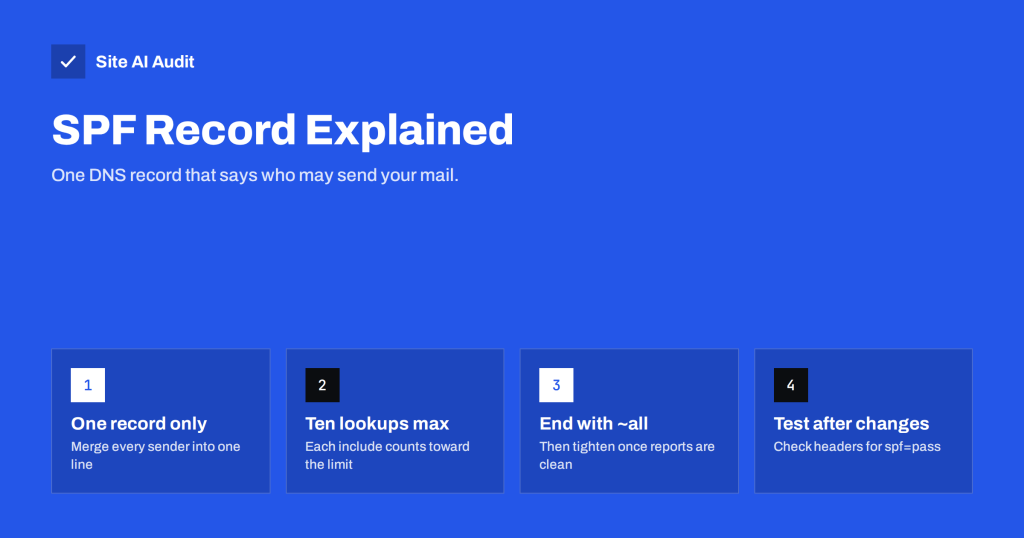 1 de ago. de 2026 · 8 min de leitura
SPF Record Explained: What It Does and How to Set It Up
Learn what an SPF record is, how receiving servers check it, how to write one for every service that sends your mail, and the…