 ENEnglish
 LTLietuviškai
 DEDeutsch
 FRFrançais
 RUРусский
 ESEspañol
 PLPolski
 ITItaliano
 UKУкраїнська
 CSČeština
 PTPortuguês
 JA日本語
JA日本語 LVLatviešu valoda
 ETEesti
 HUMagyar
 IDBahasa Indonesia
 TRTürkçe
 HIहिन्दी
 ELΕλληνικά
 ARالعربية
 THไทย
THไทย VITiếng Việt
 RORomână
 MSBahasa Melayu
 BNবাংলা
#Web vulnerabilities
Web vulnerabilities are weaknesses in websites and web applications that attackers can use to read data, change content or take control. Well-known examples include SQL injection, cross-site scripting, broken access control and outdated software with published flaws. Most of them come from code that trusts user input too much or from components that are no longer updated. They affect small sites built on popular content management systems as much as large custom applications. Understanding the common types helps owners ask the right questions of developers and hosting providers. The articles under this tag explain how the main vulnerabilities work and which practical measures prevent them.
 2026. gada 3. okt. · Lasīšanas laiks: 8 min
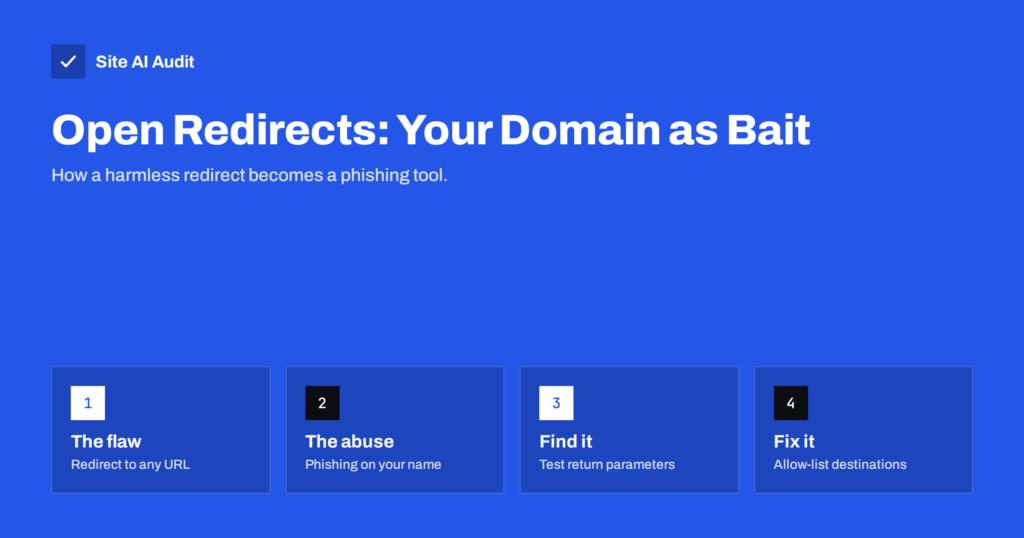
Open Redirects: How Attackers Abuse Your Website’s Links
An open redirect lets attackers send visitors from your trusted domain to phishing pages. Learn how to find open redirects and fix them in…
 2026. gada 30. sept. · Lasīšanas laiks: 8 min
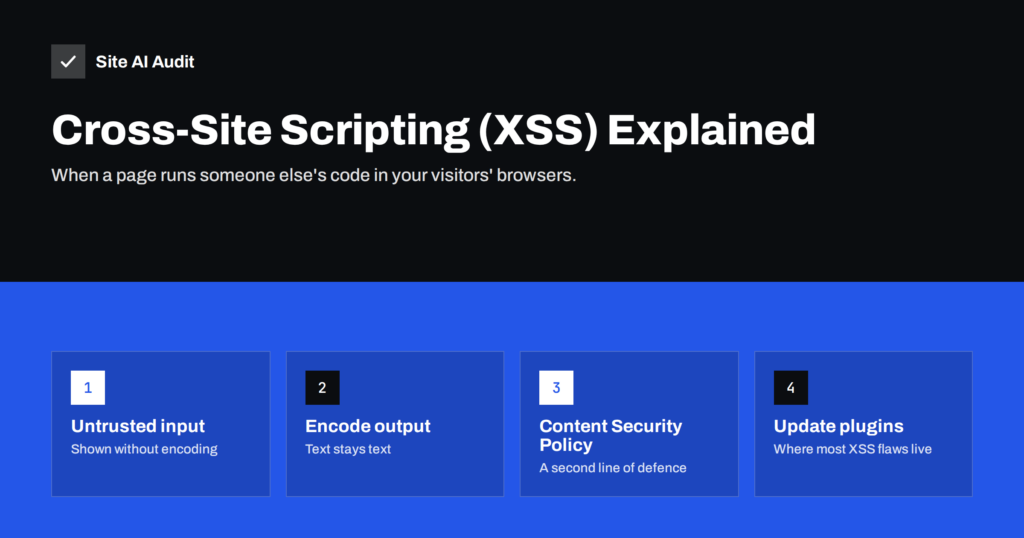
Cross-Site Scripting (XSS) Explained for Website Owners
Cross-site scripting lets attackers run their own JavaScript on your pages. Learn the main XSS types, what they can do and how to protect…
 2026. gada 30. sept. · Lasīšanas laiks: 8 min
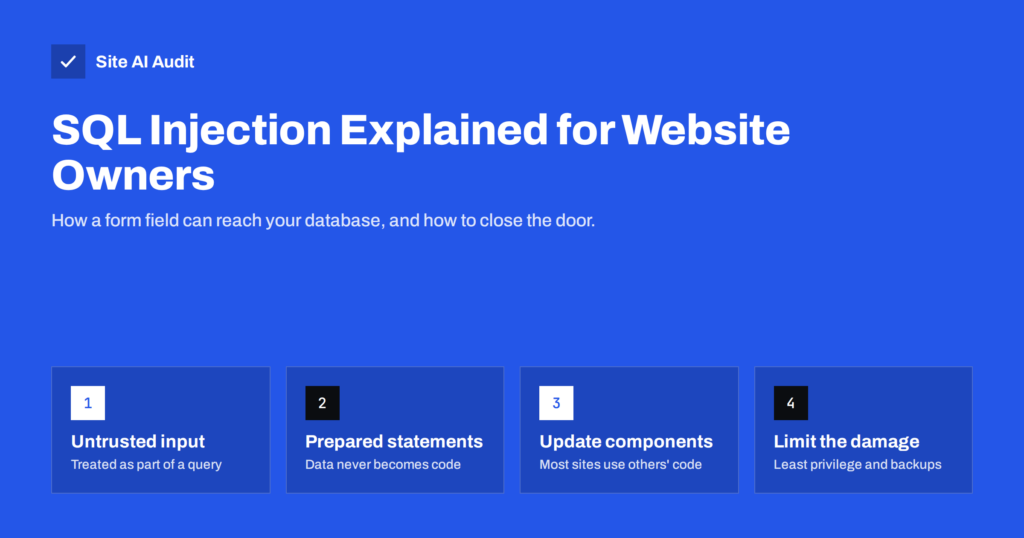
SQL Injection Explained: How Sites Get Breached and Protected
SQL injection lets attackers read or change your website's database through a form or URL. Learn how it works, where the risk comes from…