 ENEnglish
 LTLietuviškai
 DEDeutsch
 FRFrançais
 RUРусский
 ESEspañol
 PLPolski
 ITItaliano
 UKУкраїнська
 CSČeština
 PTPortuguês
 JA日本語
 LVLatviešu valoda
 ETEesti
 HUMagyar
 IDBahasa Indonesia
 TRTürkçe
 HIहिन्दी
 ELΕλληνικά
 ARالعربية
 THไทย
 VITiếng Việt
 RORomână
 MSBahasa Melayu
 BNবাংলা
#Email Authentication
Email authentication is the set of DNS-based standards that prove a message really comes from the domain it claims. The core trio is SPF, DKIM and DMARC, supported by related standards such as BIMI, MTA-STS and reverse DNS. Mailbox providers use authentication results as one of the first signals when they decide whether to trust a message. Without it, legitimate mail is more likely to be filtered and criminals can impersonate the domain more easily. The articles under this tag explain how the standards fit together and how to check them.
 10 oct. 2026 · 8 min de lecture
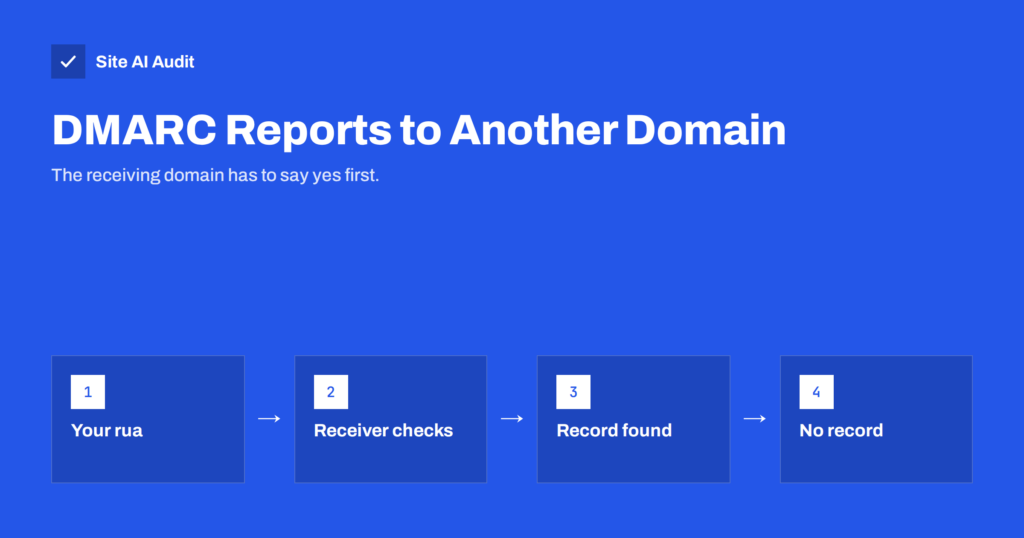
Sending DMARC Reports to Another Domain: The Authorization Record
DMARC reports sent to an address on another domain arrive only if that domain authorizes them. Learn how the _report._dmarc record works and how…
 9 oct. 2026 · 8 min de lecture
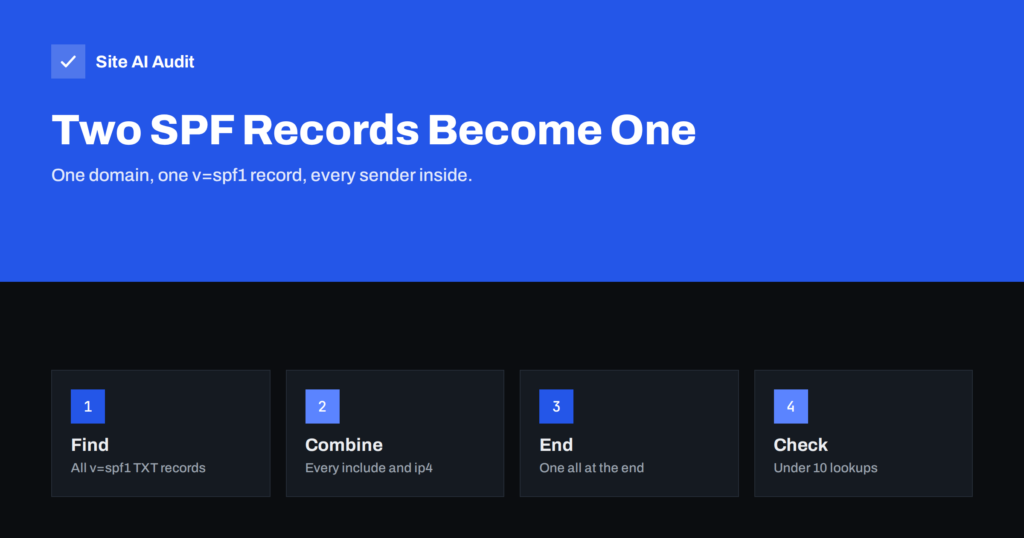
Two SPF Records on One Domain? Why It Fails and How to Merge
A domain may have only one SPF record. Two v=spf1 records make SPF fail with a permanent error. Learn how to find duplicates and…
 8 oct. 2026 · 8 min de lecture
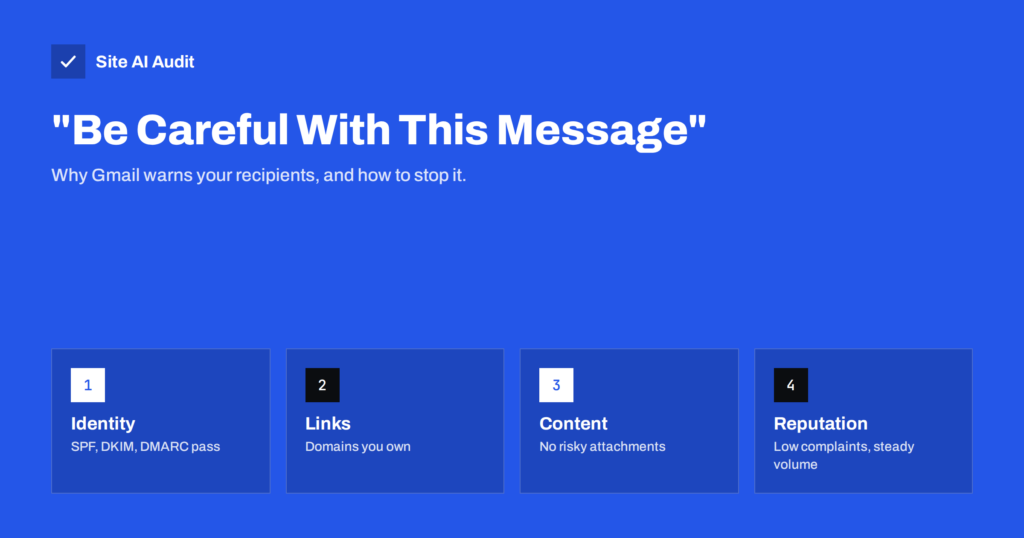
Gmail’s “Be Careful With This Message” Warning: Why It Appears
Gmail shows a "Be careful with this message" banner when it doubts who sent an email or what it contains. Learn the common causes…
 7 oct. 2026 · 8 min de lecture
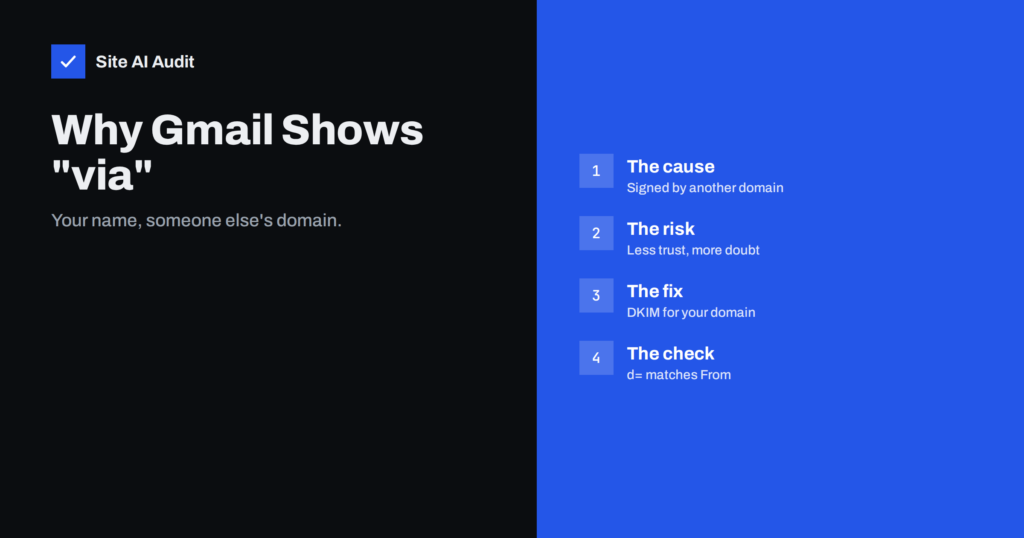
Why Gmail Shows “via” Next to Your Sender Name and How to Fix It
Gmail adds "via" and another domain next to your name when the sending service does not sign mail for your domain. Learn why it…
 4 oct. 2026 · 8 min de lecture
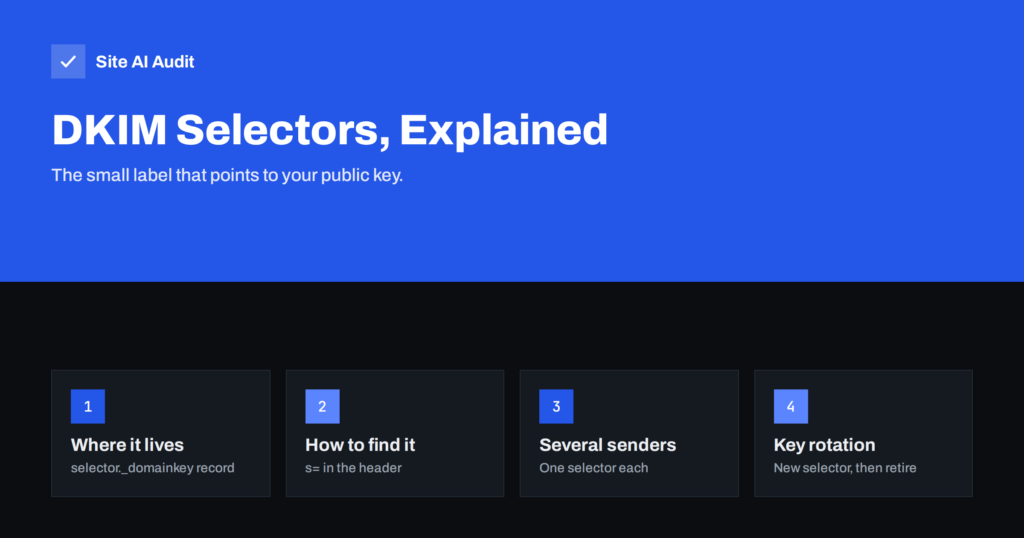
DKIM Selectors Explained: How to Find Yours and Use Several
A DKIM selector tells receivers where to find your public key. Learn how to find the selector you use, run several senders and rotate…
 1 oct. 2026 · 7 min de lecture
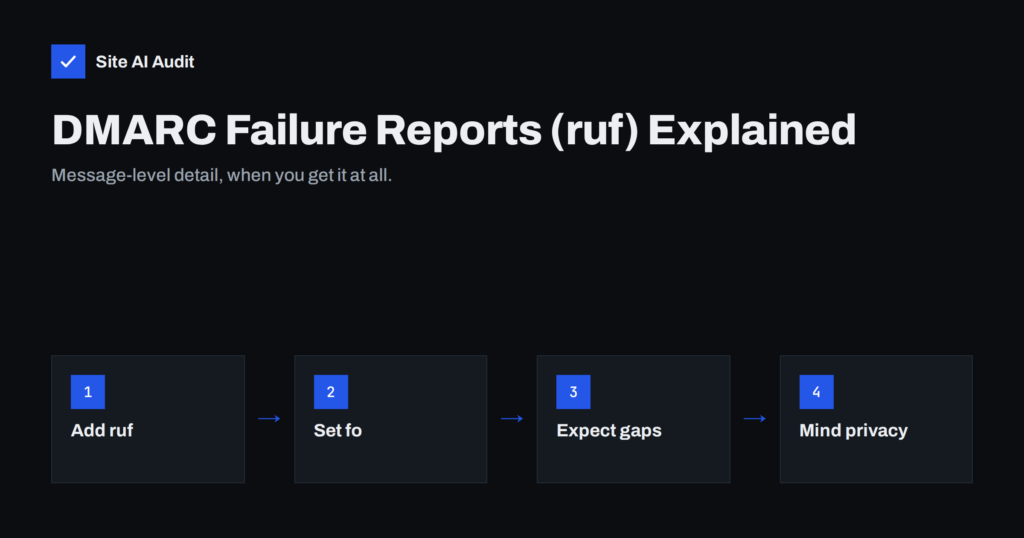
DMARC Failure Reports (ruf): What They Show and Their Limits
DMARC failure reports send details of individual messages that fail checks. Learn what ruf and fo do, why few providers send them, and privacy…
 30 sept. 2026 · 8 min de lecture
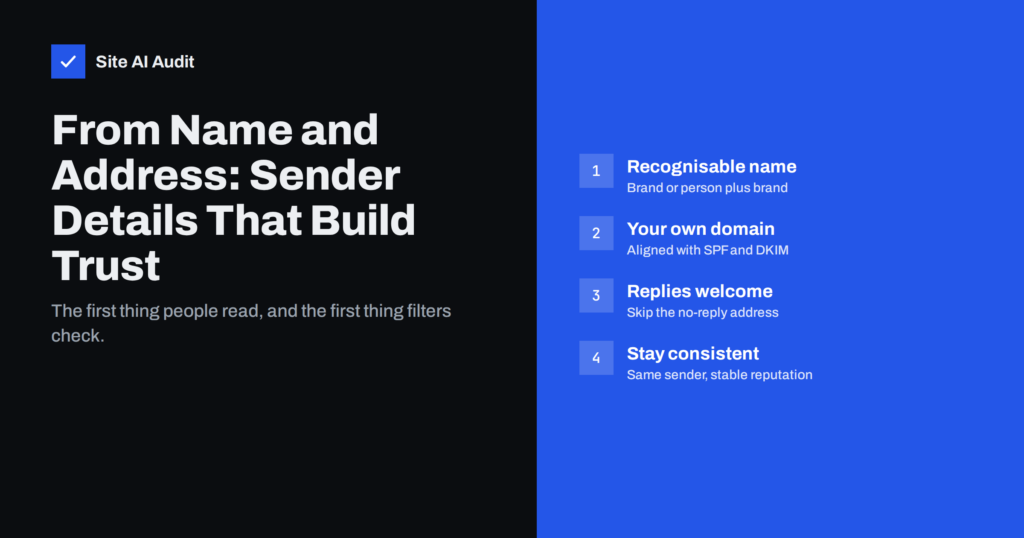
From Name and Address: Email Sender Details That Build Trust
The From name, From address and Reply-To decide whether people trust and open your email. Learn how to choose them, avoid no-reply and keep…
 29 sept. 2026 · 8 min de lecture
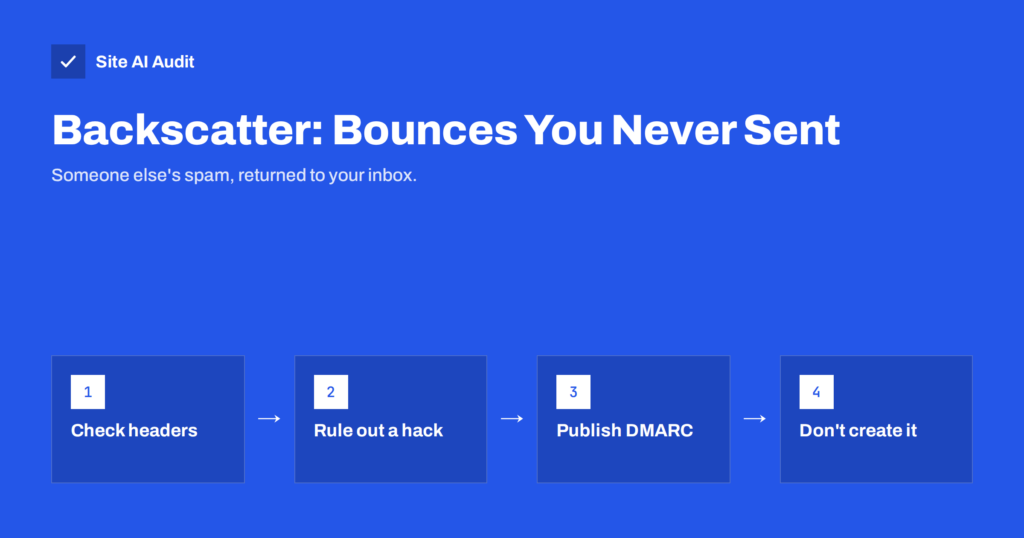
Backscatter: Why You Get Bounces for Emails You Never Sent
Getting bounce messages for emails you never sent? That is backscatter from spoofed spam. Learn how to tell if you were hacked and how…
 29 sept. 2026 · 7 min de lecture
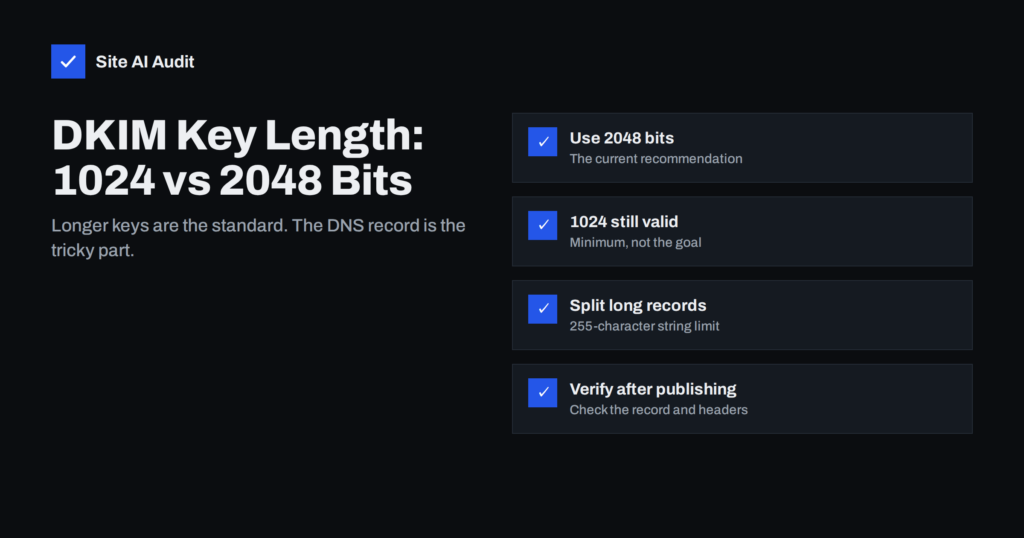
DKIM Key Length: 1024 vs 2048 Bits and Long DNS Records
Should your DKIM key be 1024 or 2048 bits? Learn what the standard recommends, how to publish long keys in DNS without errors and…
 29 sept. 2026 · 8 min de lecture
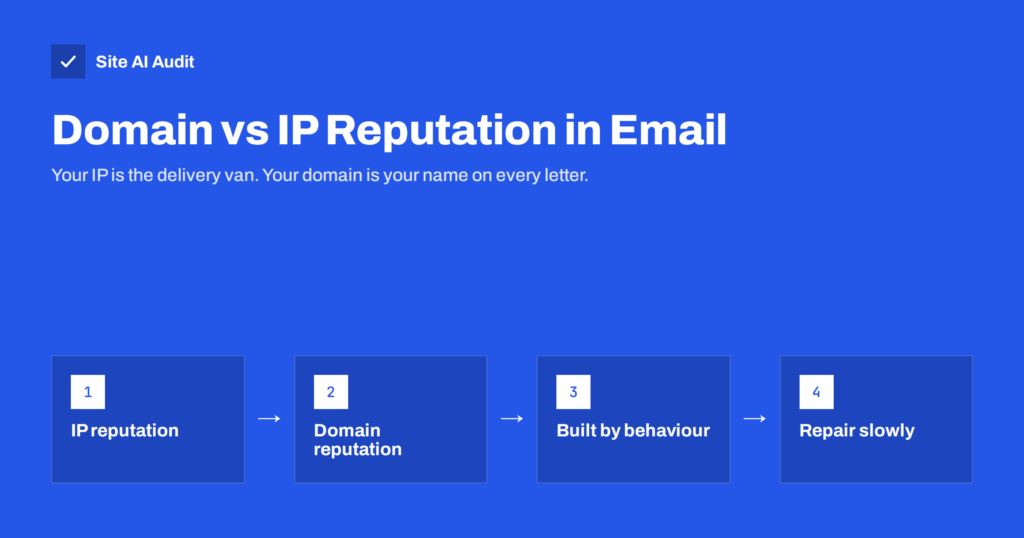
Domain Reputation vs IP Reputation in Email: What Counts
Mailbox providers judge both your sending IP and your domain. Learn how domain and IP reputation differ, how each is built and how to…
 28 sept. 2026 · 8 min de lecture
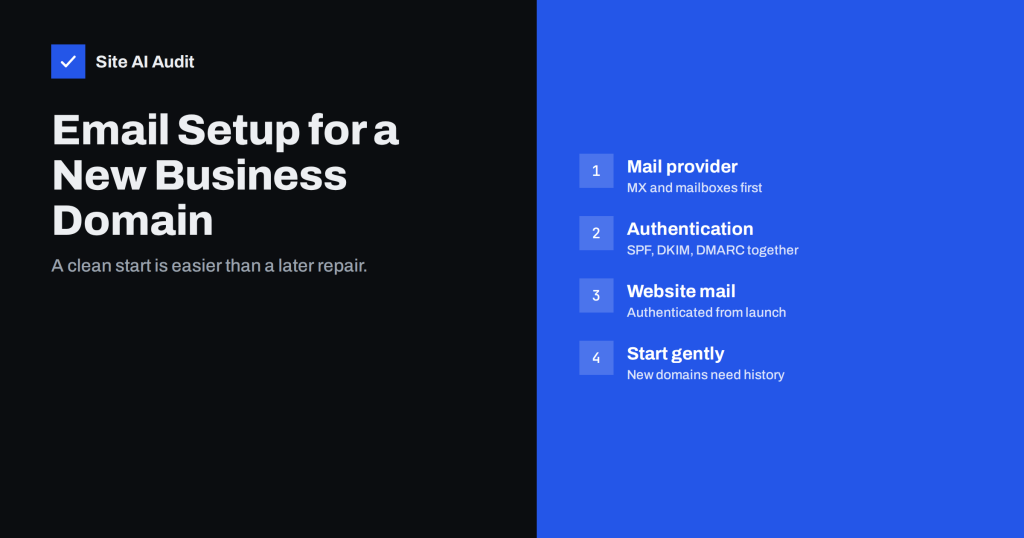
Email Setup for a New Business Domain: Get It Right on Day One
Starting a business or a new domain? Set up MX, SPF, DKIM and DMARC, website mail and sending habits correctly from day one, before…
 26 sept. 2026 · 8 min de lecture
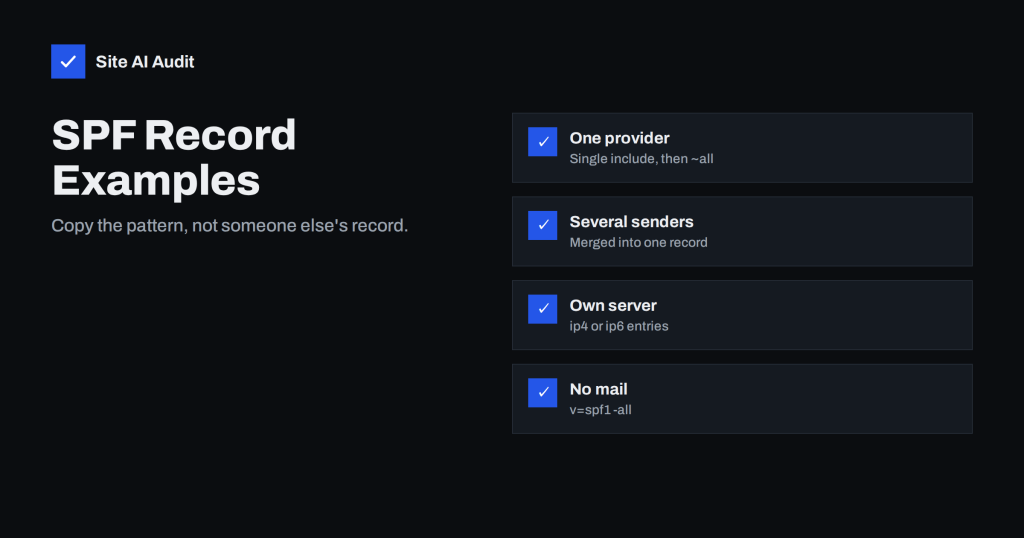
SPF Record Examples for Common Small Business Setups
Practical SPF record examples for Google Workspace, Microsoft 365, website mail, newsletter tools, own servers and parked domains, with the pitfalls to avoid.