 ENEnglish
 LTLietuviškai
 DEDeutsch
 FRFrançais
 RUРусский
 ESEspañol
 PLPolski
 ITItaliano
 UKУкраїнська
 CSČeština
 PTPortuguês
 JA日本語
 LVLatviešu valoda
 ETEesti
 HUMagyar
 IDBahasa Indonesia
 TRTürkçe
 HIहिन्दी
 ELΕλληνικά
 ARالعربية
 THไทย
 VITiếng Việt
 RORomână
 MSBahasa Melayu
 BNবাংলা
#Website security
Website security covers the everyday measures that keep a site, its visitors and its data safe. Articles tagged here focus on practical protection for small and medium websites rather than enterprise theory. They cover certificates, updates, exposed files, login protection, backups and monitoring. Each guide explains the real risk first and then the fix, in order of impact. The advice fits business owners, marketers, agencies and developers alike. Start here if you want a clear picture of what matters most for your site.
 22. 10. 2026 · Čtení: 8 min
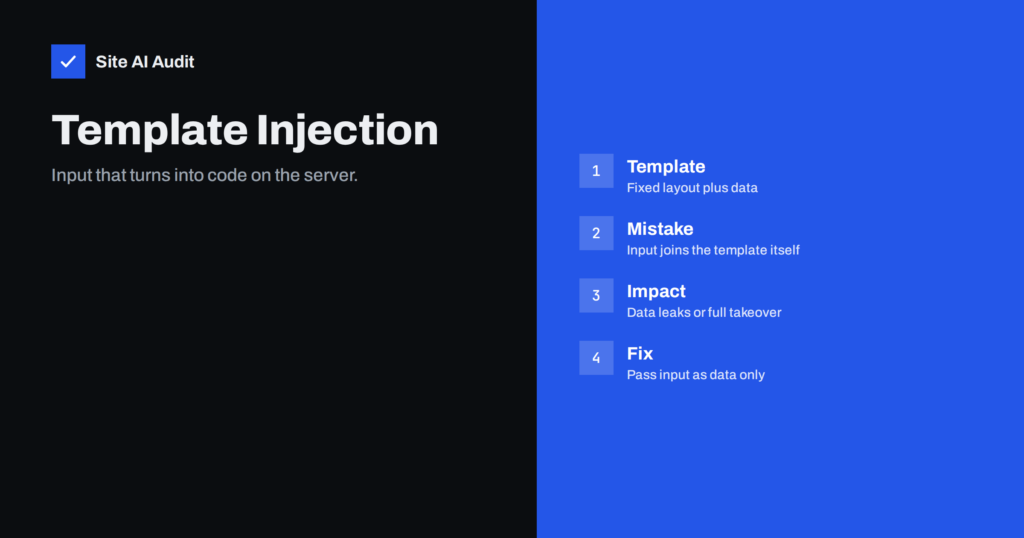
Server-Side Template Injection (SSTI) Explained Simply
Server-side template injection happens when user input becomes part of a template the server runs. Learn how it works, why it is serious and…
 22. 10. 2026 · Čtení: 8 min
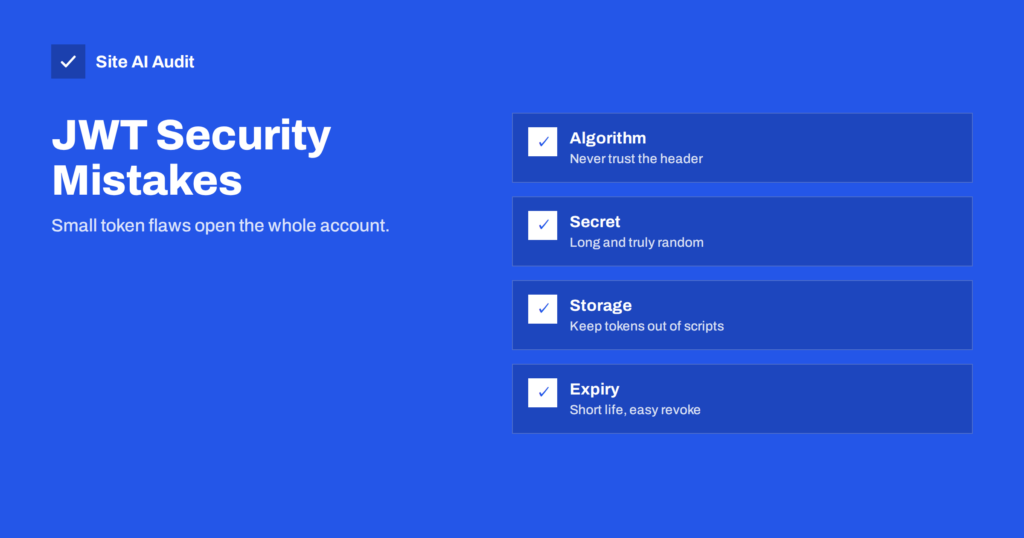
JWT Security Mistakes: Protecting Login Tokens on Your Site
JSON Web Tokens are common in logins and APIs, but small mistakes make them easy to forge or steal. Learn the typical flaws and…
 21. 10. 2026 · Čtení: 8 min
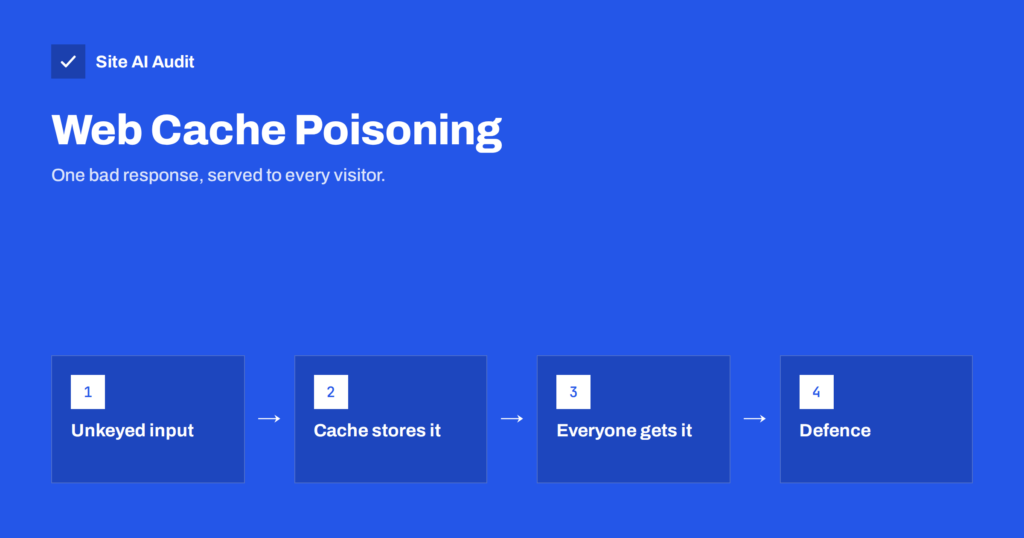
Web Cache Poisoning Explained for Website Owners
Web cache poisoning tricks your cache into storing a harmful page and serving it to everyone. Learn how it works, where caches are weak…
 21. 10. 2026 · Čtení: 8 min
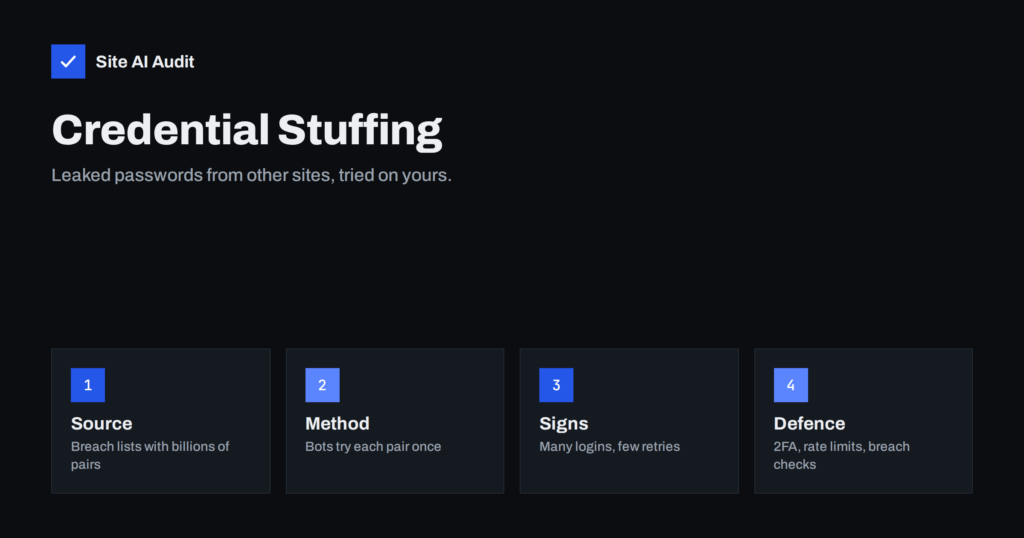
Credential Stuffing: Why Leaked Passwords Threaten Your Site
Credential stuffing uses passwords leaked elsewhere to log in to your site. Learn how it differs from brute force, how to spot it and…
 21. 10. 2026 · Čtení: 8 min
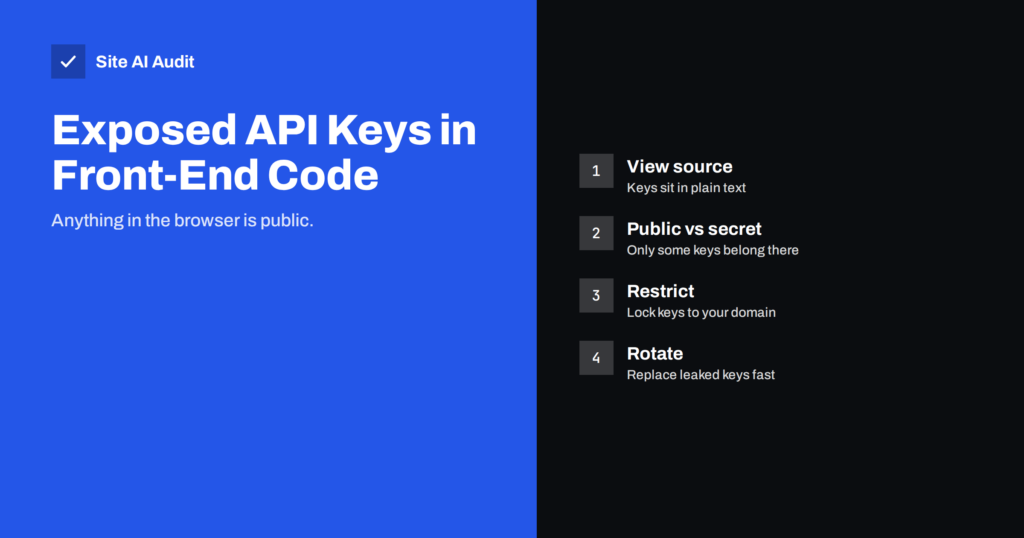
Exposed API Keys in Front-End Code: How to Find and Fix Them
Keys pasted into JavaScript, HTML or config files are visible to anyone. Learn which keys are safe to expose, how to find leaked ones…
 20. 10. 2026 · Čtení: 8 min
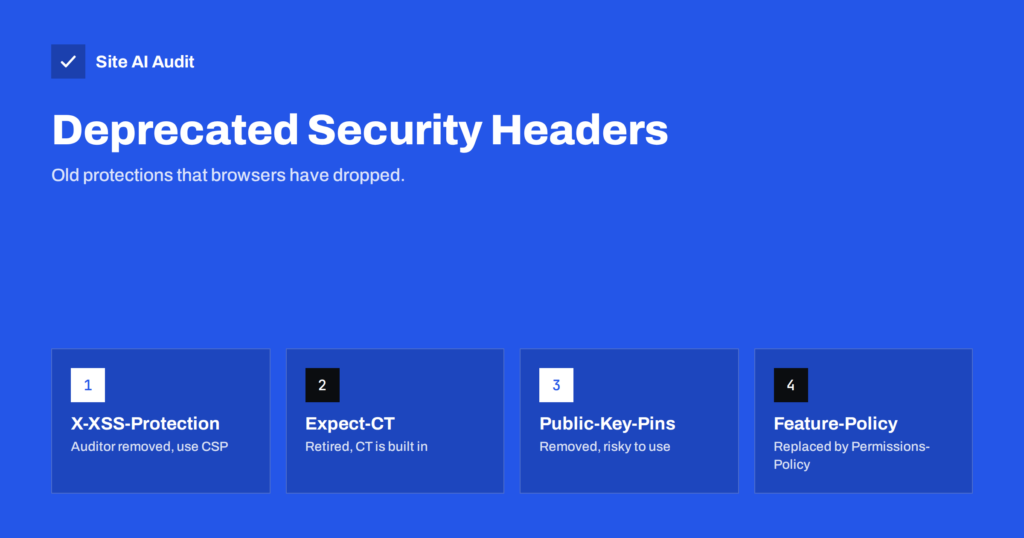
Deprecated Security Headers: X-XSS-Protection, Expect-CT and More
Some security headers are outdated or even harmful today. Learn which ones to remove, which modern headers replace them and how to clean up…
 20. 10. 2026 · Čtení: 8 min
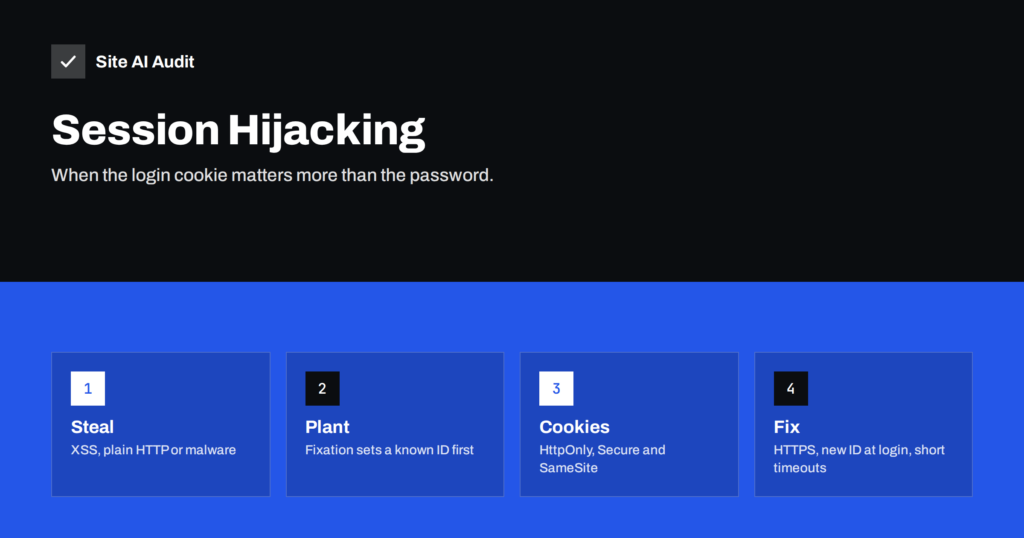
Session Hijacking and Fixation: Protect Logged-In Users
A stolen or planted session ID lets an attacker act as a logged-in user without a password. Learn how these attacks work and the…
 20. 10. 2026 · Čtení: 8 min
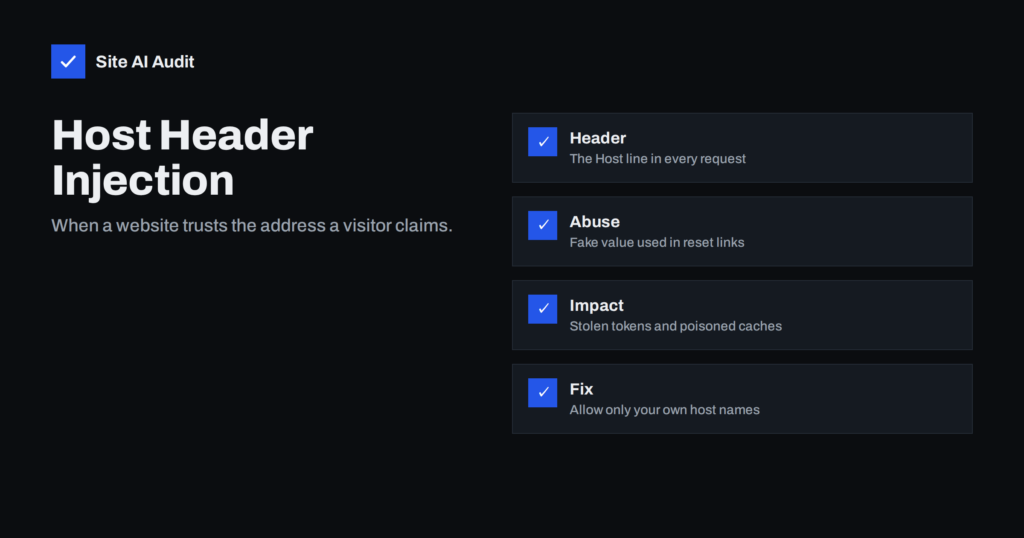
Host Header Injection: How Password Reset Links Get Hijacked
A forged Host header can make a site send password reset links that point to an attacker. Learn how the attack works and how…
 19. 10. 2026 · Čtení: 8 min
Reading Security Advisories: CVE IDs for Website Owners
A CVE number, a severity score and a version range: learn to read a security advisory, decide how urgent it is and update the…
 19. 10. 2026 · Čtení: 8 min
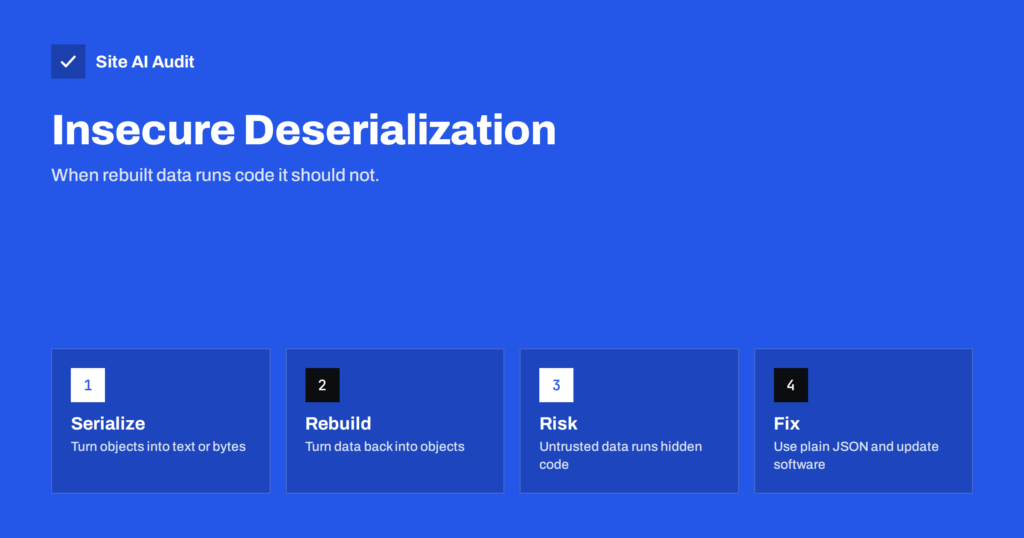
Insecure Deserialization Explained in Plain Language
Insecure deserialization lets attackers feed crafted data to your application and trigger code they should never reach. See how it works and how to…
 19. 10. 2026 · Čtení: 8 min
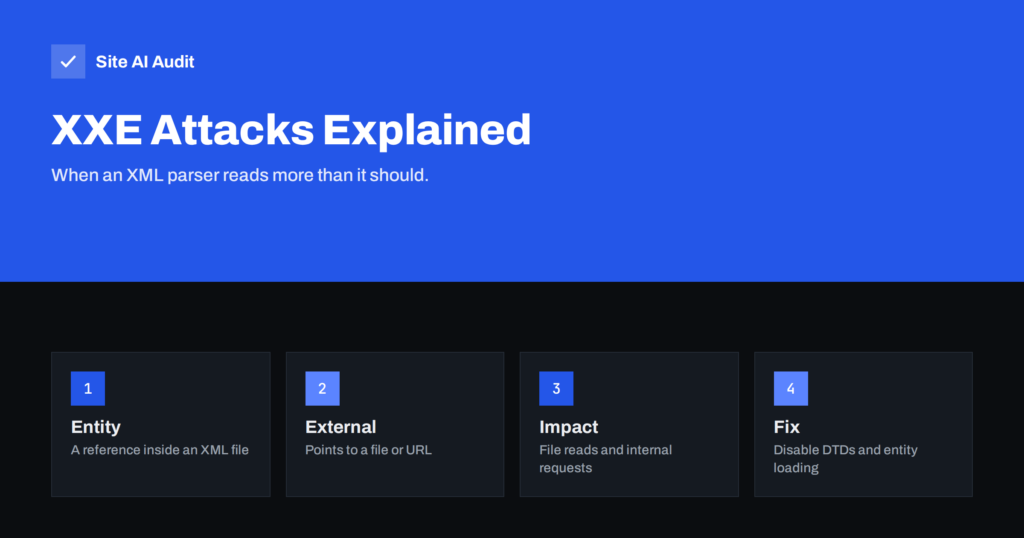
XML External Entity (XXE) Attacks Explained for Site Owners
XXE tricks an XML parser into reading local files or calling internal addresses. Learn where it hides on websites and how developers switch it…
 18. 10. 2026 · Čtení: 7 min
Command Injection Explained: How to Keep Servers Safe
Command injection lets attackers run system commands through your website. See how it works in plain words and how to prevent it in code,…