ENEnglish
 LTLietuviškai
 DEDeutsch
 FRFrançais
 RUРусский
 ESEspañol
 PLPolski
 ITItaliano
 UKУкраїнська
 CSČeština
 PTPortuguês
 JA日本語
JA日本語 LVLatviešu valoda
 ETEesti
 HUMagyar
 IDBahasa Indonesia
 TRTürkçe
 HIहिन्दी
 ELΕλληνικά
 ARالعربية
 THไทย
THไทย VITiếng Việt
 RORomână
 MSBahasa Melayu
 BNবাংলা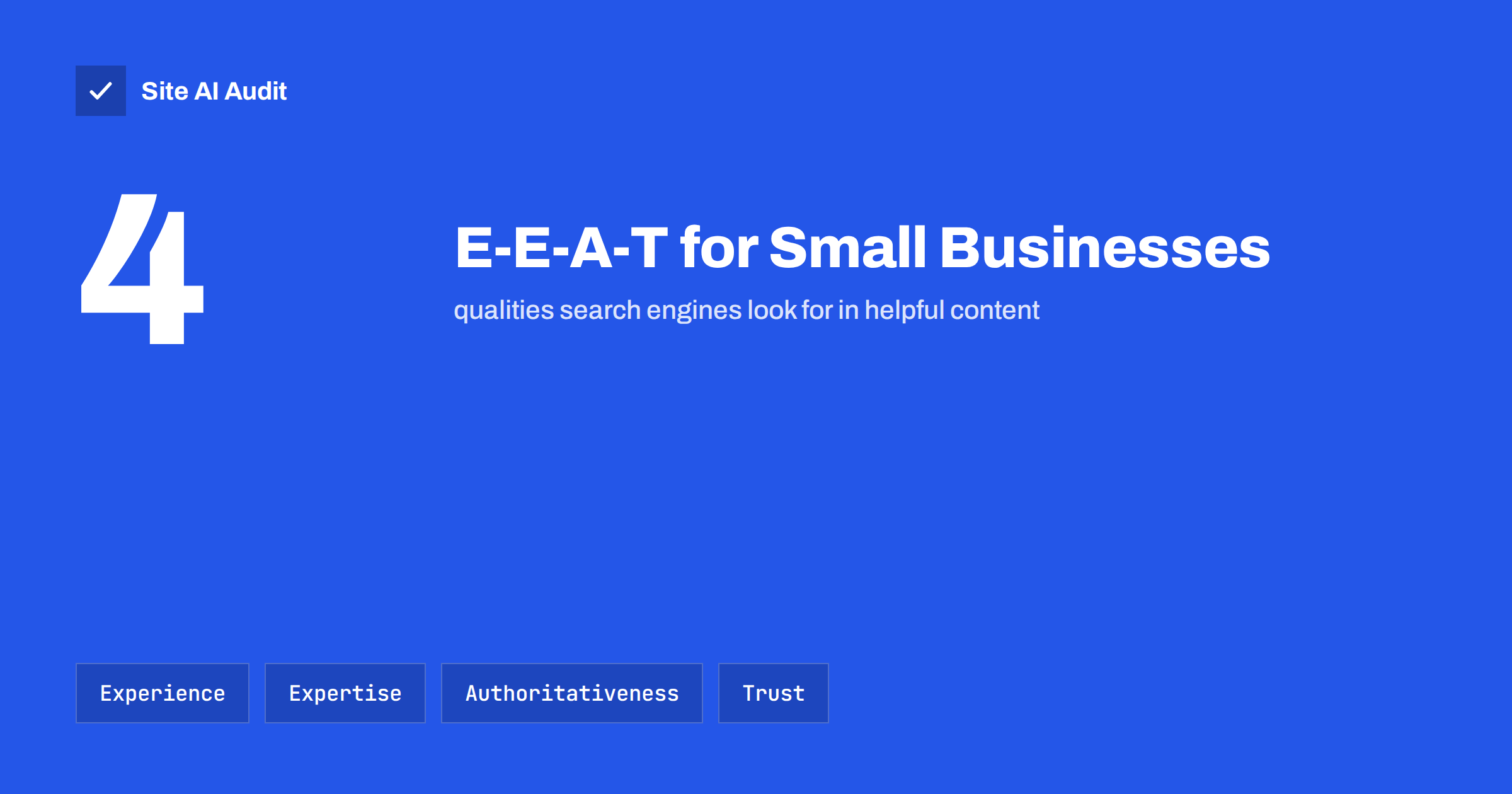
Short answer: E-E-A-T stands for Experience, Expertise, Authoritativeness and Trustworthiness. It comes from Google’s guidelines for human quality raters and describes what makes content reliable; trust is the most important part. It is not a single ranking factor or a score you can add, but a useful checklist. A small business shows E-E-A-T by being clear about who is behind the site, showing real work and qualifications, giving accurate and specific information, being easy to contact, and earning recognition from customers and other organisations.
Where E-E-A-T comes from
Google employs thousands of quality raters who evaluate search results against written guidelines. Their ratings do not directly change rankings for any site; they help Google test whether its systems are showing helpful, reliable results. The guidelines describe E-E-A-T as a way to judge the quality of a page and its creator.
Google’s article on creating helpful, reliable, people-first content explains how the same ideas apply to site owners. Its core message is simple: create content for people, show who created it and why they are qualified, and be trustworthy.
For small business owners, the value of E-E-A-T is practical. It is a lens for asking whether a visitor who does not know you would trust your website enough to call, book or buy.
The four parts in plain words
- Experience: first-hand experience of the topic. A plumber who has fixed hundreds of boilers, a shop owner who has used the products, a traveller who visited the place.
- Expertise: knowledge and skill, often shown through qualifications, training, accreditation or a track record.
- Authoritativeness: recognition by others as a go-to source, through reviews, mentions, memberships, awards or links from respected organisations.
- Trustworthiness: accuracy, honesty, transparency and safety. Google’s guidelines describe trust as the most important member of the family; the other three support it.
Why it matters more for some topics
The guidelines apply higher standards to topics that can significantly affect people’s health, finances, safety or well-being, sometimes called “Your Money or Your Life” topics. A medical clinic, financial adviser, lawyer, electrician or childcare provider needs to show more evidence of expertise and trust than a hobby blog about houseplants.
If your business works in one of these areas, being clear about qualifications, regulation, licences and the people behind the advice is especially important, both for search and for customers.
Show who is behind the website
Anonymous websites are hard to trust. Make it easy to see who you are:
- An About page with the company’s story, the people involved, how long you have been operating and what makes you qualified.
- Real team members with names, roles and, where relevant, qualifications, rather than stock photos.
- Company details: legal name, registration number where it applies, address, VAT number for EU businesses.
- Authors on advice content. Guides and articles should show who wrote them, with a short bio explaining their relevant experience.
Show real experience
Experience is the newest addition to the concept and one where small businesses can shine, because you do the work every day:
- photos of your own projects, products, premises and team at work;
- descriptions of typical jobs, with the problem, the approach and the result;
- honest advice drawn from what you see in practice, such as common mistakes customers make;
- your own product testing, measurements or comparisons, rather than copied specifications.
Generic content that could have been written by anyone, about anything, is exactly what search engines have too much of. Specific, first-hand detail stands out.
Show expertise
- list relevant qualifications, certifications, licences and trade memberships, ideally with links to the issuing body where it offers verification;
- explain your process and the standards you follow;
- write guides that go beyond the obvious, answering the harder questions customers ask;
- keep advice up to date with current rules, prices and practices;
- cite reliable sources where you rely on facts you did not produce yourself.
Build authority
Authority comes largely from others. You cannot declare it, but you can earn it:
- collect genuine reviews on your Business Profile and relevant platforms, and reply to them;
- join trade associations and professional bodies that list members;
- take part in local events, sponsorships and partnerships that lead to mentions;
- share useful expertise with local media, industry publications or community groups;
- create content that others want to reference, such as practical guides or checklists.
Make trust visible
Trust is the foundation. Practical trust signals on a business website include:
- Easy contact: phone, e-mail, address and opening hours, not only a form.
- Clear policies: pricing information where possible, delivery, returns, guarantees, privacy and terms.
- Accurate information: no outdated prices, services or team members.
- A secure site: a valid SSL certificate, no browser warnings, no mixed content.
- Honest claims: no invented statistics, fake reviews or exaggerated promises.
- Transparency about paid relationships, such as affiliate links or sponsored content.
- Working e-mail: messages that do not land in spam, supported by correct SPF, DKIM and DMARC records.
Examples by type of business
What E-E-A-T looks like in practice depends on what you do:
- A dental clinic. Named dentists with their qualifications and registration, clear information about treatments written or reviewed by them, transparent prices or price ranges, patient reviews, accessible contact details and emergency information. Health information should be accurate and cautious, with a clear recommendation to book a consultation.
- An electrician or plumber. Certifications and trade registrations, photos of completed installations, explanations of safety standards, a written guarantee, a physical address or service area and real reviews. Guides can share practical experience, such as warning signs that need a professional, rather than encouraging risky DIY work.
- An accountant or financial adviser. Professional body membership, regulatory status where it applies, named advisers, articles dated and updated when rules change, and clear notes that general articles are not personal advice.
- An online shop. Company details, clear returns and delivery policies, secure checkout, original product photos and descriptions, honest stock information, genuine reviews and responsive customer service contacts.
- A local restaurant or café. Current menus and prices, opening hours that match the Business Profile, photos of real dishes and the venue, the chef’s or owner’s story, and replies to reviews.
In every case, the common thread is the same: specific, verifiable information from real people, kept up to date.
What E-E-A-T is not
- It is not a score in Search Console or any tool.
- It is not a single ranking factor you can switch on.
- It is not solved by adding author boxes to every page without real substance behind them.
- It is not only about links; experience and trust come largely from the content and the business itself.
Think of E-E-A-T as a description of what reliable content looks like. Search engines use many signals to approximate it; your job is to be genuinely reliable and make that visible.
AI-written content and E-E-A-T
Many businesses now use AI tools to help write website content. Google has said that how content is produced matters less than whether it is helpful and reliable. The risk with generated text is that it tends to be generic: correct-sounding, but without the first-hand detail, local knowledge and accountability that show experience and expertise. If you use such tools, treat the output as a draft, add your own examples, photos and judgement, check every fact, and make sure a named, qualified person stands behind the published page.
A quick E-E-A-T review for your site
- Could a first-time visitor tell within a minute who runs this business and where it is?
- Do service pages show real work, real people and specific details?
- Are qualifications, licences and memberships mentioned and verifiable?
- Do advice articles have named authors with relevant experience?
- Is every fact, price and policy current?
- Are reviews genuine and recent, and are complaints answered?
- Is the site secure, fast and free of broken links and errors?
How Site AI Audit helps with the trust basics
Technical reliability is part of trust. Site AI Audit checks the signals visitors and browsers notice immediately: a valid SSL certificate and its expiry date, HTTPS redirects, security headers, e-mail authentication with SPF, DKIM and DMARC, broken links and mobile speed, along with SEO basics. Run a free check to make sure nothing on the technical side undermines the trust your content builds.
Related reading
- Local SEO Basics: How Small Businesses Get Found Nearby
- How to Update Old Content for SEO: Refresh, Merge or Remove
- What Is an SSL Certificate and Why Does Your Website Need One?
- Common SEO Mistakes Small Businesses Make (and How to Fix Them)
The bottom line
E-E-A-T is a description of reliable content: made by people with real experience and expertise, recognised by others and above all trustworthy. For a small business, that means showing who you are, showing your real work and qualifications, keeping information accurate, being easy to contact and running a secure, well-maintained site. It is not a trick, but it is one of the clearest guides to what search engines and customers both want.
الأسئلة الشائعة
Is E-E-A-T a ranking factor?
Not a single, direct one. It is a framework from Google’s rater guidelines describing reliable content. Google uses many signals that aim to reward content with those qualities.
What does the extra E in E-E-A-T stand for?
Experience. Google added it in 2022 to recognise first-hand experience, such as having actually used a product or done the work, alongside expertise.
Do I need author bios on my business blog?
They help, especially for advice content. A short bio explaining the author’s role and experience shows readers and search engines why the advice is credible.
How can a new business show authority?
Start with what you have: qualifications, real work, genuine reviews, memberships and local connections. Authority grows over time as customers and organisations recognise you.
Does E-E-A-T matter for online shops?
Yes. Trust signals such as clear policies, secure checkout, real product information, genuine reviews and easy contact are central to whether shoppers buy and whether content is considered reliable.