 ENEnglish
 LTLietuviškai
 DEDeutsch
 FRFrançais
 RUРусский
 ESEspañol
 PLPolski
 ITItaliano
 UKУкраїнська
 CSČeština
 PTPortuguês
 JA日本語
JA日本語 LVLatviešu valoda
 ETEesti
 HUMagyar
 IDBahasa Indonesia
 TRTürkçe
 HIहिन्दी
 ELΕλληνικά
 ARالعربية
 THไทย
THไทย VITiếng Việt
 RORomână
 MSBahasa Melayu
 BNবাংলা
#Website security
Website security covers the everyday measures that keep a site, its visitors and its data safe. Articles tagged here focus on practical protection for small and medium websites rather than enterprise theory. They cover certificates, updates, exposed files, login protection, backups and monitoring. Each guide explains the real risk first and then the fix, in order of impact. The advice fits business owners, marketers, agencies and developers alike. Start here if you want a clear picture of what matters most for your site.
 29 sept. 2026 · 8 min de citit
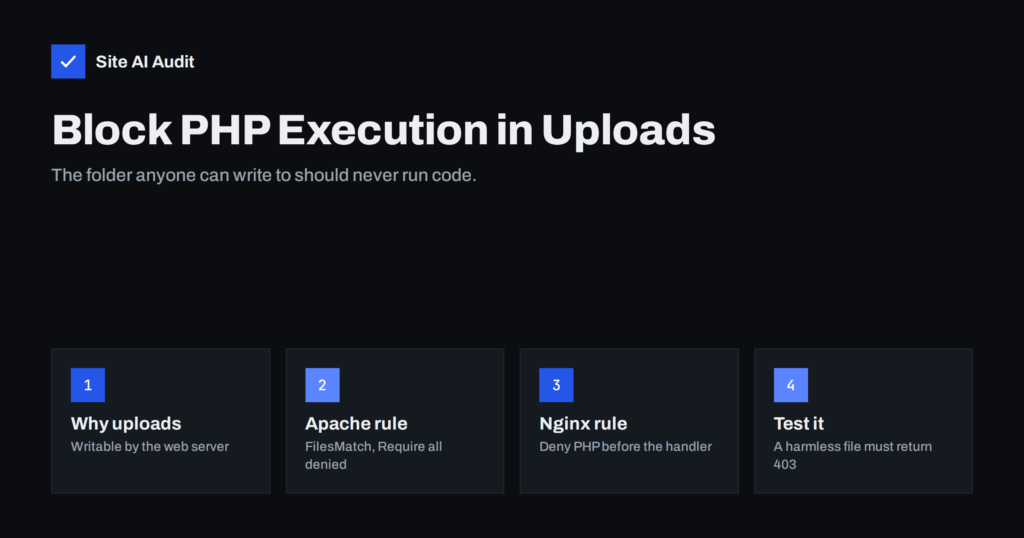
Uploads Folder Security: How to Block PHP Execution
Attackers love hiding scripts in the uploads folder. Learn why, how to block PHP execution there on Apache and Nginx, and how to test…
 29 sept. 2026 · 7 min de citit
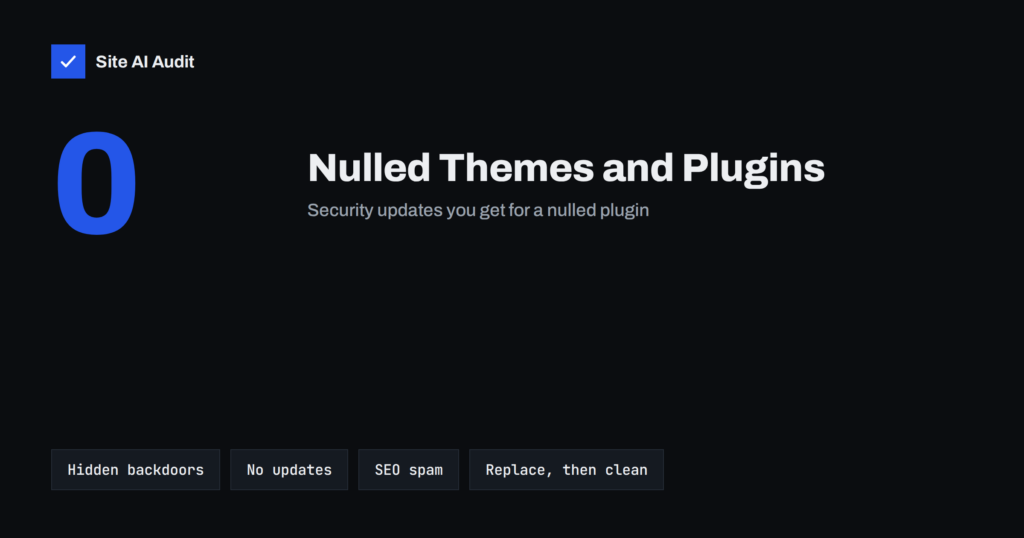
Nulled Themes and Plugins: The Real Cost of Free Premium
Nulled themes and plugins often hide backdoors, spam links and redirects, and never get security updates. Learn the risks, the signs and how to…
 29 sept. 2026 · 7 min de citit
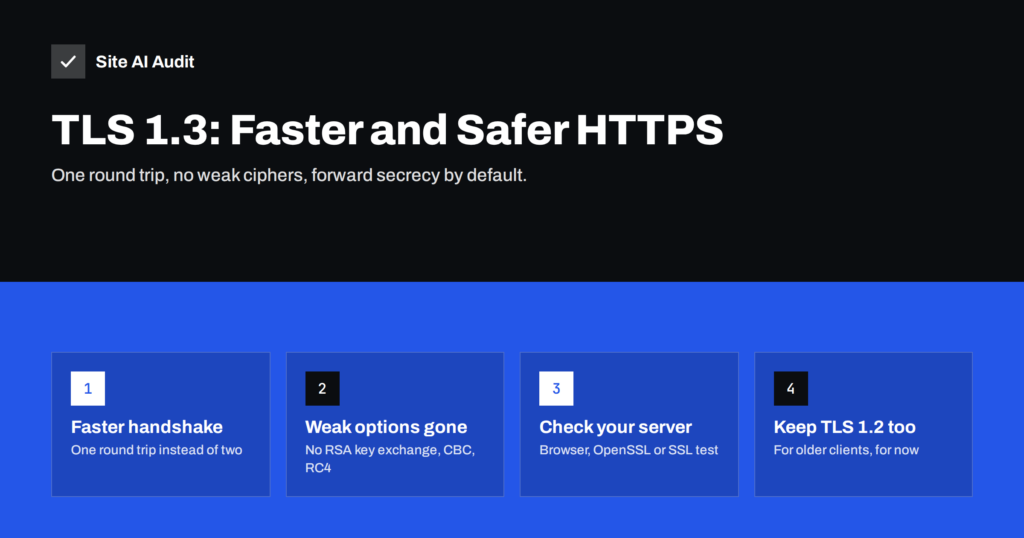
TLS 1.3 Explained: Why It Is Faster and How to Enable It
TLS 1.3 makes HTTPS connections faster and removes weak cryptography. Learn what changed, how to check your server and how to enable it safely.
 28 sept. 2026 · 8 min de citit
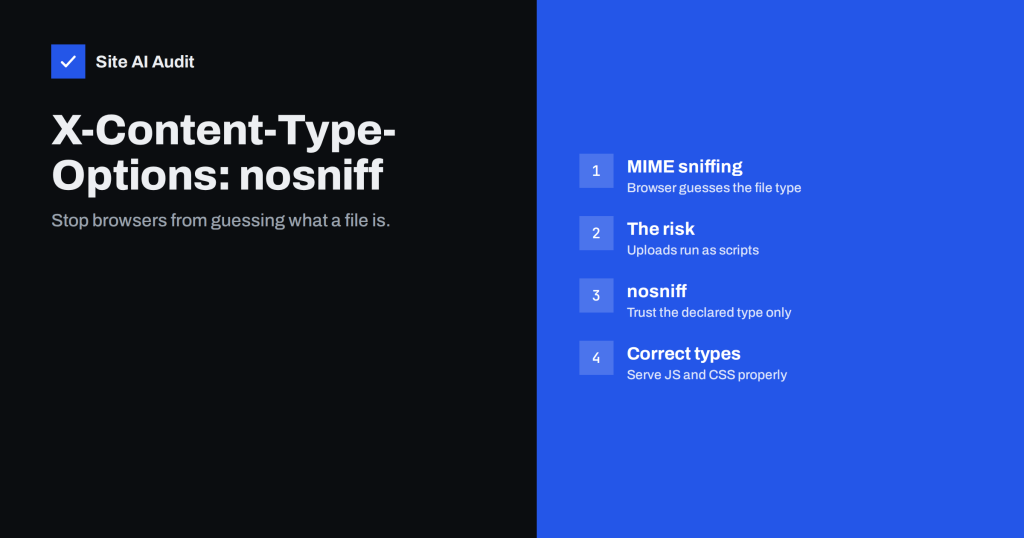
X-Content-Type-Options: nosniff and Safe MIME Types Explained
X-Content-Type-Options: nosniff stops browsers from guessing file types, closing a path for disguised scripts. Learn how MIME sniffing works and how to set it.
 27 sept. 2026 · 7 min de citit
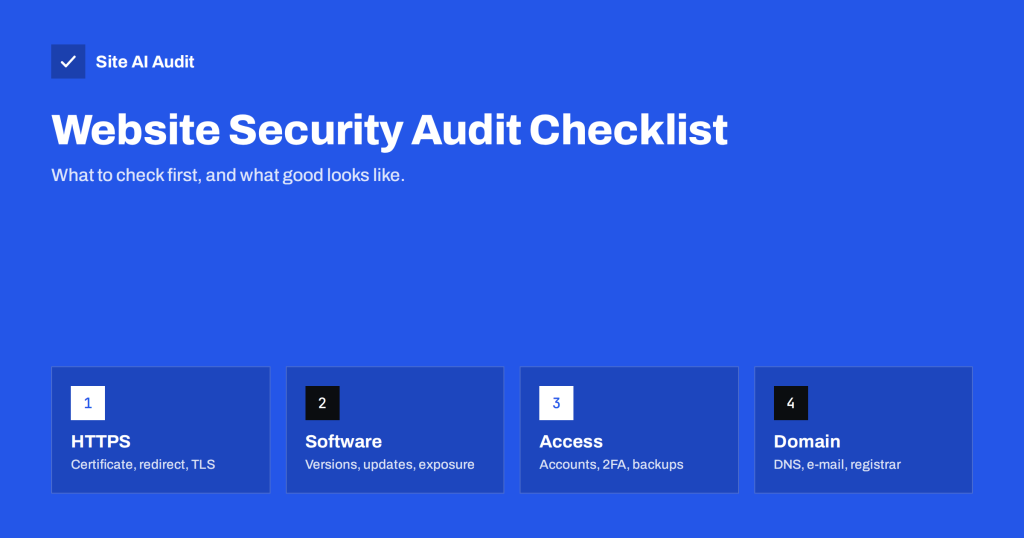
Website Security Audit Checklist: What to Check and in What Order
A practical website security audit checklist: HTTPS, certificates, headers, software, access, backups, DNS and e-mail, ordered by impact with clear targets.
 25 sept. 2026 · 7 min de citit
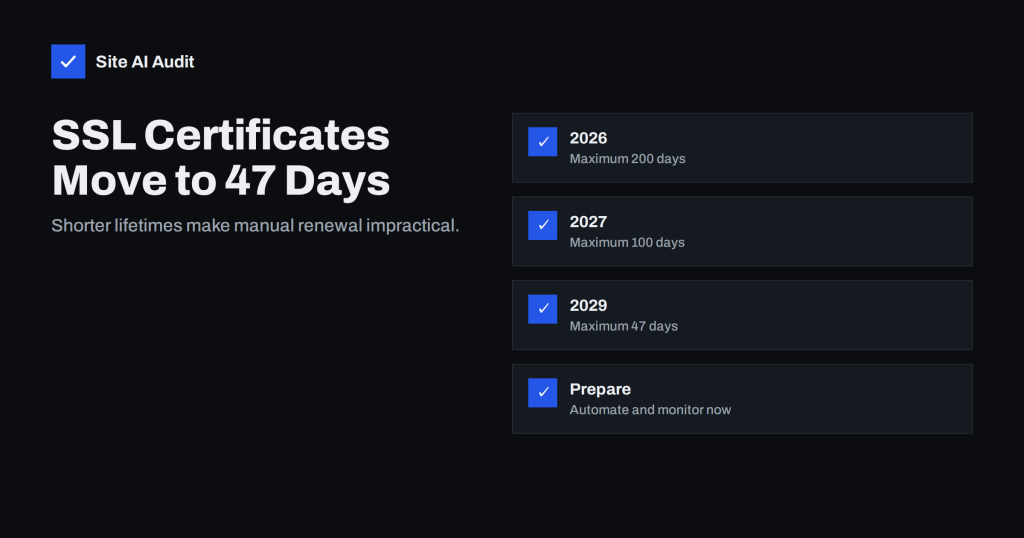
SSL Certificates Are Moving to 47 Days: What Site Owners Must Do
Maximum SSL certificate lifetimes are falling step by step to 47 days by 2029. Learn the timeline, who is affected and how to prepare…
 23 sept. 2026 · 7 min de citit
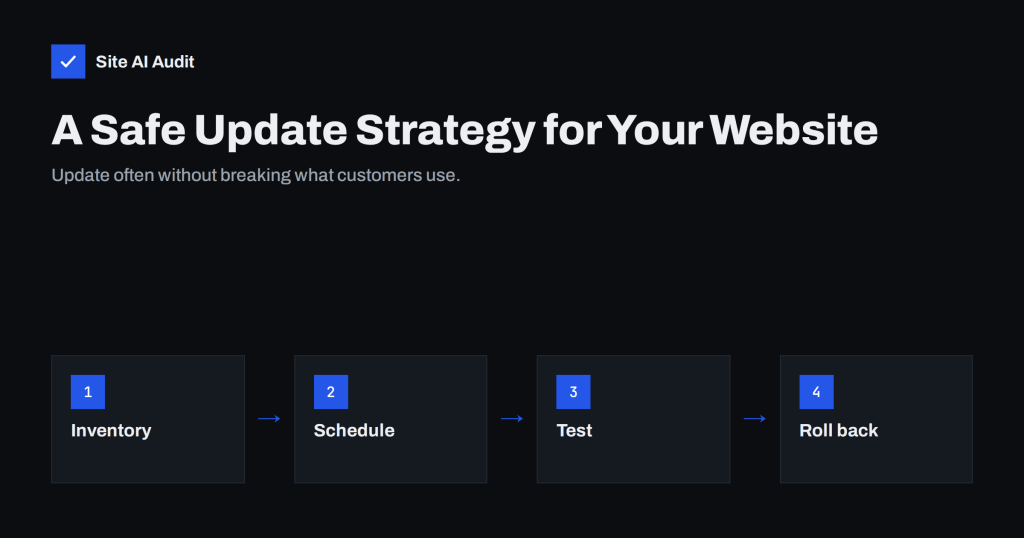
Outdated Plugins and CMS Versions: A Safe Update Strategy
Outdated plugins are the most common way websites get hacked. Learn how to update the CMS, plugins, themes and PHP safely, often, and without…
 22 sept. 2026 · 7 min de citit
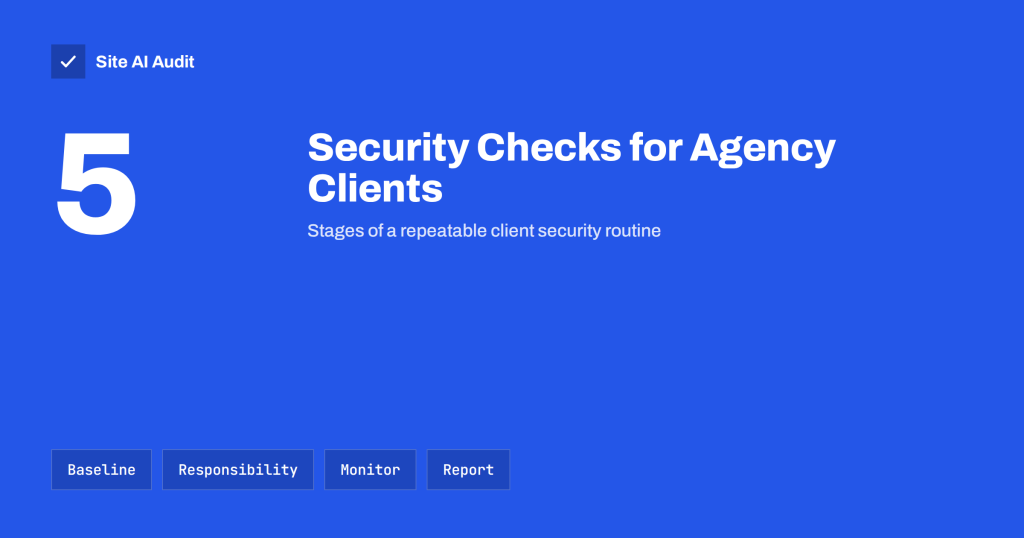
Website Security Checks for Agencies: A Repeatable Client Process
A practical process for agencies to check client website security: baseline audits, monitoring, clear reports, responsibilities and turning findings into work.
 21 sept. 2026 · 7 min de citit
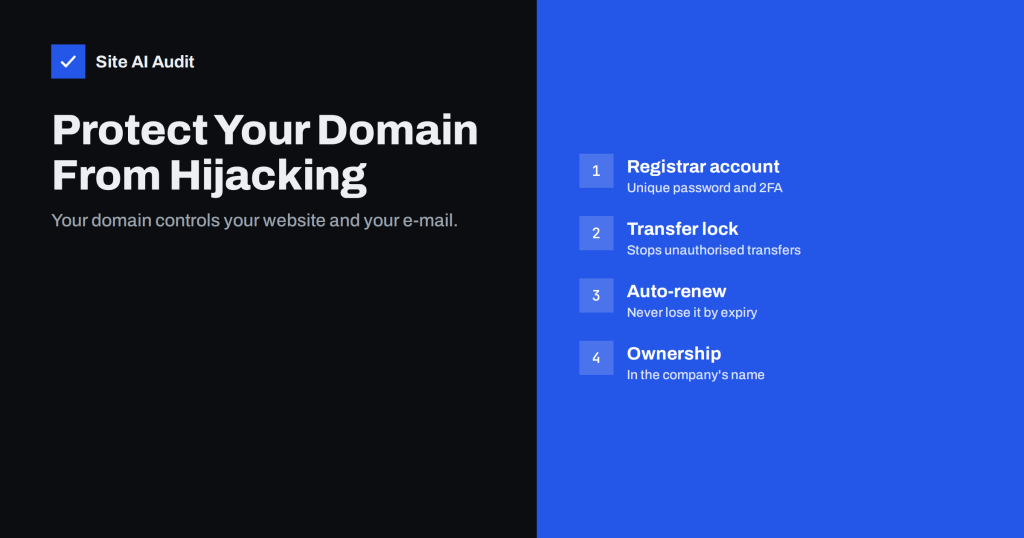
Domain Hijacking: How to Protect Your Domain Name and DNS
Losing control of your domain takes down your website and e-mail at once. Learn how domains get hijacked or expire and how to lock…
 20 sept. 2026 · 7 min de citit
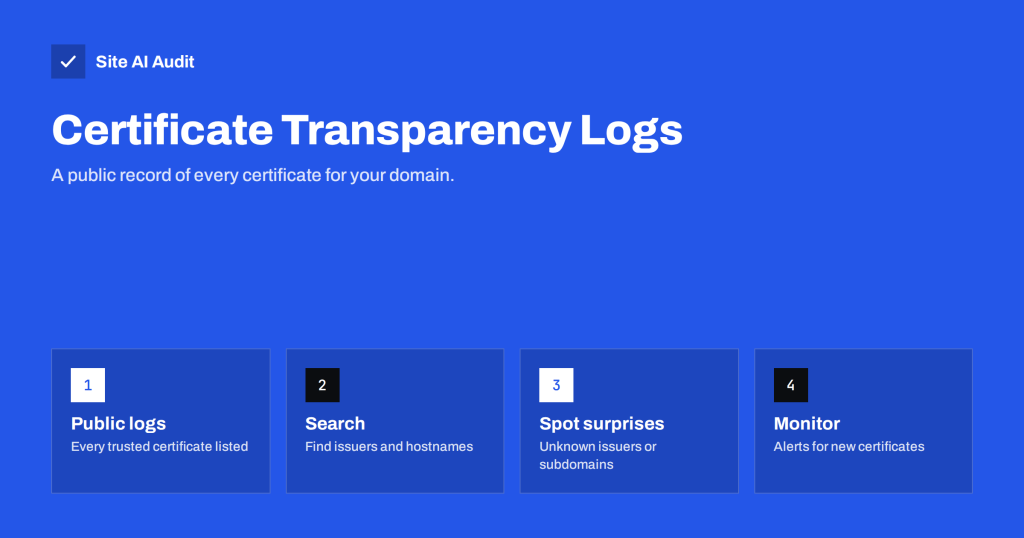
Certificate Transparency Logs: Every Certificate for Your Domain
Every public SSL certificate is recorded in certificate transparency logs. Learn how to search them, what to look for and how to monitor your…
 18 sept. 2026 · 8 min de citit
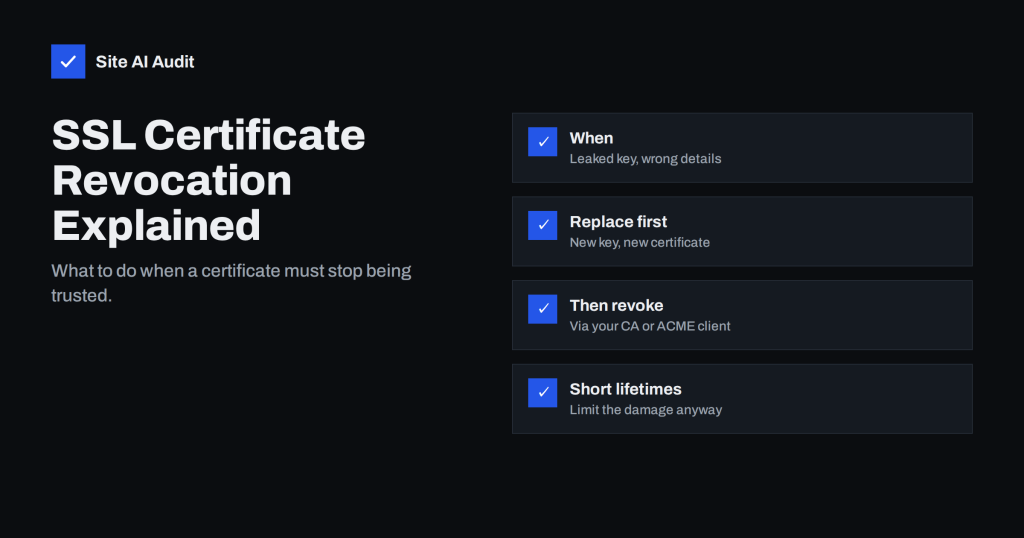
SSL Certificate Revocation: When and How to Revoke a Certificate
Revoking a certificate tells browsers to stop trusting it before it expires. Learn when revocation is needed, how CRLs and OCSP work and how…
 17 sept. 2026 · 8 min de citit
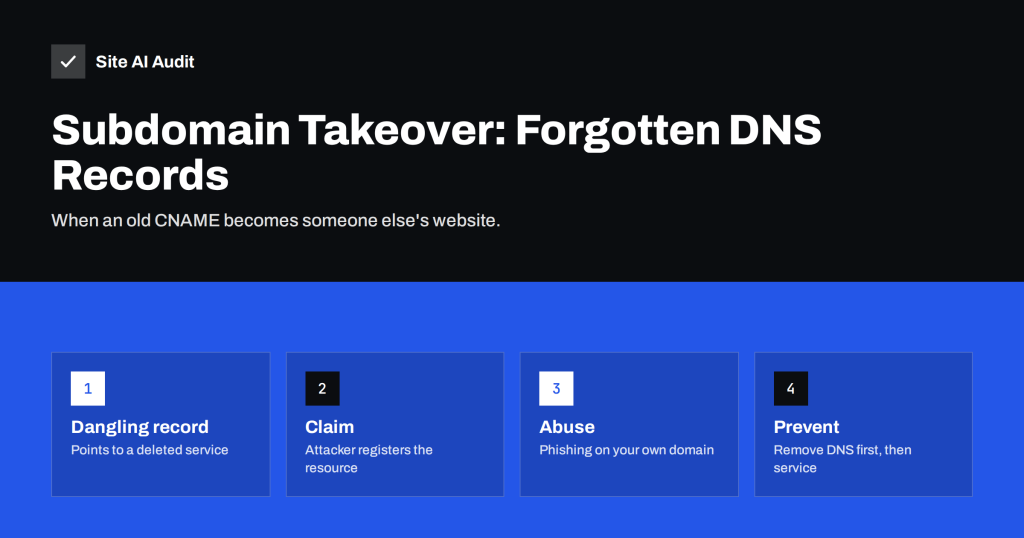
Subdomain Takeover: How Forgotten DNS Records Get Hijacked
A DNS record pointing to a service you no longer use can let attackers take over your subdomain. Learn how subdomain takeover works and…