 ENEnglish
 LTLietuviškai
 DEDeutsch
 FRFrançais
 RUРусский
 ESEspañol
 PLPolski
 ITItaliano
 UKУкраїнська
 CSČeština
 PTPortuguês
 JA日本語
JA日本語 LVLatviešu valoda
 ETEesti
 HUMagyar
 IDBahasa Indonesia
 TRTürkçe
 HIहिन्दी
 ELΕλληνικά
 ARالعربية
 THไทย
THไทย VITiếng Việt
 RORomână
 MSBahasa Melayu
 BNবাংলা
#Content Security Policy
Content Security Policy (CSP) is a browser security mechanism that controls which sources a web page may load content from. Articles tagged here explain its directives, from script-src and style-src to frame-ancestors and upgrade-insecure-requests. They show how CSP limits the damage of cross-site scripting and injected code. You will learn how to build a policy from a real inventory of your site’s scripts and services. The guides describe a report-only rollout that avoids breaking forms, analytics and payment widgets. Examples cover common CMS setups as well as custom websites.
 2026-09-30 · Skaitymo laikas: 8 min.
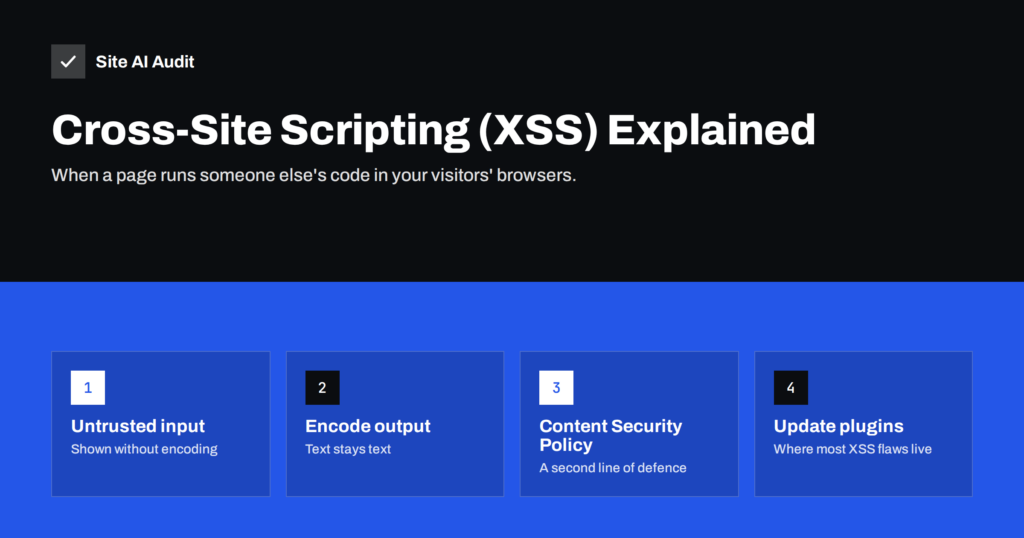
Cross-Site Scripting (XSS) Explained for Website Owners
Cross-site scripting lets attackers run their own JavaScript on your pages. Learn the main XSS types, what they can do and how to protect…
 2026-09-16 · Skaitymo laikas: 8 min.
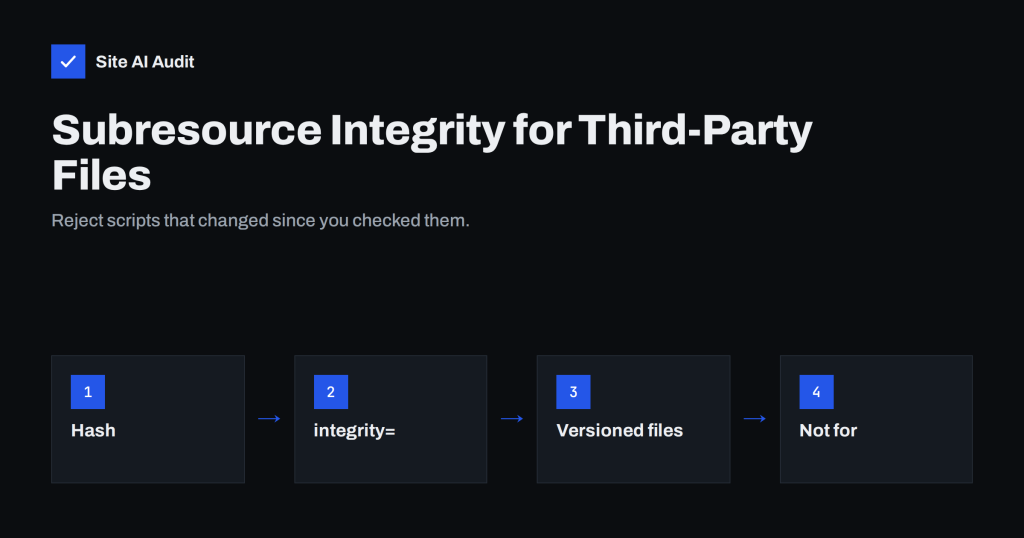
Subresource Integrity: Protect Your Site From Tampered Scripts
Subresource Integrity lets browsers reject third-party scripts and styles that have been changed. Learn how SRI works, when to use it and where it…
 2026-09-08 · Skaitymo laikas: 8 min.
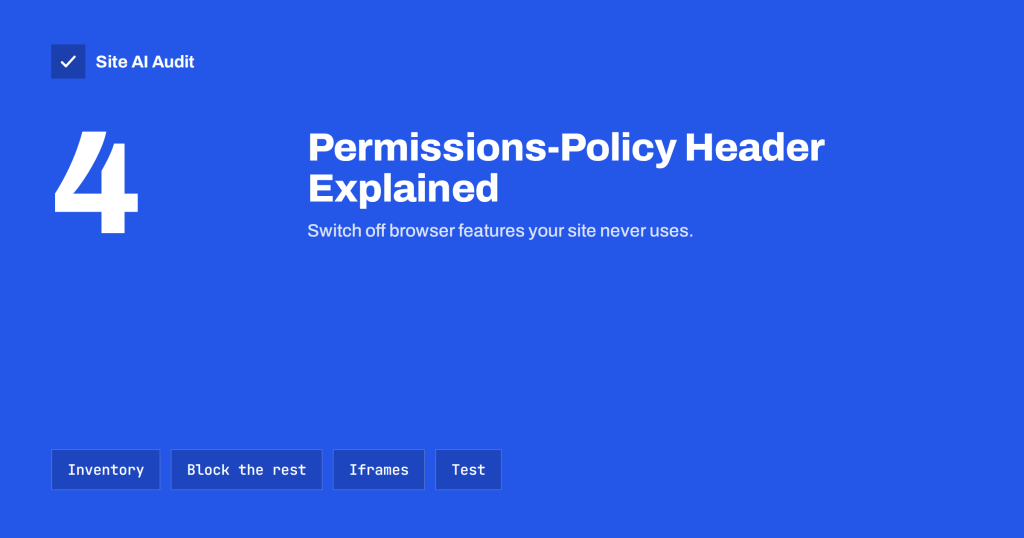
Permissions-Policy Header: Control Camera, Location and More
Permissions-Policy lets you switch off browser features like camera, microphone and geolocation for your pages and embedded iframes. Here is how to set it.
 2026-08-17 · Skaitymo laikas: 8 min.
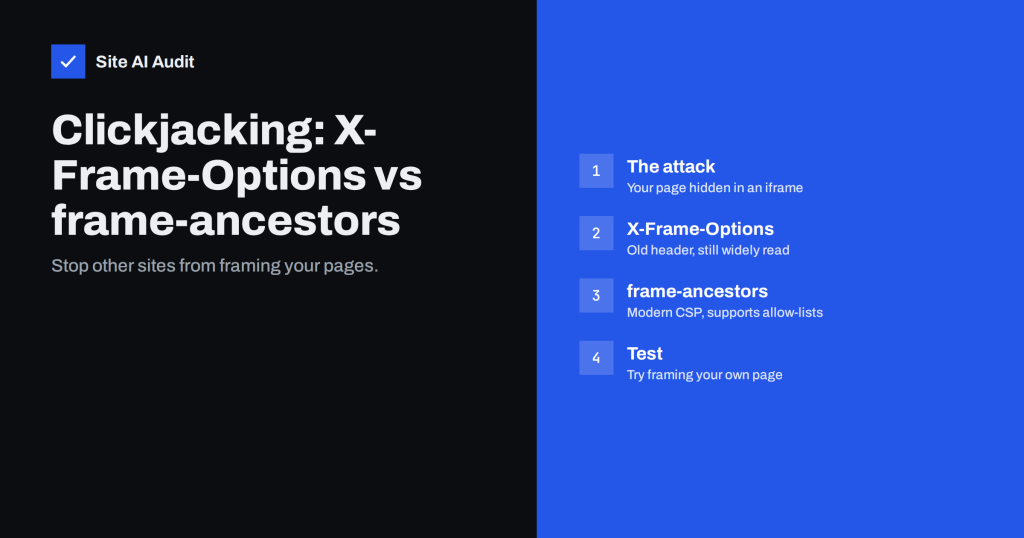
Clickjacking Protection: X-Frame-Options vs frame-ancestors
Clickjacking tricks visitors into clicking hidden buttons on your site inside another page. Learn how X-Frame-Options and CSP frame-ancestors stop it.